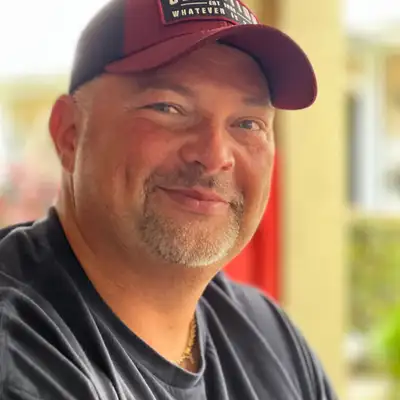
Episode 020: He Sold Pizza at Thirteen, burned Insurance at Thirty and Still Building a Paid Community with Christopher Grant
TGFP_Audio_Ep20
00:00:00 Speaker: Average is the enemy of greatness. Comfort is the enemy of growth. Welcome to the Grit Factor podcast, where we strip away the highlight reel and get into the darkness beneath it. The real stories, the real battles, and the battle plans used to conquer them. I'm your host, Carl Jacobi, combat vet, entrepreneur, resilience and performance coach, keynote speaker, husband and father. I've built, scaled, and exited multiple companies totaling over forty million in revenue. But here's what that highlight reel doesn't show you. Life has been smacking me in the face with a two by four since I was just five years old. Broken home, constant chaos. No playbook. No safety net. Just grit. And if you're anything like me. You know, you've got another level in you, in your business, your career, your faith, your leadership. You're just not sure how to get there. That's exactly why we're here. Be sure to follow me for more great content and check out my website. Success with Carl. Com. Now that's Carl with a K. Now let's get to work. This dude has skipped college and jumped straight into insurance sales at eighteen years old. Self employed commission checks. Twelve years in that world before he ever thought stepping foot or even leaving anything else. He looked at franchise and subway. You looked at buying a gas station. Bless your heart. He even tried eBay dropshipping and scale it to fifty thousand a month. And then you realize he was only taking home less than ten percent of that. So fast forward all of this. He became a dad. And this is really where it becomes a turning point. And for fathers, this is really going to hit you. I know it did for me. He runs a brand called Clear the Shelf, a brand with over thirty thousand newsletter subscribers, a YouTube channel, a podcast and a paid community. He has his flagship course called the Oh Challenge, has trained over two thousand Amazon sellers across fourteen cohorts. He's built numerous pieces of software for the Amazon community, and to this day, he still teaches every session himself live, sharing his screen, answering every question in the room. Chris Grant, my dude, welcome to the show. Thanks so much for having me, man. It was it was good to meet you in person. Finally. Yeah, we live. We live too close not to have had that happen before, but I appreciate you. Appreciate you allowing me on the on the show, man. Yeah, absolutely, man. It's an honor, dude. And yeah, you're right, man. It's, it's, uh, you know, we do live too close. In fact, I was just reminded of this, uh, yesterday. Just in fact, uh, there were two other locals to us, Ryan Kimura, which, uh, was on your show. I'm sure you know of him as well. And, uh, Ryan Otwell, uh, and, uh, one of my clients flew in from Indiana, uh, on vacation in Naples, and it was because of him, like, hey, I'm in Florida. Love to, for us to get together. And he was like, why did it take that? To get us all together. Right. Um, but I guess it's just, uh, you know, we just get into our own world and, uh, we just don't think about those things. But yeah, we like to, we like to make money on the internet. And so it's, you know, going outside and peopling is not something that crosses our mind a whole lot. That is true. That is true. I know, especially since we're in twenty nineteen to twenty twenty when the world got crazy. Yeah, it's, uh, it's really steered in that direction. So but man, thanks again for, for joining me. I'm really excited for this conversation because, uh, you brought up some interesting points in your intake, especially as a father. I can definitely resonate with something you said there. And we'll dive into that here in a moment. But Chris, my man, take me back to to eighteen years old, right? Everyone else is filling out college applications or, you know, joining the Army like this dude did right here. Um, but you're walking into an insurance office, right? What made you skip that script? Because in those days, and I don't think it's changed much since then, it's either college or military entrepreneurship or anything outside the grain of that wasn't really common, right? Sure. So what made you skip that? And, uh, and decided to do something different? I'll. I'll have to go back a little bit further to fully explain. So if you'll, if you'll bear with me a moment, let's go. Um, in eighth grade, I, it was before that, but eighth grade is where I really got the taste for entrepreneurship. And it actually started because of the best teacher I ever had. Mrs. McDermott. And I know that she'll never hear this. And, uh, I don't even know if she knows what a podcast is, but, uh, she was the best teacher I ever had. She put up with. I was not a great kid. I was, uh, let's, let's do things and let's ask for forgiveness later. Um, I can, you know, let's, yeah, let's push the boundaries a little bit, see what we can get away with. But, uh, in eighth grade, there was always an eighth grade class trip. I went to a very small school between. I had to explain this to my son the other day between kindergarten and tenth grade, there were about one hundred and forty kids in total. Uh, very small school. Yeah. And the eighth graders always had a class trip every year. Um, and we were going to go. We wanted to go to Niagara Falls. However, we also wanted to make it as inexpensive as possible. And so we came up with the idea that we would sell pizza to the entire school on Fridays. And that gave me the opportunity to reach out to the local Pizza Hut and work with the manager and get a discounted rate. So we ended up getting pizzas for about fifty cents a slice, and they were all cut into eight slices. I think back then their normal large pie was cut into ten. We had them cut into a little bit bigger. That way we could sell them for a buck a pop and still make. It ended up being like forty cents per slice in profit after we tipped the delivery guy because we. We also negotiated that like, we're kids, we can't come pick them up. I know it's a little bit early for you guys at noon, but could you have someone deliver them? So that was fantastic. And the idea there was let's sell pizza. Let's, you know, if we sell a couple thousand slices over the course of a year, we should be able to help everyone go to Niagara Falls, because not everyone will be able to pay for it out of their own pocket, at least fully. Um, the very first idea was these kids want pizza, but what else are they going to want? And so then I talked to my teacher into drinks and I was like, hey, you're already going to Sam's Club. Can you go ahead and pick up some crackers and some candy and things like that? And then we priced all that out. And so we took over her little supply closet and we delivered the pizza. And then we also said, hey, if you guys want any crackers, chips, drinks, etc. you come to the eighth grade classroom and we opened up our little storefront for about thirty five to forty minutes every day. That is so cool, man. It was, it was awesome. I ended up I got so into it that I also kept the books, um, which was interesting. It was very rudimentary accounting. Um, you know, just cash basis accounting. We kept the books. Fast forward to the end of the year. We ended up having enough money to. So nobody had to pay a dime out of pocket to go to Niagara Falls. Uh, incredible. All the teachers were paid for. All the students were paid for. We rented a fourteen passenger van to drive up there. Uh, we were able to pay for all of our meals, like there was not a penny out of pocket. Um, and we had money left over, uh, actually enough money left over that we were able to replace the basketball hoops in our gym, which were. They were like the basketball hoops we had. Looked like they came out of the movie Hoosiers, those metal white. Uh, basketball backboards. So we replaced them with glass backboards that moved up and down and stuff like that. Um, and so it was, it was the best year that eighth grade had ever had raising money. And I fell in love, um, of arbitraging stuff essentially. I see it now. Yeah. And then, and then I was like, oh, well, if we could sell this, we could sell other things. So I ended up being the front man in the winter time. And I would go up with my shovel in hand, and I would go to all of the people on my street and three or four streets down, and we would offer to shovel their driveway. Um, I would make my brothers do the work and I would make sure that they stayed off to the side while I went up and I sold the homeowner. Well, I offered it for about twenty five dollars. Most everyone said yes. You know, chubby cheeked kid, all red in the face, holding his, uh, holding his shovel there. Yeah. And yeah, we sold a bunch of them. Well, little did they know that I rented my grandfather's snowblower. And as soon as they said yes, they hear the snowblower pop on. And we get this job done in five minutes. Oh, man, that's brilliant, dude. And that's when I first learned about positioning. Uh, I was not lying. I was just positioning myself as a, a kid just looking to shovel some driveways. But we had some heavy gear to do it. Yeah. Um, and so then I learned door to door sales, which was not as fun, but it was a good skill to have. Um, and that's when I first fell in love with being able to go out and make your own money. Uh, you know, because as a kid and my dad made a ton of sacrifices for us. We you know, we never went hungry. We always had a roof over our head. But, uh, my friend, my friend Chris likes to say, uh, we weren't, um, we never went hungry, but we were always a little Wanti is something he liked to say. And, uh, you could say that was. That was the way it was for for us as kids. Um, and it was, it was great to go out and earn some money so I didn't have to ask for it. You know, I went and earned my own money for my Super Nintendo, and I worked an entire summer to earn the money for my first car. Uh, I just, I've, I always liked work and I'm happy to get lost in it, um, no matter what it is. Um, now saying all that when I was in high school, I was, uh, captain of the basketball team and I was going to go play basketball. Now, not at some D1 school. It was going to be like a. I don't even know if they were in a division, but it was a, it was a very small, um, religious school and I was going to go play there. I ended up tearing my meniscus, uh, playing ball with the adults on, uh, on, on Sunday mornings. And that dream was shot. Uh, so, and I'd also thought about going to fire fire school to become a firefighter. I had gotten acceptance into fire school and that kind of blew that chance as well. Um, and so I was trying to figure out what do I do? My grandfather owned an insurance agency and had for, I don't know, twenty, twenty five years. And I read a lot of books. I read a lot. I read Rich dad, Poor Dad, the four hour workweek, and a lot of other books. And so my mind got going, what is something that I can do where there is no ceiling on the income and it's not passive income, but if I work really hard, how can I have things pay me over and over and over again? Yes. The only logical choice at the time was insurance. You sell it once, you service it every year, and you get paid the renewal for less and less work over time. And then you learn things like, oh, well, if I cross sell and someone has three lines of business with me, the chances of them leaving, uh, cut in half. And if they have four, it's down to ten percent. And I should be able to keep them longer and longer and longer. Mhm. Um, and so I, I ended up enjoying that. I, I used a teaching method rather than a hard sell method. Um, I knocked on doors again and I was able to like win several awards. I at eighteen years old, I won this life insurance contest and I got to take, uh, my, my stepbrother to like Puerto Rico for four or five days. Uh, all for free from selling insurance. Um, and, and so I, that's why I chose insurance real Real quick before we keep rolling, maybe life hit you hard. Business fell apart, career isn't working out, relationship ended, health took a dive, and now you're staying in the rubble trying to figure out what the next move even looks like. Or maybe nothing blew up at all. On paper, you're winning, sure. But on the inside, something's off. If you're not in crisis, you're at a crossroads. And the playbook that built the life you have is not the playbook that builds the one you want. Either way, you're stuck. Not broken, stuck between who you were and who you're becoming. Most self-help dispels more weight on the load you're already carrying. I do not want to do that. I put together a free video series called "The Grit Code Exposed," and I want to invite you to check it out. Seven short videos. That's it. The five laws that change everything for me and every client I coach. The same five that every person who's ever come back from the fire has walked through, whether they had a name for it or not. No fluff, no 90-minute webinar, no bait, just the free video series. You can start it tonight. Grab it at gritcodeexposed.com. One more time, gritcodeexposed.com. It's free. You don't need more hustle. You need the next version. And this is how you find it. Check it out. See if it speaks to you. And if it does, I'll see you on the inside. Wow. Thanks for sharing that, man. It gives it gives a lot more context of who you are today, right? In fact, I think you're probably you could probably claim responsibility for the fact that, uh, all the allowances that kids had for for lunches, you were that dude to take it all. Yes. Right. Matter of fact, the very first time I ever got in trouble at school. And once I got into fifth grade and up, I was suspended once or twice a year for one reason or another. But in third grade, I got sent to the principal's office because third grade was the very first time I sold something on the playground. Um, and they were not happy with me. Oh my gosh. Oh my gosh. Well, I guess it goes to, uh, to the that schools are not designed to create entrepreneurs, right? Schools are designed to create people to follow, systems to follow doctrine, to follow a process. Um, I know it's not a popular thing to say these days, but that's that's just, you know, my take on that. Um, but that's man, it gives a lot more context to where you are today and who you are today, especially in everything you've created, right? Like if you look back, selling pizza, selling snacks, selling something on a playground, it all started, uh, or all of this started with those moments back there, right? And it all, and I could resonate with the story of how it took a school teacher to, to not necessarily change your life. Well, I guess in some ways, a lot of ways it did. Right? Um, I can resonate with this in the sense of somebody at school changing my life. You know, it wasn't until somebody said, hey, Carl, you and I'm a good enough diploma guy. You know, I didn't graduate high school. Uh, I did enough college. Uh, only because. You know, um, I only did enough college just because I couldn't figure out what I wanted to do, man. You know, I was in the military and, uh, you know, was always stressed upon us by leadership. Go to school, go to school, you know, and of course, at that time, the military paid for it. But for me, and I think this is what I sense from you is because a school teacher pulled me aside and said, Carl, man, dude, what what are you doing? Right? You you're capable of more. You're you're able to do more. And, uh, it wasn't it wasn't until that conversation took place where I saw somebody believe in me that spoke a fire in me or to develop a fire in me. Of course, that fire wasn't really found until years later. But the questions and things he was saying to me was this lodge, didn't he? Right. And I think school teachers, unfortunately, have the most one of the most thankless jobs on the planet. They don't get paid enough for what they do, especially in today's society. Right? But, uh, man, that really gives a good picture of, uh, you know, everything you've done, everything you've built and so forth. I, I, one other thing that I want to get your opinion on, especially on what you just said, I heard you say that when you're selling insurance, that you're using the method of teaching versus hard sell. Well, I can immediately resonate and understand what you're saying to the average person out there that's listening. I was like, what is Chris talking about? Help me help, help those who are listening or watching. Understand what you mean by teaching versus hard selling. So insurance is becoming popular again as a career path. If you happen to scroll through Instagram, you're going to see sales bros and they're always talking about, oh, here's how you, you know, use this psychological hook or here's how you, uh, you know, deal with your cold calls and it's all very gross. I didn't care for that. And so what I ended up doing, and I didn't mind making cold calls. I, I, I'm fortunate to have been born with the gift of gab. And so I don't mind talking to people and I can make things up on the, on the fly, at least things to talk about, not lies. Yeah. Um, but, uh, I would see other people using these assumed closes and, um, you know, all kinds of stuff. And I went to enough sales seminars to learn all these things and they just kind of felt gross. So what I would do with somebody is I would say, hey, listen, I said, tell me about your situation, tell me what you think you need. And I said, and then let me educate you as to what is going to help you. And like, let's make you sleep well at night knowing that you're covered. Or if you can't afford that, let's start peeling back the things that you're okay without having until we get to a point where you're comfortable. Yeah. And this may, when it comes to a sales cycle in insurance, if you're selling like an auto policy, it you want to get on and off the phone with progressive as quickly as possible. Amen to that. You know, but I actually, I lengthened the cycle, made sure that they understood everything that was covered wasn't covered what they were comfortable without having or couldn't live without. And then that ended up making the price seem a little bit easier to swallow because they understood what was actually going to happen. And I did this across everything. I sold auto, home, life, business insurance, and my job, I felt, was to teach the person So that they would know, am I okay? Because insurance is insurance is not what people think it is. A lot of people think that, oh, well, I buy insurance and it just it takes care of everything. Like I just don't and it's not it's just it is placing your risk or what risk you're comfortable with paying for to other people. Um, and so once we would have that kind of conversation, my close rate was a lot higher because people felt like, oh, this guy actually gives a crap. And he's not just trying to throw something at me to get me out the door. Yeah, that makes perfect sense. And it really, I love that you just said that because I, I've seen the same thing. Right? And at the end of the day, I got a bill of sleep well, right. And, you know, build a tool to be able to walk away from a. relation, not necessarily relationship. The transaction. Right. Knowing that I made a difference for like, I'm not doing this for me, I have to flip the perspective. I'm here to serve a need for this person, right? And I find this in this transaction, you know, if I'm in this just for the transaction, that's the wrong mindset anyways, right? I mean, that's something I've had to relearn throughout my, my older days. It's not about me. It's about serving that person, what they, what they truly need. And at the end of the day, and I think you can resonate with this, people can sniff out where you're truly concerned about them, right? Whether you're really in it for them, like you don't care about the outcome, right? You know, you truly do care. And I think nowadays people are craving that more than anything is having that authenticity to have that care, to have that, uh, that give a crap mentality. Right? I think it's been lost in recent days, but well, cool man. Let's let's fast forward a bit because you know as much as you and I both love to talk, and I feel like this could go on for another two or three hours. I know you've got some commitments that you got to honor because, uh, I do as well, but, you know, paint me a picture of your life. Say eight or nine years into the insurance space. Um, you know, you've been self-employed for, you know, in that space for, uh, almost a decade at that point. When I say self-employed, you pretty much controlled your own destiny, right? Making money, you're stable. Um, on paper, uh, what did a good leak or leak? Hello? What did a good week look like for you? Like, what was your day to day life look like? Um, like when I was eight or nine years into insurance. Yeah. Mhm. Um, well, I, again, I really enjoy working. And so for me, it was I'm not a morning person. So it was get into the office around ten. Uh, and it was, you know, catch up on voicemails and email and all that stuff. And then it was calling clients and things like that. And then from like six to eight, it might be handling some of those appointments after work. Mhm. Um, and it there, and you know, in between I would go out and I'd do some, I pound the pavement a bit, pass out flyers, you know, stop in businesses and see if they were interested, go reach out to car dealerships, all that kind of stuff. Um, but my opinion is, is I like the boring work. And so my perfect day looked the same over and over and over again. It was just hopping on the phone. Uh, it was, you know, following up with people asking for referrals, uh, checking in with clients, that kind of stuff. And what I found is by doing that, having enough touch points, you end up getting a whole lot more business than you can usually handle. I agree with you ma'am. I agree, I love what you said there. Love the boring work. It reminds me of a quote that I heard Mike Tyson say, uh, learn to do. Aw man, I'm going to butcher this up now. But basically, you know the things you hate doing. Learn to love them, right? You know, do the things you hate as though you love them, I think is what he ended up saying. Right? And I think that's what I love to hear your take on this. I think this is what separates the successful versus those who are not successful, right? TA ta. Love that boy. Work to love the to fall in love with the process, not the journey. What's your thought on that? Oh, a hundred percent. You know, I, I do, I get bored easily. I want some variety. However it is, it is not the thing that actually builds any, any business. We were talking to? We were talking last night about the flywheel effect. Um, and, you know, the flywheel effect is it's, uh, Jim Collins book. Good to great. He's like, imagine, imagine this flywheel on an axle and it's five thousand pounds and you push it and it doesn't really move, but you keep pushing it and keep pushing it. And eventually it gets to the point where it's just spinning real nice. Well, the thing is, you're going to have some maintenance work and that maintenance work to keep it spinning. Is that boring work that the fundamentals, the stuff you don't necessarily want to do. And sure, you can outsource it, you know, but there's always going to be those boring, tedious tasks that you've got to handle yourself. Um, and oftentimes those are the things that are actually the lubrication for that flywheel. Mhm. I love that analogy, man. As you're describing. I'm actually picturing this, you know, this, uh, block of metal. You know, spinning around. That's so true, man. I think everybody that does separate the successful versus the unsuccessful long term right, is, you know, sustaining that flywheel. Make sure that your parents are taken care of, making sure everything's lubricated and, uh, taking care of everything, you know, to keep that flywheel moving, right? Because, uh, man, it takes a lot of effort to get that flywheel moving. Right? And, but it doesn't take much just to keep it going, but it is that consistency day in, day out, regardless of how you feel, regardless of what's going on in your life. It doesn't matter that you stubbed your toe on something or that, uh, you don't feel well. You still have to attack the process. Cool, man. Uh, well, let's get into some nitty gritty of this because I want to dive into what I mentioned earlier on this, because this is something I can completely resonate with. And I'm sure a lot of fathers or parents, parents in general, but I'm going to speak from the father's perspective here, uh, just because in this world, we need more of them in my opinion. Um, you told me a moment that shaped you more than anything, uh, else in your entire life was that you learned that you're going to be a father. Walk me. Walk us into that. Right? How to. Well, I ask, you know, how did you find out? Well, duh, that's a pretty obvious question, right? But when did you find out? Uh, where were you? You know, walk us through that moment of, you know, when you learned that you were going to be a father man. Um, it was Thanksgiving Day, twenty twelve. Um, Thanksgiving Day twenty twelve. My wife and I were sitting at the table and it was just, just her and I, I think, um, and she says, I'm pregnant. And I was like, it's too early to know. Um, we, we had, we had been trying to get pregnant for a while and, uh, I was like, it's too early to know. I was like, you can't know that. And she was like, it's my body. I'm pregnant. And I said, she just knew, okay. And I, and I didn't, I didn't believe it. I was like, we'll see in a couple of weeks when you take a test and when you go, you know, we visit the doctor and all that stuff. Um, and she was right. Uh, and when, when what she said was confirmed and I, I don't know why I still have this problem. My wife will tell me things and she's right about them. And I'm like, I, it takes me months to figure out she was right. Uh, so you should've came with me, too. Yeah. Like her dealing with that. She's a she's a saint. Um, but it was the scariest thing that has ever happened to me in my entire life. Mhm. Um, and I've done some things that like, I won't, I won't talk about on the podcast, you know, but. Yeah. Exactly. Uh, it was the scariest thing that ever happened to me. And I immediately felt this extreme sense of, um, responsibility. Mhm. Um, so much so that after about a month or two, I ended up having to go to the doctor and the doctor was like, your blood pressure is insane. It was like one eighty over, you know, one hundred and ten. They're like, we've got to get this under control now. Partially was yes, I was out of shape. I'd let myself go, but it was also very, very stress induced. Um, and almost immediately I started going to bed at two in the morning and waking up at six in the morning every single day for months on end to try to get us to a point where I thought we were going to be okay financially. Um, and, but over and above that, I wanted to make sure and I don't like this word. Okay. Uh, I don't, I don't like the word generational trauma, but I wanted to make sure that the mistakes of the generations before me were not, um, did not continue going forward with my own children. Um, you know, I'm, I'm getting ready this year will be like our eighteenth wedding anniversary. Congratulations. Thank you. Uh, as far as I know, that's the longest marriage in at least three generations. Wow. Now, my my brother is gonna is gonna hit that, too. So, like, both of us have been able to, to work that out, but it's either is the longest or it's pretty daggone close to being the longest marriage in, in at least three generations that I'm aware of. Mhm. Um, you know, and then there are other things that have happened in past generations. I just wanted to make sure did not continue. And, um, and that weighed on me. You know, do I have the ability, am I able to be the kind of, um, role model that is necessary? How am I going to pass on the lessons that they need? Uh, am I the right person for that? Um, and so all of that was weighing heavy on me. And fortunately, I think I've done as good of a job as I possibly can. Um, you know, no one's perfect, but, uh, you know, that was that was a very pivotal moment for me. I think most, if not all, I can't say all that's an absolute statement, but I know I could definitely resonate with you. Right? When you start disqualifying yourself, man, am I going to be good enough? Right? Like all of these questions start running through your mind of like, it's no longer about you anymore, right? Not that life is ever really about us, right? However, when you're told when you have, you get delivered the news, hey, you're about to have a junior male or female, your perspective changes. You know it now. It goes from, you know, just living your life now to you're going to be the protector. You're going to now be the provider, not just for, your wife, which ironically, you know, you're talking about Thanksgiving Day. Our oldest daughter was born on Thanksgiving in two thousand and three. So that was kind of cool to hear that. Um, but I think that, uh, I think every father deals with that. Right? Uh, every, every parent. I can't just say this father's, but I think every parent goes through that start disqualifying themselves or start getting this rational or this, this flow of fears and then look back and you're like, man, I want like, for me, I can relate. I wanted to stop the generational curse. You know, the generational curse of, uh, you know, variety of things. Like I'm the richest person in my family. Not that I'm a super wealthy person, but I am the wealthiest person in my, in my bloodline to date. Um, I don't even well, my grandparents, I know they there were well over fifty years, so I can't say you know that many generations back, but my wife and I are still celebrating twenty six years. Uh, you know, of, uh, of us being together or, you know, being married. And, uh, so yeah, man, I could definitely appreciate everything that was running through your mind. And by the way, uh, one thing I want to note, those of you who are watching video, you're going to see this, but if you're listening on audio, just picture, you did go through a major weight transformation recently. I say recently, it's not ever a recent thing, right? Um, I can attest to this. I've been going through one myself, but you've lost a lot of weight recently. I can tell just by looking at pictures and so forth. So congratulations there man. It's not an easy feat. Yeah, man. So, you know, walk us through that. You know, walk us through after that, right? You learned that you're going to be a father. You, you learn that, uh, you know, the pressure's on, right? The pressure cooker is on. What steps did you take after that? Like, what changed for you? What was the aftermath of those news being delivered to you? Um, it was, it was a ton of hard work and trying. And mostly what I was worried about is one of the things I've always thought about is, all right, let's, let's take some chances. I've always been happy to kind of be uncomfortable being on or being comfortable being uncomfortable and, you know, living with risk and things like that. Um, but I had to, I had to reframe it a little bit. One of the things I've always done, ever since I can remember is, okay, if I do this, what is the worst thing that can happen? And can I live with that? Now, as a young married guy, um, all right, my wife and I could live out of the car, you know, or bounce from hostel to hostel or hotel to hotel until we could find, you know, if everything went sideways. But when there's another life in the mix, it's. Is that acceptable? And it's not. And so, um, what I started working on is making as much money as I possibly could in my. Quote unquote day job, which was selling insurance and at the same time, uh, because I. Could see some writing on the wall. What I mean by this is I made some mistakes in the insurance business. One of them was turning down my own insurance agency at the age of twenty one. Oh, wow. To try to continue, uh, the company that we sold insurance through at twenty one came to me and said, hey, this person's retiring. We'd love for you to step in and take over. And I said, I appreciate the opportunity. However, I want to help my grandfather continue to grow his business And with the idea that I would be able to purchase it from him when he was ready to retire. And but there was some writing on the wall. They were no longer looking for these midsize family businesses. They were looking for twenty, forty, fifty million dollar a year companies to run insurance agencies. And so it was no longer going to that opportunity was going to be gone for me. And, um, so I started looking for other opportunities. I was the first one at the company to want to start producing YouTube videos and blog posts and doing mass email and things like that. And legal department always told me, no, you can't do that. It's too much. It would have to get approved. It would take weeks. It's not going to happen. Too much bureaucracy. Yes. And so I went down the path of, well, if I can't do it here, how can I make this magical internet money without having to be in the insurance business. And I went down all the typical steps of, let's look at affiliate marketing, which I still like and still do. Yeah, let's look at, uh, selling on eBay, which I had done since I was fifteen. Anyway, selling old electronics and things. And, but the problem was, how do I have time to go source items for something like eBay where I have very little money as it is? And, um, and still like be a husband and be somewhat present. So that's where I found dropshipping. And so we started doing dropshipping and we added affiliate marketing onto that. And once we ran that up and I figured out that it really did not have great margins. I looked for other things and I just happened to find Amazon FBA, and I sold some old magazines that I bought from some weirdo on Craigslist. Uh. and, you know, you sell one and then two and then five, and then you're like, okay, this has got some legs because these would not have sold anywhere else. Yeah. Um, let's go deeper. And that's what we did. Nice man. That's, that's a great transition into that. Right? One thing you mentioned that that reminded me of a phrase I had with one of my clients. You're talking about evaluating the the regret, right? Looking at risk. And I'm reminded of what he told me not too long ago. What he tells himself every time he looks at an opportunity is I is this a situation where I would rather deal with the pain of effort versus the pain of regret? Right? Like you're going to get a bill one way or the other, right? You're going to get a bill of regret or a bill of pain. Which one's going to give you the biggest ROI, right? And so every time I hear what you just said, I'm reminded of that quote is at the end of the day or in that lifetime is you're going to get this bill, you know, and that bill is going to be all the regrets of chances you could have taken, but you didn't take them because you allowed fear to interfere with the process, right? You allowed fear to intrude. And I think that, well, I'll put it this way. And I don't know if you've you know who Les Brown is. Yeah, yeah. One of my favorite guys, man. He says something in a speech I heard from him deeply resonates with me. And I think it will be with you. Is he asked the audience, what is the the most valuable place on planet, right? Or the richest place on the planet or something to that effect? And, you know, people start, you know, thinking of gold mines and diamond mines and this and this. It's like, no, no, no, it's the graveyard. Right? It's where all the dreams and hopes and, and, you know, aspirations and talents and skills and, you know, there's probably patents and things that could have changed the world, that city, but people chose to not take action because of fear. Right. And, uh, and I think for us parents, and I think you can resonate with this too, especially in how old is your, you have one son. Um, well, actually, no, now, now I have, uh, a nineteen year old. We adopted him. Um, uh, we adopted him when he was sixteen. I've got a, a twelve year old and, um, at the end of the month, uh, I will have a baby again. Wow, dude. Congratulations. Thank you. Dang, man. Okay, I didn't ask enough questions. Well, that's that's even, you know, more inspiring, right? Because as a father, you know, ultimately we've got to set the example, right? And not just by the disciplines of what we live, like, how we eat. And, you know, in that aspect, right? But it's also how also how we approach risk, how we approach life. Are we going to constantly play it safe? Because if we're going to constantly play it safe, then what's that setting for our kids? Right? You know, we're always telling our kids, dream big, dream big. And I think you've seen this. You may have had it happen in your life, but I know in my life, when I try to dream big or when I wanted to do big things, I was told to play it safe. Not because they didn't want to see me succeed, but they didn't want to see me get hurt. Right? And so I think that all adds another perspective to parenting is allowing allowing them to take risks. I mean, we allow them to go ride bicycles. At least I think we still do these days, right? I think they still do those things. I forced mine sometimes. I know, man, now it seems to be. I don't know about your neck of the woods, but eBay ebikes are, like, swarming the world right now. We've got a couple. Uh, but, um, yeah, I think that just adds another perspective, you know, as far as parenting, but, uh, I, I, I think that one of the things that too many parents do and it's, it's totally understandable is I don't know of any parent who doesn't want their child to succeed. However it is, it is too easy to put our own fears on our children. And I think that's where that comes from a ton. You know, the oh, well play it safe. You know, get the job, go to school. That is something that I have had to very Carefully make sure not to do to my own kids. Um, you know, my son came to me with something the other day. And my son, my twelve year old son, he wants to he wants to start a business. Um, nice. And he's like, he's like, well, what about this? And a lot of people will be like, oh, well, here are the reasons that won't work. And instead I'm like, well, let's try it and let's see how it goes. Now I think I know what the end result is for this particular business idea, but that's not going to teach a lesson other than, oh, dad, you know, just kills every idea I have. And I don't want that because I want him to take that risk. Yep. That's a great point, man. Because what what is entrepreneurship, right? You know, what is I mean, you need you ask any entrepreneur, founder, business owner in this perspective, it's all the same. Rarely is it the first thing that got them successful, right? It was five, ten, fifteen ideas later that got them successful. So the earlier on that we could say, yeah, go do it. To your point, I think I know what the outcome is going to be, but I would rather learn that lesson, you know, get the data from that failure. I hate saying failure because it's not a failure, right? It's a learning opportunity. Learning opportunity. Love that. Yes, agree. Extract the lessons learned from that learning opportunity and then take that and move on to the next step. Because that very next thing might have been the next biggest, uh, maybe the next Amazon or the next eBay or the next Airbnb or what have you. Right? I love that, man, I love that. Um, so moving forward, man, or, you know, moving on, you told me that, you know, your biggest reason or the biggest season. uh, or that season required you to do like a financial reset, right? You know, pretty much start off from zero. Uh, financially, that's heavy line for a lot of people, especially that's navigating parenting or getting ready to navigate parenting. Um, you know, break it down for me, you know, was it something you lose or what did you lose? What did you walk away from? Um, you know, what did that bank account look like at that time? So when we, when we first started Amazon, we started with like three hundred dollars. And now this was a different time. You could go out and you could thrift. And there were all sorts of things that you could get away with that you cannot get away with now. Agree. So I did have, I did have a bit of an advantage in the fact that it was a, it was still the Wild West, um, however, started with very little capital. And after about a year and a half or so, we were to the point where it was still not paying me. I was still reinvesting everything. We had made some mistakes. We bought a semi truck of liquidation, which ended up having to be sold at a loss. It was just it was garbage. Kmart Kmart returns are worse than Walmart returns. So for those of you who know what Kmart is or remember Kmart, I remember those. Um, and, uh, we've done all kinds of thing. We've done bulk books and bought gaylords of books from local booksellers and all kinds of things. But we were finally to a point where we were making money, we were reinvesting all of it. And I felt like I really only had a choice. One, two choices. It was, I either need to put my head one hundred percent back into the insurance business, or I need to, I need to take a chance on myself. And fortunately, now my. My gut instinct is not to believe in myself. Fortunately, my wife believes in me. For the both of us. Mhm. Um. That's awesome. And. And so after talking with her, she said, you got it. You got to do it. Like you need something different. You're not happy any longer, you know, because you see what's coming down the road. Yeah. And I know you want to do something else, so I did. Now, I was in a unique situation where my contract was with my grandfather. I still had a contract. Um, I had six months of renewal commissions that would be paid out to me. And so my thought was, yeah, we're burning the boats, but I've got six months to figure this out. And at the end of six months, worst case scenario, I have to either go find a job or go beg for my old job back from my grandfather. So, you know, it was I. The safety net, I felt was pretty strong, although he could have told me no, and he would have been completely justified because I left him hanging. Um, and, and so I dug in. Now, first week or two, I spent a lot of time hiding under the covers. Mhm. Um, but after that, I really dug in, and I mean, I worked harder than I ever worked in my entire life. Uh, to be able to make sure that we could pay the bills once my income was gone and it was probably month eight or so before we could actually pay the bills. Um, so there was a couple of really lean months, but we were able to do it and I am thankful that we did. Um, that, that we took this chance because I mean, I mean, it changed everything, you know? Yeah. It changed. It changed the way that I believe in myself. Uh, I was able to prove to my wife that her belief was justified. Uh, and now I'm able to show my kids by what I do day in and day out, that they can craft their own uncommon life. Real quick before you go, if you're still with me this deep into the episode, something in it hit you. Maybe it was the guest. Maybe it was one line. Either way, you're still here. And that feeling in your chest right now, that's the signal. Most people get a signal like that and do absolutely nothing with it. They close the app, life rushes back in, the moment's gone. Six months later, they're in the exact same spot.
I don't want that for you. So, I put something together. I want to invite you to check out a free video series called The Grit Code Exposed. Seven short videos, the five laws I walk every client through. The same ones that rebuilt me when everything else fell apart. And if you listen closely today, you heard them running underneath the entire conversation because everyone who's come back from the fire walks through these five laws. Some find them on their own, some get help, but the laws don't change.
Free video series. You can start it tonight. No fluff, no 90-minute webinar, just the series. And if you're going to do something with what you heard today, do this before life talks you out of it. Go to gritcodeexposed.com. One more time, gritcodeexposed.com. And hey, before I let you go, thank you for riding with me this long. It means a lot more than you know. Thank you. Uncommon life. I love that what you just said right there because that is the uncommon life, right? Um, and think about all now, you just talked about your life that's been impacted, right? Because you took a risk in your wife. You know, essentially said, hey, I'll, I'll. You know, for the both of us. You know, I'll give you that encouragement, support in which I think that makes it breaks any relationship, in my opinion. But you just talked about yours. Now think about all the lives that you have impacted through your newsletters, through your YouTube channel, through your podcasts and through all the trainings that you've done. Look at all the lives that you've impacted since then, all the crises, all the calls, all the Ryans and so forth, all because you bet on yourself. You went out there and still you still went through it despite all the fear, right? Despite all the fear, you still said, let's go. Let's do it. So I honor and respect you for that man, because that that is unfortunately something that kills a lot of people from even just taking a first step is worrying about the house and worrying about all of this stuff and the fear. And yes, you know, everybody that is successful is successful because they looked fear in the face. Okay, I see you, but I'm not going to allow you to stop me. Right? Today, today, Chris, I love to hear your perspective on this because who you are today. I'm kind of playing devil's advocate here. It may sound like a fear doesn't bother you anymore. Like it just you've gotten desensitized. And I love to hear your feedback because I've got, you know, an opinion on this, but because you said fear of failure is still what challenges you today. That's heavy. Right? For a guy who's built what you've built, that tells me that fear is still there, right? So what does it sound like in your head when it shows up? What does it tell you? I'd love to hear your thoughts on that. I think these days it is. Well, it's two things now. Number one, I will say this. Um, I don't know how many people, um, know who Jensen Wang is or Wong. I'm not exactly sure how to pronounce his last name. It's the CEO of Nvidia. Um, yeah. Yeah, but he, uh, he put this into words better than I can. My internal monologue is not nice. It's not the way that I want it to be. And I have I have gone to therapy and tried to figure it out and all that kind of stuff. And I understand where it comes from, but, uh, it's not something that I have been able to change. And instead I use it as a bit of a motivator that that mean internal dialogue is actually the reason I lost weight. Um, but, um, I deal with that mean internal dialogue a lot of ways. And one of it is it comes as imposter syndrome number one. I still have that to this day. AM I the person for X, Y, or Z? I still wonder, do I have what it takes to be the dad that my children need in this season of their life? Yeah, I've got a I talk about my twelve year old because he's the one going through changes. Uh, and you know, I get, I wonder all the time if am I who I need to be to coach him through this particular set of challenges that he's going to start going through? And I wonder the same thing about having a baby here at the end of the month, you know, am I I'm forty years old, man. You know, am I going to look a day over twenty? AM I going to throw out my back picking this baby up out of the crib? AM I going to be able to make sure that she has you know what she needs to. You know what? This. Whatever. This isn't meant to be sexist or anything, but am I going to be the person who, uh, who she ends up looking to be an example for, who she decides to find as a partner in the future? Um, you know, and make sure that she understands her own worth. Mhm. Um, so it comes up a lot as imposter syndrome. And then I also fear, uh, that I will not be able to figure out the next challenge because if there is something that is universal is that entrepreneurship is just the jumping from one problem or challenge to the next, and that fear of, am I going to be able to take the leap this time and figure out how to put the parachute together on the way out of the plane? Um, has never gone away. Thanks for sharing that because I can definitely resonate with you one hundred percent. That never goes away, right? I, I've seen, you know, many of my mentors battle with the same thing. And it really was insightful because I thought that I was the only one. I thought that I was the only one that was battling with these voices, you know? You know, many of which you've already described, um, which are very similar to some of yours, but it never goes away. You just learn how to deal with it, right? You just learn how to deal with it. You learn how. Okay, I see you. I'm going to give you a name. Okay. Got you. So now every time you rear up, I acknowledge it and I move accordingly. Right. So I appreciate you sharing a spotlight on it because I think that's really important for every person, whether you're an entrepreneur, you're a parent or so forth, that you understand this because this is going to be the clear differentiator between being successful or not. And it doesn't necessarily mean he's successful in entrepreneurship. It's in every area of your life, relationships, health, finances, business career, you know, is being able to deal with those voices in your mind because they're never going to go away. Never. Right. So I appreciate you sharing it, man, because I know it was a good reminder for me and to also, man, you're in a spotlight a lot, right? So I think it's refreshing to, for people like myself to hear that it's like, okay, he's always in the spotlight. You just seem to think that you just have this persona of like, he's never afraid, right? He's never afraid. Um, but talk to your point for a second about are you going to be able to figure out the next one? I always like to revert back to evidence collection. We somehow forget of all the past evidence that we can figure this out, right? So how is it different from the future evidence that we're going to be continuing to collect? Because yes, we too can figure this out. Everything is Figureoutable I learned. I heard this from Chris be you and I both know love her to death. Amazing human being. Um, is everything's figure, figure outable. Everything is like you've got past evidence. You do too, right? So it's a clear differentiator. You just got to remind ourselves, man. But, man, I feel like we could talk for another hour, but, you know, before we hit record, I know you've got a commitment you've got to make. So I want to try to wrap this up. Uh, might be a part two to this, but, you know, understand how you, how you became successful. Correct me if I'm wrong, is this that you simply showed up, you do the work and you were something else that you put on your intake. And I want to try to extract from this, um, what is another tactic that somebody can use to be successful, to be where you are today. It's like, what are the, what is something you could say that future or that past? Chris. That is probably in the stage that you were twenty years ago. What would you tell that person? Um, I can't remember where I heard this or, or who I heard it from, but from a fairly young age, I was always taught that the bigger the problem you solve or the more value you bring to, we'll call it the marketplace. Mhm. Um, the, the more that you will be paid because dollars are just little thank you notes. Sure. Um, and so if, if I could teach anybody anything, it's something I tell my kids to this day is the whole point of. Capitalism is to solve other people's problems. Yeah. Um, now it doesn't have to be curing cancer. It can just be the inconvenience of having to go to the store. I mean, look at what Amazon just solved the problem of the inconvenience of having to go to the store. Yeah. And instead I ordered these stupid Stanley replacement straws today, five point nine nine a piece for a six pack. All right. They're going to be on my doorstep before ten p m tonight. I ordered them an hour ago. It's crazy, man. That's the only thing that Amazon really solved. Yeah. You know, retail existed for thousands of years before that. That's great. I now just don't have to go, people. So I tell my kids, as long as you can bring a ton of value to whatever domain that you're interested in being in. You will get those little green thank you notes and you can get them in droves. If you either solve a big enough problem or you solve the same problem for enough people. I agree that was the thesis behind me. Going from just doing online arbitrage and retail arbitrage into content is I've solved, not solved this problem. I'm at least a chapter or two ahead of other people. Let me show what's working for me. Maybe that will solve some problems for other people. And in return, I can ask for a few dollars for my time, my effort. And the problem that I've solved, and that's that's honestly the thesis behind everything that I do nowadays appreciate sharing that. And honestly, I think that's what really helps you be successful, right? Like you don't have to attract everybody. It's all the Chris's that you're trying to impact and help through what you're doing. And speaking of which, you know, I'd love to dive into that for a moment, you know, before we close, you know, what is something exciting that you're working on right now because you're looking at, excuse me, in looking at everything that you've done and still do, there's a lot out there. Right? But what is something exciting that you're working on right now that the audience can get some value from? I mean, I think the, the best thing that I'm doing right now is I'm, I'm rebuilding my community. Uh, entrepreneurship and selling on Amazon can be lonely. Uh, we, and not just Amazon sellers, but entrepreneurs in general are, in my opinion, often misunderstood. We're a, we're a round peg in a square hole. Um, and I told a friend of mine, I said, you know, actually it wasn't a friend of mine. I told my therapist, I said, one of the reasons I don't necessarily like to hang out a ton with say, you know, friends, is that our interests are so misaligned in most cases. I want to end up talking. I want to talk about ideas. I want to talk about ways to make money. I want to talk about, you know, what's going on in the world. And when people want to talk about whatever. Was. On Keeping Up With the Kardashians last night, I can't. I'm with you. It is not interesting at all. It is not useful or any of that. Um, and, uh, well, I kind of forget where I was going with that, but, uh, we so building my, my Amazon or my OAC plus community, I knew that folks need a place to be. Now the unfortunate thing is, is that those free places these days tend to be not as useful or helpful as they once were. And I get it. You know, we're constantly bombarded with negativity. It's very easy for us to become negative. And so I moved it to a private area where, yes, there is a little bit of a hurdle to get in in the form of having to pay to be there. But it is, in my opinion, one of the most useful, one of the most helpful, one of the most uplifting communities for Amazon sellers and entrepreneurs. And that's the way that I plan to keep it. Um, love it. Does that mean that we can't share problems? No, but we have a everything is figureoutable attitude first. Not a oh, woe is me. Uh, I just want to complain. Yeah. Um, and so it's been I had, I had this community once before and I, I, I ended up doing away with it and I brought it back because I missed it. I, I, I was going to fold it into another community. And I'm not so great about being a community member, but I enjoy leading communities. I can understand, I can resonate with that. My man, I certainly can. In fact, one of your community members, uh, is Silas Anderson. He was actually bragging you up yesterday when we were meeting. You know, it's very nice. Yeah. He phenomenal dude. Uh, but yeah, he was he was talking very highly of you in your community, and he's like, this is one of the few communities actually correction. This is the only community that I really put myself into. I enjoy the calls, I enjoy the content, I enjoy Chris. Um, and, uh, yeah, so I want to provide you some feedback because I, I know it's nice to hear that, you know, when you're in the thick of things, it's it, you, You know, you're doing good, but hearing feedback, man, it it really keeps us going, man. So I thought you would certainly like to hear that, but, uh. Well. Awesome, man. Um, you know, as we're wrapping this up, man, I'm going to go through some rapid fire questions with you. Um, you know, in this season that you're in and I love what you put on your intake. You know, as far as grit because, uh, Duckworth I think is her name is Angela Duckworth, if I remember. Right. Um, got a very clear definition of grit, but in this season that you're in, how do you personalize grit? Um, it's a good question. Uh, you know, everything is it's kind of, I don't want to say difficult, but we're in a time and I think everyone can ever, I think everyone throughout history can say this, but this is one of the most interesting times to be in. Um, and of course we're talking about AI, you know, AI going from, uh, not having been around or at least to us five years ago to what you can do with it now. Yeah. I understand why there are doomers and, you know, it is very easy to say, okay, well, it's time to pack it all up. Let's just let's just forget about everything. There's not going to be anything for me in a couple more years or there is a let's show up every day. Let's find out what we're passionate about. Let's figure out how we can use it to be better, how we can sharpen our own skills. And I think that I think AI will be something that we can use to augment ourselves. Um, because people, people want to deal with people. Yes. Um, they, they don't want some faceless entity, you know, to show them everything. And people learn. We're, we're mimetic. We learn through stories. Mhm. And things like that. And that's not something I think AI is going to be able to replicate like any human can. I agree with you. So we just you just got to keep showing up. And that's, that's what I think grit is. Um, it's continuing to show up even when you don't want to. Mhm. I love that man. I, I agree wholeheartedly, especially in your, in your sentiment of, you know, things are different these days. They are man. And at the end of the day, human connection can never be replaced, you know? And I think that's what twenty nineteen or twenty, you know, back when the world got stupid in the world of chaos, right, is we we've lost that human connection. Everything went virtual. And, um, yeah, I, I agree wholeheartedly, man. in this, you know, in my season of life. And I think you can definitely resonate with this. Love to hear your thoughts on this. But in my season of life, I. You always hear this talk about adding systems, adding things. AD. AD. AD. AD. Especially with AI, but also the belief that growth requires subtraction in your world, in your season, or maybe something that you've had to unbelieve or unlearn, or maybe some friction or something you've had to remove in your, what is something you've had to remove in your life so that you can level up? Um. I have had to learn that it's okay for people not to like you. That's hard. Um, it is, uh, as I am someone who does not care for conflict. I don't care for, you know, discord or, you know, uh, not having some harmony. Yeah. Um, but not everyone is going to like you, even if you are the most congenial, the most interesting person in the world. Someone is not going to like you. And, um, if you're going to go out and take chances or you're going to say a lot of things, like on podcasts or on video, they're going to be people who just don't like you for one reason or another. You're a scalper, you are a scammer, you whatever it is. Yep. You've got to be okay with that and realize that it's very likely something that they're projecting on you rather than them actually giving you some great, uh, criticism. And then, but there is a little bit of a, uh, alternative to that in that you do need to be able at the same time to accept criticism when it comes from a good place. Yes, there are going to be people either that you trust or that just have good intentions, and they are going to offer some criticism. And you need to be able to internalize that without getting your feelings hurt, because it will help you. If it came from a good place, man, that that was a good knowledge drop right there. Good golden nugget. And it's hard, man. It is hard to to go through, not just go through it, but to internalize it. Because sometimes, man, especially if it's something that's personal to you, um, it stings, right? But they're not doing it to hurt you. It may hurt you, but they're not doing it to hurt you. You know, they're doing it because they want to see you do better and they see you build. But, uh, I'm reminded, as you said, that is, you know, if you're if you're not pissing anybody off, you're, you're, you're playing too small. You're not doing it right, you know? So awesome. Last two questions, I promise. Uh, both of these I kind of prefaced to you before we hit the record. Uh, what is one quote? Like if you're in the trenches, you're going through something dark or you just you're in that moment. What is a quote or directive or something that you tell yourself to pull yourself through that moment or that season of, uh, hardship or when you're in the trenches. Sure. Um, there are two that I have. Um, I think that there are a, I think there's a lot of correlation between entrepreneurship and even just general life with both the military and with sports. Mhm. Um, so I'll tell you my, one of my favorite things that probably everyone knows that I say, and I don't know how many people realize that I just straight stole it from the military. Um, and it is. Embrace the suck. Yep. Right. Like there are going to be things that absolutely suck. Um. Yep. Embrace it. Deal with it. Go head on through it. Uh, the second quote actually comes from probably my second favorite athlete of all time, which is Kobe Bryant. Mhm. Um, we don't quit. We don't cower. We don't run. We endure and conquer. Uh, those two things should make you want to wake up in the morning and put your head through some walls. Yeah, absolutely. Absolutely. I want to put my head through some walls right now. Those are both good, man. I appreciate you sharing that. I could definitely resonate to embrace this suck. I heard that every other phrase when I was in the Army, uh, instill afterwards in the military community. So, um. Hey, it doesn't matter where you got it from, man. All right. Last one is a two part. I'll ask the first part first or the last part first because I, I've been forgetting to ask is I preface this with you already, but just for the audience in case is the first episode. I always love to offer my guests an opportunity to ask my next guest a question. Could be something they've gone through or something that's, you know, burning their minds. Like how, what the the lineup is anonymous, so they have no clue who's coming up next in my lineup. And I do this by for a reason. And so far every question is lined up perfectly. So with that, Chris, my dude, what is a question that you would love to ask my next guest? Well, the question I would ask your next guest is, what have you changed your mind about recently and how did you go about changing your mind? Like, what is it that made you change your mind? Love it. Nice. It's a great question, man. And looking at the gas line is perfect for her. I told you, man, it's been perfect. All right, so this is from Jeff Clark. You may know him. He was my my last guest. Uh, he had this question for you again, not knowing who. You know, who my next guest was. How do you evaluate yourself? Not just how you see yourself, not just how you ask others, how they evaluate you, but how do you evaluate yourself? I don't know if this is right or not, but the way that I evaluate myself is. By how much of an impact I am having on others. Ooh. Um, and I don't I don't just mean because I have an Amazon community, because I make, you know, I've got a little YouTube video channel and stuff like that. Um, this honestly has a lot to do with my own kids and my own family. You know, how much of an impact am I having on them so that they are able to grow up with my idea of generational wealth? I know this is very popular right now, especially among the younger guys, about creating generational wealth for their families. And my definition is different. It is not that I want to be able to leave millions and millions of dollars for my children, but I want to leave them with a skill set to be able to go through the turbulences that come with life, number one and number two, to be able to provide for themselves and not have to rely on anyone else to do it for them. Um, and so am I making that impact and if so, then I think I'm at least in the going in the right direction. Mhm. That's a great answer, man. That's a great answer, especially in a sense of generational wealth. Because at the end of the day, man, it's not the money that's going to get you the furthest mass, the skills. It's the intangible things, right, that you can pass on. And, uh, it's, I think that's what's going to get people a lot further. Great answer man. Awesome, man. That that is the wrap. So for those that are listening, uh, you know, Chris, where can people find out more about, uh, what you're doing either because they want to hear more about your community or your. Oh, challenge that you're, you're, you know, consistently launching the new software you've been working on or, you know, this new project you've been working on, or they just want to connect with you, you know, personally. Chris. Man, what you shared was amazing. Thank you. Where can I connect with you? Um, I, I am at clear the shelf everywhere. It's my website. It's my YouTube. It's my Twitter, it's my Instagram. It's even my Facebook. Um, so if you just Google at clear the shelf, I'm going to show up somewhere. That's a pretty good brand, man. Pretty good, brand good brand recognition. Awesome. Well, we'll be dropping everything in the show notes, your YouTube, your, your podcasts and, uh, all of that so that they can find you and connect with you on so well. Awesome. Well, Chris, my man, it was so amazing to have you. I appreciate this time with you and sharing everything. And I just honor and respect you for coming in here willingly to not just share the highlight reel, to share all of this. You know, the amazing things that you've accomplished, but allowing us a sneak peek into things that made you transform into this amazing human being that we have the honor and privilege. So again, man, I honor and respect you. Thank you so much for joining me today. Thanks, Carl. I appreciate you having me, man. More welcome. All right. To those that are listening and watching, the gap, as you know, between average and excellence is just merely action. Don't just listen to Chris. Please. Just take one thing that he shared today and use it. Also be the reason someone doesn't quit today. Don't just keep this episode to yourself. Share it with someone in your circle in your life. Write them right now. Somebody in your circle needs this episode so that I said thank you again, Chris. It was. Thank you so much for stepping in. Irina. It was amazing to have you today.
Creators and Guests