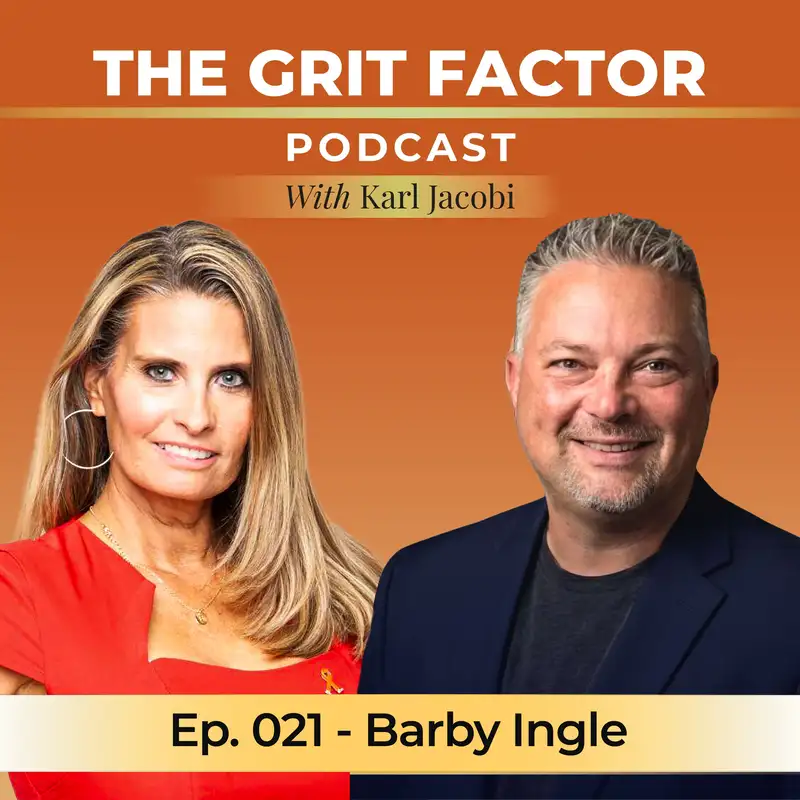
Episode 021: She Lost Everything to a Rare Disease. Then She Wrote the Laws That Could Help You with Barby Ingle
TGFP Audio Ep 21
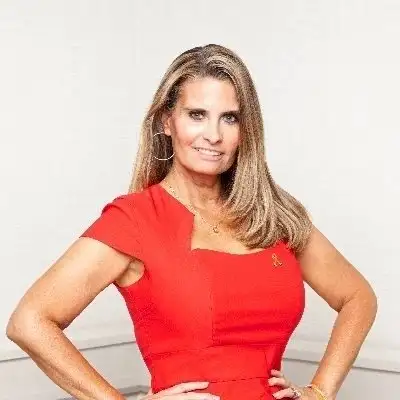
00:00:00 Speaker: Average is the enemy of greatness. Comfort is the enemy of growth. Welcome to the Grit Factor podcast, where we strip away the highlight reel and get into the darkness beneath it. The real stories, the real battles, and the battle plans used to conquer them. I'm your host, Carl Jacobi, combat vet, entrepreneur, resilience and performance coach, keynote speaker, husband and father. I've built, scaled, and exited multiple companies totaling over forty million in revenue. But here's what that highlight reel doesn't show you. Life has been smacking me in the face with a two by four since I was just five years old. Broken home, constant chaos. No playbook. No safety net. Just grit. And if you're anything like me. You know, you've got another level in you, in your business, your career, your faith, your leadership. You're just not sure how to get there. That's exactly why we're here. Be sure to follow me for more great content and check out my website. Success with Karl dot com. Now that's Karl with a K. Now let's get to work. All right. Today I have an amazing guest and I know I say this quite a bit, but today is an absolute no exception at all. This amazing person I have today. She was born in Bangkok, Thailand, born in a military family. Which of course if you've been part of this show at any point in time, you know, I could deeply resonate with the military community. Diagnosed with an early learning disability at just first grade, and her parents had to fight the school district just to get her the right education. She pushed through it and fast forward. She graduated with a Bachelor of Science in Psychology from the George Mason University. So I really got to watch myself probably being analyzed right now. But nonetheless, as she towards the end of that time, she graduated a four point zero GPA, which is obviously just like an accolade by itself, right? Started training in cheerleading and dance at the age of four. Wow. Founded her own training company, got hired by the state of or Washington State University to pilot the first spirit coaching program. Um, took the dance team to the national top ten cheer squad to the top five. Like, how impressive is that? Then of course, we will jam into here shortly. A rare disease just like took it all down. Spent years in wheelchair, saw over one hundred doctors. Just hearing that alone makes me want to choke somebody. Endured numerous surgeries that made it worse. And instead of letting that break her, which is what this show is all about, she came back and persevered in his true testament of grit. So She came became one of the most recognized chronic pain advocates on the planet. Nine books, over forty accolades, president of the International Pain Foundation for Arizona laws that she's personally authored, well over two thousand media features. Like guys, I'm telling you, like we're extremely blessed to have this amazing young lady with us today. And right now she's running for Arizona state representative in her district. Barbara Engel, welcome to the show. I'm so glad to be here, Karl. I'm excited to share. And I also want to thank you for your service and your family's service to our country as well. My parents were, as you said, in the Army and they both passed away now. But my mom's buried with special honors in Arlington. And, uh, our service men and women have a special place in my life, so. Thank you. Yes, ma'am. Thank you. It was worth it. You know, it was worth it. I loved you know, it's that moment where people say thank you for your service. And it's like, for so long, I was like, what do I say? You're welcome. Right? But I don't remember who it was, but programmed me to say it was. It was worth it. It is worth it. Not that it was. It was worth it. And, uh, so thank you, I appreciate that. And, you know, like I said, uh, both of us coming from a military community, I think that's probably, uh, you know, something we can definitely share some common themes on, share some common stories, especially family members, because as a child, you know, especially, you know, being born in Bangkok and spending some time there, you're all over the place. You didn't raise your right hand, right? You didn't say, hey, I've, you know, I'm going to be voluntold you're told where to go, right? Yes. Right. Absolutely. And, and having both of my parents in the military, it there's, there was times where, uh, usually they were sent in different times. My dad would go or my mom would go and so we could stay. But there was times where we had to, uh, have other people watching us or taking care of us and spent a lot of time on base and, and traveling and, and it definitely impacts your life and you're just born into it. So you don't know any different until you grow up and realize that their service and sacrifice give us our freedom and liberty and how important that is. That's true. You're so correct on that. And you just get desensitized to all that, right? I mean, you go to these different places and you make friends and so forth. It just becomes routine. I'm kind of curious. I love to hear your take on this. You know, I, I, when our kids were born, they didn't get the full experience of like moving all the time. But for you, did you find it advantageous for you to make new friends, or was it harder for you to make friends because you were moving around consistently or moving around a lot? Well, I do find it easy to make friends. And I also felt for when new people came into a situation. Mhm. And, um, and knew how they felt. So I wanted to, to make sure that they were seen and heard and brought in. And then getting my degree in psychology, there's five stages forming, storming, norming, performing and adorning. And I know that we have to get through the storming phase, the second phase, the quickest. So I'm very conscious of that. But I was even conscious of it before I knew that there was five stages of, of coming together with new people and networking. So it's part of the grit that I had that I didn't know I had until I was an adult. That's fascinating. That is fascinating. I hope everybody just plugged into that five stages of networking is what I grabbed from that. Right. You know, the psychology from that. I didn't really think of that. And you changed one person in that network and you're starting to go through these stages again. You have to form. You come together, you storm. That's when when you're like, well, I like it this way and I like it that way. And we're yeah, game is locked. You know, you're on the outside. Well, I'm new to the situation. I need to come in so that we can do things together. And so you have to get through that storming phase. And then you, norm, this is this is how it's going to be. And then you perform, you are friends, you do your events together. You get to go into society and be you with this team of other people, your network. And then, and then when you have to move again, you adjourn and you start it all over again. Rinse and repeat. Right. Yes. That's fascinating. I just walked away with the knowledge bomb. Thank you so much for sharing that. I definitely learned that. We even got into the heart of the of the show yet, right? I mean, you're already not dropping knowledge bombs and, and, and, uh, and so forth. So let's get into the meat of this because you do have, you know, we're bound by time. Otherwise you could probably chat for a long time on this, but you do have an incredible story of grit and perseverance, which is what this show is all about, right? So real quick, you know, this take me back to before any of what we talked about or what I briefly highlighted. You're at Washington State, right? Life at the surface would appear great. Yeah. Right. It was amazing coaching. Yeah. Yeah. D1 school. Right. Uh, so walk us through that. You're in your element point, you know, paint me that picture. What would life look like for you in a day to day environment to give us a highlight reel? Life was grand. I was coaching at Washington State University in the athletic department. We constantly we cheered and danced at every single sport. So not only were we building a program in the midst of it, but we were cheering people to and through their own challenges and their own games and wins and losses. And we even went to swimming, golf, cross country. We'd be like popping out behind trees while people are running by. Go, team, know, and I can actually see that. Like, what are we doing? But we wanted to cheer on the entire athletic department. That was our number one goal. That's awesome. But I also wanted to build competitive teams. I came from competitive cheerleading and sideline cheerleading. And I also, uh, performed artistically in dance, multiple types of dance, tap ballet, modern. And so I wanted my team members to have that same experience because competition is, is also where grit comes from. I mean, there's so many things in life you can gain grit and perseverance and patience and so true. And so I wanted them to have those same life skills when they became adults. I know they were eighteen. I'm coaching college level, but I tried to make it as fun as I could if I could go back. I used to schedule fun into the agenda, I would, I would be like, get off the bus. You have an hour for fun and and they would be like, you can't, you can't schedule fun. And I was like, yeah, well, you need to find the happiness in the fact that we get to go and hear people to and through what they're facing and we get to lead the crowd. I got to coach at two Rose bowls and a sun bowl, and there's less than one hundred people. Um, I think they've had fifty some Rose bowls now. So okay, a little bit more than one hundred people at this point. But back then it was less than one hundred, a few, a few at a Rose Bowl. Um, and I got to do it twice. So I had some amazing life experiences. And then I also owned my, my own cheer and dance training company on top of that. So that was fun being a business owner and, and teaching people from all ages, from elementary school all the way through college. It was very fascinating. That's incredible. I mean, if you're watching or listening, just imagine this life that, uh, Barbie just illustrated here, right? Like that is like the ultimate highlight reel. You're at a D1 school, you're, you're living the life. You're not only are you articulating this right, but I can hear and feel your passion as you're talking through this, right? Your true enjoyment, like life was perfect. Yeah. Right. And I could feel that. And so just imagine, you know, if, if you can, guys, this, you know, this life that she's pinning for you, but ultimately that was that that's not been her life the entire time, right? Correct. You know, so you built this amazing or you had that amazing season talk us through, you know, what was, what was that, that ultimate like, uh, you know, moment where your heart sank and you got some news, you know, walk us into that moment where life changed for you. I say eight seconds changed my life. Ooh, eight seconds. Eight seconds changed my life. I went from the top of the world living my dreams. And. And it wasn't just living like being a human being. I was a human doing. And I was creating and, and building my life. And so in first grade, my, my principal told me, you'll never graduate high school. Don't think about college. That was first grade. And then I graduated in college in four years. I was the first of my siblings. We all graduated college, but I did it in four years. Um, and that's awesome. And, um, you know, I, I had to learn how to learn and it was different than everybody else around me. But because I had to go through that, I learned that there's a million ways to do something. So don't get stuck on, on a be ready for b c e z double a, be ready for whatever is coming and adapt and change. Learn how to learn. And so I was in a minor car accident. And they told me I had whiplash and I'd be better in three or four days. And here we are twenty five years later. And that's a quick few days. It was like, yeah, it's just flown by. Um, and I went from being at the top of my game and coaching and choreography. I was named top five choreographer that same year. And um, to being told there's something wrong, but we don't know what it is. And seeing forty two doctors moving, not being able to to coach anymore. Losing my business, going from the top of the world down to food stamps and needing help. And, uh, losing my ability to drive. And, um, after forty two doctors, the forty third doctor got it correct. And, um, tested me for rare disease. At that time, it was called reflex sympathetic dystrophy. And I think that's the best name for it. Reflexes. Anything in your body that's automatic goes haywire. Sympathetic is your nervous system. I feel like I'm on fire all the time. And dystrophy is loss of muscle and bone. So I went from being wide awake and working out six to seven days a week to sleeping twenty to twenty three hours a day. I would go to practice because I kept trying to coach. I kept trying to keep my business going. And, um, and I would go to, to practice and I would lay on the ground. I physically couldn't sit up. I was in so much pain, I would lay, I would lay down, I would go back to my office and lock the door and go to sleep on my desk. And when someone would knock, I would wake up and pretend like I was awake and working the whole time. But I was making mistakes and missing things. And I a very scheduled individual. And I was very on top of everything with all of those different events that we were responsible for being at, I had stopped being able to produce the calendar for the team. Um, I couldn't remember what what the team members were supposed to be wearing and, and clarifying, you know, which uniform to wear because we had multiple uniforms and I had a hard time recognizing and realizing, but then the team doctor said, hey, there's something wrong. We don't know how to fix you. We are, uh, athletic doctors. We think you need to get better care. And I said, if you could go anywhere in the world, where would you go? And they sent me to Arizona. So I ended up stopped coaching, lost my business, came to Arizona to, uh, get the medical care I needed. Still saw more providers. Finally, the forty third doctor figured it out. Reflex. Sympathetic dystrophy. Now it's known as algoneurodystrophy. And, um, it's it's. It was already in me. And genetically, they can see it, although they're there's still research and things that need to be done. But, um, they keep changing the name because it's considered a syndrome, which is a collection of symptoms versus a disease, which means that insurance covers it and pays for it and you get the care or better care, uh, that than, than what I was able to do. However, the doctor was here in Arizona. He just wasn't the first doctor I saw here in Arizona. Um, and I that's kind of frustrating. Yeah. So that was two thousand and two, two thousand and nine. I went into the hospital in a wheelchair in Philadelphia for special treatment in ICU. And seven days later I was able to walk out. It looked funny. I walked like a teeter totter walking down the hall because my legs were weak. But, um, I can imagine my husband and my sister videotaped it and, um, it's on YouTube if you want to go find it, but yeah, I'll put it up there actually. Yeah, it's, it's literally a miracle. I'm like, I have shoes on my feet, I have shoes on. You get excited about the little things. My husband came home from work and I, and I was doing laundry and he was like, are you okay? I'm like, yes, it's kind of like physical therapy, taking the clothes from the washing machine into the dryer. And, and, um, it really was an experience. And my husband, I met him after I moved to Arizona and, um, he was my new neighbor. And again, for me, it was God's hand in everything that was happening. And I needed to go through the challenges that I was going through so that I could learn the life lessons that I needed to. So now I can help other people. And, um, and so he, he was one of the first people I met here in Arizona. And, um, I was paying him to drive me to doctor appointments and all kinds of, you know, physical therapy and surgeries. And in the process, we fell in love. And now my doctor says, how does it feel to have a wife that's getting younger instead of older? So we've done a lot together real quick before we keep rolling. Maybe life hit you hard. Business fell apart. Career isn't working out. Relationship ended, health took a dive. And now you're standing in the rubble trying to figure out what the next move even looks like. Or maybe nothing blew up at all on paper. You're winning. Sure, but on the inside, something's off. If you're not in crisis, you're at a crossroads. And the playbook that built the life you have is not the playbook that builds the one you want. Either way, you're stuck. Not broken. Stuck between who you were and who you're becoming. Most self-help just piles more weight on load you're already carrying. I do not want to do that. I put together a free video series called The Grit Code Exposed, and I want to invite you to check it out. Seven short videos. That's it. The five laws that change everything for me. In every client I coach, the same five that every person who's ever come back from the fire has walked through where they had a name for it or not. No fluff, no ninety minute webinar, no bait. Just the free video series. You can start it tonight, grab it at grit code exposed dot com one more time. Grit code exposed dot com it's free. You don't need any more hustle. You need the next version. And this is how you find it. Check it out. See if it speaks to you. And if it does, I'll see you inside. All right. Let's get back to the conversation. I can imagine. How long have you guys been married? We were married in two thousand and seven, but I met him in two thousand and three. Okay, nice. So almost twenty or over twenty, twenty years you guys have been together? Yes. You know, and, uh, math isn't math and but, you know, twenty years, nineteen years. Yeah, yeah. So yeah. Wow. That's incredible. You, you, you illustrate a quite a few teaching point. Sarah. I hope the audience grabs into, I know I definitely, uh, pulled some, you know, you mentioned that you had to go with these lessons, these through these adversities so that you can impact other people, right? And ultimately, you already answered the question I was going to ask you. Um, through you answered through your story, which again, I appreciate you sharing this. I'm often reminded by my own people and my my coaches and people in my corner. Anytime I go through something, the reminder to ask a few key questions. What can I learn from this? What is it that guy's trying to teach me in that moment, in that season or what have you? And it may not be the lesson you want to learn, right? Um, if in fact, I've learned, uh, which sounds like you could agree on this, that, uh, it's, uh, it's never been a situation I wanted, but it was necessary. Right? And with that in mind, that puts this perfectly, you know, uh, I don't know if you follow Emilyt for his content. I love what he, uh, you know, a lot of content. He shares almost every bit of content he shares. But I'll paraphrase when he, when I say this, but basically, you are the perfect person to impact the people that you used to be, right? The life you've lived, the stories you've lived, the things that you've been through. Well, now you can impact the people who are following in your same steps because they didn't. You didn't have you had to figure all this stuff out, right? You had to get you had to get it's learning a new language, the language of healthcare. And it's literally like learning a new language. And I remember when I was four, I saw cheerleaders for the first time in my life and it was at a soccer game. It was the diplomats soccer team. And, um, just outside of Washington, D.C., D.C., diplomats. And I said, I want to do that the rest of my life. I saw how they were impacting the crowd. And, and my dad said, no, no, honey, you can't do that. Um, you're not going to be a cheerleader the rest of your life. And I said, well, God wants me to be. And at four, I felt that that that's what God wanted me to be. And I thought God wanted me to be a cheerleader, like the ones on the field that are performing and leading the crowd. But that's not what God wanted for me. God wanted me to be a cheerleader, and I was a cheerleader for a while, and that was a blessing. And no one can take those experiences away from me. But developing a rare disease showed me through God that I will always be a cheerleader. But I had to turn those talents and skills that I had in physical cheerleading into mental cheerleading. And now I'm able to cheer on myself and others, too. And through whatever challenges that we face. And so good. But it was the thing I knew I like from like, one of my first conscious thoughts that I can remember was I'm supposed to be a cheerleader. And so you can't take the cheerleader out of me even if you physically take the skill out of me. I love it. I love it. Can't take it out of me. Nope. Nope. I'm gonna go out. Yep. I love that. I love the differentiation there between the physical cheerleading that you know, that you felt was in your heart at fourteen years old when God spoke to you. Yeah. Right. Four years old. Like, I don't even remember what I was doing at four years old, to be honest. Um, probably doing boy boy things, I don't know. Yeah. I don't remember what I did yesterday. Who am I fooling? But. But you pivoted from being a physical cheerleader to a mental cheerleader. And, you know, this may, you know, spark some controversy, but I don't care. But in my opinion, and I'd love to hear your thoughts on it, I think that's probably, if not more important. It just is equally important, right? To be more important. And, and I feel like, God, I noticed it through this process. God gives me pebbles and if I have pebbles, I know where to go. I know I'm on the right path. Then if I, if I decide to do something and I don't drink or smoke or any, any of those kind of things, but I just mean like just a daily life choice. I chose, I chose red over green and it's the wrong choice to, to be in God's light. He'll hit me with a rock and, and if I'm not paying attention, he will put a boulder in my life. And I see my eight second car accident as the boulder in my life. I was not living for for God, for, for his light and his purpose that he had for me. I was living what I thought was my best life in this boulder came into my path, and I had to realize, just like I did with my learning disability, do I go under or over? Around, through? How do I get back to the pebbles on the path, showing me the right way to go and so, so good. When I pay attention, I see. Oh, that's rocks. They're hurting. I don't want to get a boulder. I need to readjust and reevaluate what I'm doing, where I'm going and what my goals are and watch for that. And that's kind of how God talks to me. He doesn't talk in clear voice. He talks in in this is the path. It's not always easy. It's not always the easy path, but you're still on the pebbles when the rocks start flying, pay attention sooner so that you can get back onto the correct path. And there's lots of paths. There's lots of choices. Like there's a through double A on how you can accomplish something. Find the one that is the right path for you, even if it's hard. Agree. Wow. So good. This conversation is so good. Uh, great amount of great lessons shared there, especially the rocks versus the boulders. I could definitely test where I've had some boulders laying in my life. You know, it was like God's like, all right, listen up, boy. I've allowed you to live this life that you thought was good. Yes. However, if you just listen to me and trust me. I can tell you there's a much better fulfilling life ahead of you. You just need to lean in. You are made for more. We're all made for more. One of the best lessons that I learned was I went through counseling after my accident, having a rare disease and losing my whole life that I had worked very hard to build and grow. And one of the best lessons I learned was from a psychiatrist, and he had me go home and do this exercise. And I think it would be great for your listeners to also do get a piece of paper and start writing down your I ams. I am brave, I am smart. I had all of my life tied into being a physical cheerleader and losing that I felt like I lost all of me. But all of me was still here. Everything that I am is not everything that I do. And seeing that and separating that and and God talks about the. I am in the Bible quite often and he is the great I am and we are made in his image. We need to tune into what our I ams are. Those are our gifts and talents on loan from God and we got to take those back and give them the the light that they deserve. And you know, he says, love your neighbor as you love yourself. Well, are you not treating yourself well? Because that's something that God asks us to do. You come first and then you take those talents and gifts and help other people. And doing that I am project. At first I couldn't. I was so depressed and sad and full of anxiety that I had lost everything in life and or felt like I lost everything that I had to find my I ams. And he said, you know, your first one is your spiritual. And yeah, that was the first one I put on to my list. My eye. My psychiatrist called a couple of days before I was supposed to come back and see him, and he said, how's the list going? I started crying, I have nothing, I am nothing like, oh, Barbie, you are so much. And he said, you're spiritual. So start with that and then build a foundation based on that. And by the time I got to his office, I had twenty five things that I am. And now I have a list of over one hundred and fifty items. And I keep my list going and I keep it here on my desk so that I can remind myself if I'm having that challenging moment that I am. More than that, God made me for more and I can do more. So start your I am list. So good and take that forward. Wow, I I'm almost speechless here. This has been such a good conversation. Barbie. It I mean, I've got goosebumps, especially as you're talking about I am statements and identity. You raise a very, very important point in my opinion, about identity. Because when I heard you say, correct me if I'm wrong, is you tied your identity to that season, right? So when the rug was pulled out from underneath you, right. Everything that you knew at that point in time, cheerleading just. Yeah, yeah. Everything gone. I mean, my, I, I, uh, had to leave my network and moved to another state to get care. I yeah, I met my neighbor, but I was paying him to help drive me to doctor's appointments and things. The Uber didn't exist. And so I, in my worst moments of life, I had to rebuild a network. I had to ask for help and, and go on food stamps for six months and literally pick up my life and, and, um, I would call my dad and in the first few months and be crying and saying, I can't dance anymore. And he would say, you can dance. You just dance in your heart instead of with your body. And he said, I want you to dance every single day. And, and so I had a few people, my family was always there, but other friends that were there my, my whole life that I thought were my network were gone. They didn't understand a rare disease. They didn't understand what I was going through and why I was sleeping for, you know, twenty something hours a day and why I couldn't find the motivation that I had had for my whole life. And I had to dig down deep and find patience and grit and perseverance and make sure that I took, loved myself first and built the world around me and the network around me, back as I could, and as I learned lessons that I was supposed to be teaching these lessons to other people. So good. Yeah, I mean, I this has been such a great conversation. You know, thank you for for sharing this story. Thank you for sharing these lessons. And, uh, these are all things that we struggle with. I know I personally struggle with it for, for a long time, I just didn't know it as an identity. Uh, we'll call it a crisis, right? And indentity crisis, right. You know, there was a, a season of life as a parent, as a husband, as an entrepreneur. I was in a space for twenty five years and God's like, now it's time for you to listen to me. Now listen to me, boy. Um, you know, it's like, okay, um, and so change your life. And yeah, really, it was changing every day. And a lot of people are afraid of change. I realize change is going to happen. Let's make the best of each moment. And I also stopped thinking about like a twenty four hour clock. I do follow. I am a time punctual person. But the thing that I'm doing, I see as a moment. And how can I make this moment? Even if it's a bad moment? Or I'm getting bad health news. And, oh, your gallbladder died today. And now you got to get rushed into emergency surgery. Whatever it is that I'm facing, I take it as the moment. And how can I make this moment be the best moment, no matter if it's a good moment or a bad moment. And that's all. That's all you have, right? It is. And that's what all humans go through. Yeah. It's just perspective as to how we we process through it. Yes. It is a perspective issue. I agree wholeheartedly. That's that's been a hard lesson I have to remind myself of. You know, it is a perspective. You know, all the things that we go through. It is to it is for your benefit. Um, you may not enjoy it, right? You may not enjoy the lesson that's being brought to you, but, um, I'm of the belief, and it sounds like you would agree that we have to go through these trials and tribulations, uh, to grow. And somehow we as a society, we've, we've normalized or not necessarily normalized, demonized, uh, adversity, you know, failure, all these different things. So we somehow shunned it on social media. And so that's all we see now is look at my house, look at my career, look at my business, look at my relationships, look at my car. If I didn't see that already, and we've stopped normalizing adversity, stopped normalizing failure. And I hate I hate to use that word f word failure because it's not a failure, right? It's just a misstep. You know? Right. It's you. You went off of the path that that was meant for you. How do you get back to it? But you have a chance. As long as you're on earth, you have a chance to correct and to move forward. And I constantly want to move forward and do what needs to be done, so that the next moment can be the best that it can be, even in the hardest of times. But I and you talked about, um, demonizing, I've had people I'm running, as you said earlier, I'm running for office. And I had someone say, well, hearing your story, it sounds like God is just spiting you. Do you ever feel like God is just spiting you? And I was like, no, I never thought God is spiting me. I'm going through things so that I can be the best I can be here on earth. And in the process, I'm connected to all the other human beings that want to go forward and move forward and do things. And we're not perfect. We we have imperfections, every single one of us. So stop trying to be perfect and start living your best life no matter what you're facing. It's not a spite from God. It's a challenge that you have to go through. So you so you have a lesson learned so that you can be a better human doing agree. Wouldn't you actually consider it? Wouldn't you? Wouldn't it be fair to say I'd love to hear your thoughts on this? It would actually be considered as a blessing, right? To to be a gift. Yes. I mean, I view it as that, you know, when you're a level nine or level ten and you're passing out and you're vomiting and you can't constantly. It's not a. You don't see it as a blessing, but there is a there's something that will come out of it that is a blessing. There is a reason for everything that we go through, and we don't always see it at the moment, at the time. But when you look back, you go, oh my goodness, I would not be here if I did not have that boulder or those rock. And so it is a blessing. You just don't always see it in the moment because you have to go through it. And so you have to take that time to, uh, yes, get the tools in your life. Agree, agree. And two, you highlighted this, but I want to bring this out to the surface. It's also all the other Barbies and all the other corals and so forth, that are five paces behind you or ten paces behind you that needs your lessons learned, needs your inspiration and motivation. And you know, the little cheerleader, right? They need that cheerleader to push them on, to give them, because your word may be the very word that saves them. Absolutely. Um, it may be that very word that saves her life. If you look at it like a mountain and you're climbing up the mountain and you go into like a little valley of, of a peak, um, you're still looking at the top and you're like, I want to get up there. Oh, look, there's castle up there. I want to be where Carl is. Well, Carl's in the valley in his world. He's having a challenge in his life. But you're looking up and going. I want to be up there. I learned that we're all climbing this mountain, and there's enough room on the mountain for all of us, and we have to stop going. I want to be where Carl is and keep moving forward so that one day you're going to look back and go, oh, I remember when I was down there and how hard it was, let me give a hand up to somebody. Let me help propel other another person forward. And it could be sharing your story. It could be you have a talent and, and it brings somebody a smile, even open. Holding a door open for somebody else could be the thing that they needed. They were feeling in their life that they're lower on the mountain. They're looking at you and you go, hey, let me hold the door open for you. The other day I was at an event and someone said, hey, can you take a picture of me and my friend? And I said, sure. And I grabbed the camera and another lady goes, she's a candidate. Why did you ask her to take a picture of you? As if I was anything different, more or special because I was it. I'm like, I take pictures too. Everybody needs help sometimes, right? It was a simple thing They wanted to document this moment. I was standing nearby. They said, can you help? Yes I can. It's not about somebody above somebody else. It's where are you? On your mountain. And how are you going to adjust so that you can get out of that valley and get to the next peak without saying somebody else down, right? I mean, so, so good. I, I, I agree wholeheartedly agree. This has been such a great conversation. I know I keep saying it, but it really has been a great conversation because these are all the points that we struggle with as society, right? Um, and nobody knows the battles, uh, that people deal with. Right? Um, your battles, my battles and all the listeners right now, we're all struggling with something we don't see, right? You know, and that random act of kindness opening a door or, you know, you know, making a. Yes, exactly. It's literally getting ready to spit that out, uh, smile or, you know, make a comment about how beautiful they are or their hair or whatever. Um, you know, and I just be careful because some people take that the wrong way. But, you know, I think it's important, especially say in your network, you have somebody who is a background person, uh, maybe a wallflower they've been called or, um, they, they are introverted. They don't speak up a lot. And one day they show up to, to an event and, um, they wore their hair a different way or they, uh, got, oh, I have not seen those shoes before. I love your cowboy boots. Those are really unique. Uh, yeah, that's really cool. That right there can help a person far greater than, oh, you misspelled this word or you made this mistake. Well, they're they're a wallflower. Give them something to bloom for. Yeah. Oh, I like that, I like that. Give them, give them something to bloom for, For sure. Well, speaking of blooming, I would like to to make a pivot here because it sounds like you turned your your pain and things you had to go through what we've been talking about, right? And then use that as fuel for the mission that you're on, right? Like you've been on this mission for some time now. Yeah. Uh, and I'm paraphrasing this just to fit the format of the show or this episode, but I'd love to hear this mission that you're on because it's really seemed like you've taken this, this, this path that you've been on, this mental, uh, cheerleading path. And you, you channeled it into something, you know, that you're very, very passionate. So I would just love to just hear more about this. What are you passionate about and what's been your fuel lately? Well, my fuel is that I have the knowledge and I know I can make a difference and I'm supposed to share it. And I have some people say, oh, you share so much, like keep some stuff for yourself. I'm like, but this is how we're all going to, to rise. And, um, you know, the people who want the help are I can give them a hand up. So I do, um, it's really two passions and they're kind of colliding. So my passion is to improve healthcare and I would like individualized healthcare. I don't want in medical school, doctors are taught if it sounds like a horse and it looks like a horse, put it in the pasture with the horses. And um, I am different. I want individualized care. I do not want universal health care. I do not want everybody gets the same thing. Even, you know, my brother has the same rare disease that I have, and he's had a different journey than I have. And, um, we have different treatment needs and different, um, things that work for us each, each human being, even if you have the same disease, even if you have similar genetics, you have to find what is individually best for you. And so I've been talking about individualizing healthcare. And, um, and I was talking about before I even knew what it was, but, but that's my passion. And out of that, I started working on legislation in two thousand and nine. I got in my wheelchair, I was asked to testify on the state level for a bill that was going through. And I just continued to do that. And I've worked on over a hundred bills in thirty six states and federally, as well as with the Department of Defense for our veterans. And that's my passion. And I have authored in twenty twenty two, I got the ability or the, um, the ask from a senator to write a bill, which I'd never done before. I was a whole new experience. I had to learn how to do it. Um, but I, I got to write legislation and it got passed into law. And then my second one got passed into law and my third one got passed into law. My fourth one was a team effort. Now I know how to do it. I started teaching legislative classes to other people. This is how you can make a difference in legislation. And, um, and really the two worlds collided and it comes back to individualized care and sharing my story of how I was able to learn the language of healthcare, how healthcare is working as designed very poorly. And we have to make big changes, but that's hard to do, especially in society. So, and I also want to make sure that people are not forsaken in the process of bringing in a new system. And that happens a lot even when you make incremental changes. I see, I see people say, oh, we need transparency. And then the insurance companies find a workaround and it's no longer transparent. Really. It's a delaying care tactic. Yeah, so that the insurance company doesn't have to pay as much money. So I see those those areas and have researched and found ways to correct them. And now I'm seeing, you know, everything law enforcement and border security and, uh, civic rights and duties and the Constitution, they all are on that same pack. The steps to get a bill for health are the same steps that you need in education. And so now I've picked up and started working on legislation for education and pro-life and, and other areas that are nice also need help. But it's all back to my journey and finding my arms. That's, that's so amazing. Thanks for, for sharing your journey with us and enlightening. I'm with you on the personal healthcare. Uh, in fact, all of this. To be honest with you especially, I am not a horse. Well, those who are watching on YouTube should. That should be clearly obvious, right? Um, you know those that's on audio. Uh, I'll be a witness. She's definitely not a horse. Um, thank you, but, uh, I'm gonna have to start. It's not bad to be a horse. I. I just want to be treated with the things that I need. And it's. It's not the same as everybody else, even if they have the same. I agree, I agree wholeheartedly. And this is where I was trying to lead into is I, I think this is very important for us to take seriously. And I'm saying this because, you know, I, I'm reaching a level in my life where I'm being a lot more cognizant about my health. I've been navigating some health struggles recently. You know, it's stuff we don't think about unless it's life threatening, but it's stuff we don't think about in our twenties and even in our thirties. But beyond that, you know, we start, our bodies start to deteriorate, and you start to really need the medical system and so forth, whether it's heart issues or it's cancer or it's, you know, things that you've been through, right? So that's a very valid point. So let me ask you, how can people be more involved, uh, in this, right? Like, you know, here's a few moments to, to educate some people. What do they, what do they do? I mean, talk to these individuals. The, the first step is just do something, whether it's a text message or a phone call, whether it's an email, whether it's going on social media and sharing your challenge that you've been faced with and how you're going to overcome it. Or ask people, hey, I have this challenge. What do you suggest? You don't have to take all their suggestions. Not all suggestions are good. Not even all of mine. Take, take and choose what is best for you and work it into your life so that you can be the best you you can be. Um, and I, and I like to say, um, there's great reason for hope because there's help. All you have to do is reach out and seek it. It's literally when you share, it helps other people understand that there's a challenge that is being faced and you're not the only one facing it. And how can we come up with ways to overcome those challenges? And so that's the first thing is when I first got asked to to give my testimony at the state House, I didn't know how my story was going to impact anybody. I didn't know that legislators were going to care. They they did care. And once you make that contact, have that person be a part of your network every month or every six months or whenever you can reach back out and say, hey, guess what? This is what's going on in my life and give them an update so that they can see where it's gotten better. It's gotten worse. You know what? This challenge came up and, in the hospitals are making me do um. Prior authorizations over and over and over again when it, when the state law says it's supposed to be once a year, what can we do about it? And asking, you know, hey, I have this challenge. What can be done about it? Take those steps and start sharing. And then as you learn, you can get more involved than you can get to the point where, you know, two thousand and nine, I did my first test meeting, twenty twenty two, I wrote my first bill. It was a long process in between, and I had many other challenges in all aspects of life that come up during this time. So, you know, looking at that and realizing and sharing, talking and communicating both directions and figuring out what is the best for me, take that water it, grow it, and then go to the next step. And if you're stuck on a step, realize that you can break it down into smaller parts. Get one thing I do, I, I do all the easy stuff first, and then there's only a few hard parts left. But because I have all this other stuff done, it clears the way to how to accomplish those few hard pieces that were part of the overall project. And so that's, you know, a way that I found that helps me accomplish the project instead of procrastinating and waiting till the end, do the parts I'm right there with you as, as you can get them done real quick before you go. If you're still with me this deep into the episode, something in it hits you. Maybe it was the guest, maybe it was one line. Either way, you're still here. And that feeling in your chest right now, that's the signal. Most people get a signal like that and do absolutely nothing with it. They close the app. Life rushes back in. The moment's gone. Six months later, there are the exact same spot. I don't want that for you. So I put something together. I want to invite you to check out a free video series called The Grit Code Exposed seven Short videos. The five laws. I walk every client through. The same ones that rebuilt me when everything else fell apart. And if you listen closely today, you heard them running underneath the entire conversation because everyone who's come back from the fire walks through these five laws. Some find them on their own, some get help, but the laws don't change. Free video series. You can start it tonight. No fluff, no ninety minute webinar. Just the series. If you're going to do something with what you heard today, do this before life talks you out of it. Go to grit code exposed dot com one more time grit code exposed dot com. And hey, before I let you go, thank you for riding with me this long. It means a lot more than you know. Thank you. Eat the frogs first. Essentially. Right. Yeah. And then go after the bear. There you go. Yep. Oh, this has been so good. Oh my gosh. You know, I think healthcare and this is going to be controversial I'm sure. But I don't care. But um, you know, healthcare I think is something we really need to put a lot of emphasis on. Um, so, you know, those of you that you're in your twenties, thirties, or even if you're forties and you haven't really still pay attention, still try to do something, support, uh, the cause here because, you know, it might not be you, but it's going to be your grandparents. It's going to be another loved one. It's going to be a friend that's going to be going through the type of struggles you've been through. Barbie. And if we're not paying attention, if we're just letting things, you know, status quo, right? You know this, you know, let them do their thing. Um, it's never going to change. You know, it's either you or somebody, you know, that is going through it. And a lot of times, as you said earlier, it's invisible. We don't see the challenges that people are facing. Uh, I had an event a couple of weeks ago and I was out and it was at our home. I was out in the yard setting up decorations, and I came into the house and collapsed. And I didn't know what was wrong. I didn't even know if I was going to be able to pick myself back up, to go out to the event and be a part of it. I thought, oh my goodness, I'm going to beat my right side of my body locked up. And I, I was having heart palpitations. And, um, and, you know, I didn't know if I was going to be able to do it. And I ended up going back out and, and making it through the event and collapsing, collapsing at the end. I went to the heart doctor afterwards and I had heat exhaustion, but at the time I didn't know it was heat exhaustion. Yeah, I just know I was having a major challenge, but yeah, sure. It literally you you push and push and push and push. And especially when you're younger, you feel like I have the rest of my life ahead of me. But every moment is a gift and we don't know when that's going to end. So one hundred percent. So make sure that you are taking care of yourself and your mindful so that when these challenges happen, you're better prepared for them. And I wish, you know, talking about education earlier in healthcare, I wish that somebody had taught me in elementary school or middle school about actual health, how to talk to a doctor, what you can expect at a doctor appointment, the language of medical so that not necessarily the nitty gritty details of in surgery, they're going to put this tube down your throat and help you sleep. I don't want to know about that. I don't even want I right. I know I'm right there with you. I'm like, you don't need to explain. I'll be asleep and I will never know exactly. People want to know that nitty gritty detail. Ask, don't be afraid to ask questions. And, and, um, but as as a child, I would have liked to know, hey, you're, you're going to the doctor's office and you have a really bad flu. And so instead of getting a pill that we take at home, we're going to put you in the hospital and they're going to put an IV on your arm. And this is what it means. It doesn't really hurt if there's a little pinch at first. And, and your IV might, you know, infiltrate, like just know a few things of you're allowed to ask a person in a white coat questions. They are practicing medicine. They are also a child of God. They do not know everything. You have responsibilities in that situation. I should have learned that. We should learn that at a younger age. And I agree. I yeah, I think that's part of Basic Life one hundred and one. Right? Uh, you know, learning how to navigate the healthcare system, learn how to navigate, you know, uh, healthcare needs. And these are all valid points. I, I, I agree. Looking back, you know, of course, this is a couple months ago. You know, I mean, this is back when home was still a thing, right? I had they didn't teach us how to talk to a doctor. They taught you the doctor everything. And that's why you're going to the expert? Yep. Yeah, exactly. And we just have this perception. We can't question the experts, right? We can't question the white coats. Yes, but. But we have to. And there should be nothing about and nothing about us without us. You have to be engaged in your healthcare and in life. And you're the one who lives with yourself twenty four hours a day. The medical provider you're in front of, they don't know the challenges that you face at home. You know, all of a sudden you're choking on food. You don't know why. Well, maybe the nerves in your throat aren't working or firing correctly. It might not. You have Gerd or some other challenge. It could be something else. So that's why you go to the medical provider to to help you live your best, best life when you're outside of their office. But typically they'll give you some homework just like they do in school. You got to do your homework. You have to be responsible for your own well-being, and you have to love yourself as you love others. So make sure that you're doing that. Yeah, so, so agree. That's a valid point there. Love yourself as you love others because we oftentimes give other people the oxygen mask first before we put our own right. Yes. Um, I, I hear that so many times in, in presentations and talks every night you go on, they're like, put your own oxygen on first. It's not being selfish. You cannot help somebody else if you don't take care of yourself first. You want to be able to help others to your fullest, put your own oxygen on, do and find the tools and make the tools. Be a creator. Find the things that you need in your life to live your best life so that you can help other people live their best lives. And you all all have different talents and gifts. So don't think you're going to be perfect in every area. Turn to other people and get that help when you need it, but be responsible for yourself in that process. Love it, love it. Yes, absolutely. Wholeheartedly. Strive for progression, not perfection. Yes. You know, but, uh, well, fast forward, you know, because our time is unfortunately come to a close on this on this episode, but you know, you're running the International Pain Foundation. I want to make sure that is put out there and plugged in, you know, into this episode. You've got your own podcast, the Barbie zone podcast. Um, you're also running for, you know, Arizona state representative for district seven. Yes, I saying that correctly. Correct. Right. So for those that are listening to you right now, Like this person is like, oh my gosh, you're speaking my language or they just want to support you in this race or the things that you're doing. How can they connect with you? What's the best place where they can connect with you? Well, if you're facing a health challenge, I would go to international dot org. We have projects on education awareness, social events and access to care. So international dot org is a great resource. There's lots of tools, tricks, tips, things that you can use. And please do. And then if you want to connect with me personally, you can go to Barbie dot com and find out about me personally as well as my campaign and, uh, support me through sharing on social media. My name is my social media. Barbie Engel and you can find me on Facebook, Instagram, LinkedIn, YouTube and X. And I would be happy to connect with you. And if you have a challenge, please feel free to reach out and, uh, see what I can do to help. Awesome. Thank you so much. Barbie. I'll be definitely be dropping all of this in the show notes, your socials, your, your website and your in your, of course, your, your name too. Um, especially spelling it correctly because you know, Barbie can easily spell misspell, but, uh, thank you for sharing that. As we wrap up, you know, we've got some, a couple of rapid fire questions, a couple of which I've kind of prepared you for already. Um, in this season that you're, that you're, that you're in right now, especially running for public office and things that you've been doing, your life is a true story too, like the definition of grit, right? But in this season, how do you personalize or how do you personalize personally define grit in this time of life that you're in right now? Grit is perseverance. It's overcoming the challenges. And it might take you some time. So have patience in yourself as you're overcoming your grit and, um, or building your own grit. Taking it away from, from others. Really focus on facts and make sure that you're checking if this doesn't seem right, that you're, you're balancing that with what's reality, what's real? Because reality isn't always real. Look at the Kardashians and other shows they take. They've seen six or seven times. Uh, it's it's what the producers want to get. It's the message coming across. So really take, take real and find the facts in it and move forward with the facts and continue to keep moving forward through perseverance and patience in yourself and others. Love it. Yes, facts, especially nowadays, there are so many quote unquote facts that's being spread on social media. It's not even funny. Uh, and I'm sure a lot of this stuff, I'm sure you and I can chuckle on a lot of these. Is that real? Let me go. Let me go to a place where I can find it. And then let me go to a second place so I can verify what I found to be a fact. Exactly. Exactly. Uh, so. In your while you're in the trenches, right? You're in the thick of it and you're just, you're dealing with a moment or, or, you know, you're just dealing with, yeah, you're in the trenches, right? You're trying to fight your way through what is a quote or directive or something you have heard that you champion yourself with in the to, to go through those trenches. Hope is true. Oh, hope is true. Hope is true. Hope is a fact. And you know, hope can people could use it in a negative way. You have too much hope. Well, hope is what gets me through. And even the smallest amount of hope can give you the spark to light the fire, to show you the way to to bring you to and through whatever you're facing. So at at all costs. Hope. Hope is your oxygen. You have to have hope to live. You have to have water to live. Yeah. You hope is the thing that gets you through and hope is true. So hold on to that as you're facing those challenges. So, so good. Hope is true. I love that you you need to make your campaign slogan, if you haven't already, put down your shirt. Song that my husband and I wrote called Hope is True and Nice. We have a music video that goes along with it that shows the trials that people go through and finding their hope again and defeating the demons, the monsters, and and moving forward to the next chapter in life, the next phase in life. And, um, so people can check out Hope it's True on YouTube or at hope history.org and, um, my campaign slogan is elephants, not rhinos, elephants, rhinos. I did, I did some influencer work for lions, not sheep. And when I was coming up. Okay, I know Sean. Yep. Yes. And so, um, and I love that. And people say, what is that? What is lions not sheep mean? I said, be a leader, not a follower. But it's also spiritual, but it's also political, but it's also whatever, it resonates with you. Whatever you want it to be. Yeah. And when I was coming up with my campaign slogan, um, my husband said, let's stick with animals and, um, let's be elephants, not rhinos. We want to be strong and stand in our courage and not be forgetful and, uh, help people. Help people. Yeah. And so I am an elephant, not a rhino. I tell you, this is my platform and I stand on it. And you can expect to see that in, in me and through me, through my actions. So that's my campaign slogan. Awesome. Thank you so much for sharing that. I, uh, happy to have, you know, help expose some, some, uh, some light in that campaign because I definitely want to help support your message and support your platform and everything that you're about. Uh, and as well as sharing your story and let all the Barbies out there that are here in your story, uh, that need to hear this, right? So, all right, last question is a two part and we'll, we'll close this episode because I know you've got to run. I've got to run, but this last one's a two part. I'll ask the first part first because I usually or the last part first because usually forget. Okay. Um, what would you love to ask my next guest? I always love to give the opportunity for my guest to ask my future guests a question they would love to ask. I would ask, what is your why for doing what you're doing? What is your why? I love that because I don't know who your next guest is going to be. But that's the information that I need to know better who you are and connect with with your knowledge so that I can learn. Love it. Absolutely. I agree. And looking at guest lineups. Perfect. All right. Real quick because I know you've got to run here in a few. Yes. My previous guest, Chris Grant, uh, had this question for you again. He doesn't know who the guest lineup is. What have you changed your mind about recently? How did you go about changing your mind? Um, and what changed? What made you change your mind? So, you know, uh, yeah, rephrase that again. What have you changed your mind about recently? And what made you do that? Okay, so a couple of things I'm constantly learning. So knowledge help me change my mind. I am, um, for term limits, but I was thinking like two terms and you're done. And, uh, wife of a congressman, uh, was speaking, and I got the pleasure of hearing from her. So you're not hearing from the legislator, the politician you're hearing from their wife. That's their caregiver, their helper in in the regular things that matter in life. And she said, you know, term limits are good, but sometimes things need more time and sometimes they need less time. So, you know, as, as, as you're going through, if the person is the wrong choice, but you didn't know it at the time, you need to vote them out. But if they're the right choice, keep them in longer. When you, and especially when I was younger, people would have a lifelong career. You know, my mom served over thirty years in the Army. My dad served his, his, uh, twenty years and he served twenty more as a, um, auxiliary to the army. It's okay. So. So sometimes you need more time in a situation Then. Then the term limits. So the term limit is of informed by the people. It's not necessarily what the person in power or perceived power, because the power comes from the people agree is on paper. Sometimes we need twenty years from a congressperson and and if you have a congressperson or a local mayor, say, hey, when I came in, I had these objectives and I've accomplished them all and I'd like to be your mayor again. Well, that's not necessarily a good reason to to continue on. What are you doing? Did you set new goals? Are you moving forward? Are you helping the community forward? And, and so the term limits should come from the people, for the people and by the people. So that I love that I love that, I love that. Thanks for sharing it. Yes. And anything that you're doing, you know, maybe you're in a situation, give yourself a term limit and get out of it. I love that. I like that philosophy, that perspective. A lot of perspective changes on this on this episode, right? Yes. Well, Barbie, thank you so much for for, you know, coming in here and just being a wealth of wisdom for all of us. Sharing your story and more importantly, not just giving us this amazing life you had at D1 school in this, in everything you've done, but also allowing us to glimpse of all the trials and tribulations that is actually giving you this more fulfilling, deeper, happier, joyful life that you're doing and serving other people with your story impacting not just thousands, tens, or hundreds of thousands, but millions or even billions of people at this point, right? So you can absolutely ripple out goodness too. Absolutely. So, you know, Barbie, thank you so much for for sharing your story. Uh, you know, again, thank you for allowing us to glimpse into that. All right, guys, as a wrap, to those that are listening and watching, the gap between average and excellence is just merely action, right? Don't just listen to this episode today and not do anything with it. Take one thing that Barbie shared today could be the I am statements. It could have been the five things that she's talked about with networking. You know, the, the psychology, uh, just do something in the next twenty four hours. Be the reason someone doesn't quit today. Don't this keep this episode to yourself. Be the someone in your circle. Share this episode. Barbie. Thank you again. It's been an absolute honor having you on the show today. Thank you Carl. And for everybody listening, go give Carl five stars for the Grit Factor podcast. Let him know that he's doing a great job and listen to his other episodes. Thank you so much. Thank you. Appreciate it.
Creators and Guests