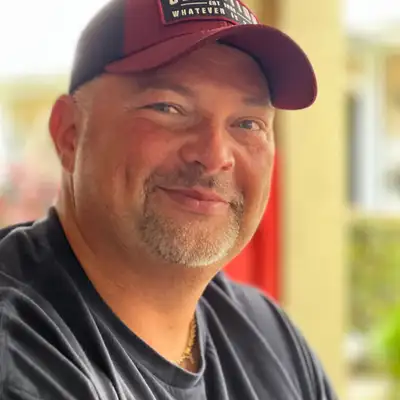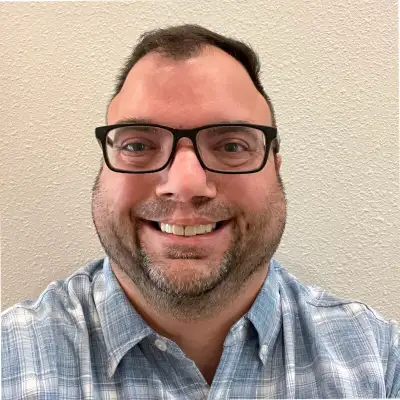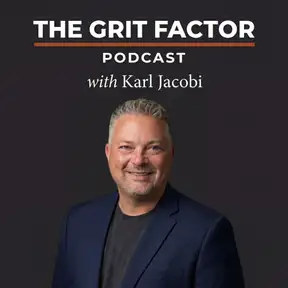
Episode 029: Overcoming a Rare Disease and Fear with Marc Schmidt
TGFP Audio Ep 29
00:00:00 Speaker: Average is the enemy of greatness. Comfort is the enemy of growth. Welcome to the Grit Factor podcast, where we strip away the highlight reel and get into the darkness beneath it. The real stories, the real battles, and the battle plans used to conquer them. I'm your host, Carl Jacobi, combat vet, entrepreneur, resilience and performance coach, keynote speaker, husband and father. I've built, scaled, and exited multiple companies totaling over forty million in revenue. But here's what that highlight reel doesn't show you. Life has been smacking you in the face with a two by four since that was just five years old. Broken home. Constant chaos. No playbook. No safety net. Just grit. And if you're anything like me. You know, you've got another level in you, in your business, your career, your faith, your leadership. You're just not sure how to get there. That's exactly why we're here. Be sure to follow me for more great content, and check out my website success with Karl dot com. Now that's Karl with a K. Now let's get to work. All right. Welcome back to the show. Today I am joined by a guest with a very inspiring story. Today, twenty plus years in a broadcast and television industry currently working, working at Disney, streaming, hosting producer of his own podcast on his own words. Mark my words. Love that play where he sits down with entrepreneurs and founders, uh, from around the world. uh, about the unlikely path that they had to take in their lives that they want. And over that time, he's released over sixty three interview episodes, eleven solo episodes, and this in the last year. Now, guys, I know you're probably thinking, okay, but guys, there's, there's a lot of work that goes into producing shows and podcasts, you know, in the preparation and not only just for the recording aspect, but then you have the producing, you know, the, the editing and all of that. It's so much energy, so much work. This is a hard lesson I neglected when I first launched this podcast. Right? So much work goes into this, but he's speaking on stages. He's a content creator on Substack, building towards a bigger platform every quarter. And underneath of it all, a story that does not show up on a resume. He was born with a very rare syndrome, and a version of him sitting across from me today had to be built on one decision at a time. Mark Schmidt, my dude. Welcome to the show, my man. Thank you Carl. That was an awesome intro. I appreciate it. And, uh, I, I love the opportunity to tell my story and I'm excited to be here. Awesome. Yeah, man, I can't wait to dive in. I, I was looking at your bio and, you know, doing some research on you. You do have a very inspiring story and I can't wait to dive into it. So with that said, let's jam because we have do have limited time. So Mark, my man, take me back right before the podcast, before Disney, before any of the winds paint the audience a picture of young Mark. What was the, you know, the inside of your head like at the as a kid, um, when did you start to understand the world was going to handle you just a little bit differently than kids around you? I feel like it started pretty early on. Like I'm talking like four or five years old, perhaps even younger kids treat you differently. Like they'll let you know that you're different. And I can still remember some smart alecky kid and just the way they would talk to me and just so many others, even like I know teachers have a tough job. They get a lot of praise. But there were even a lot of teachers who treated me a certain way. And I learned early on that I was kind of, at least in my mind, I felt like I was walking alone. Yeah, man. That's scary man. It's one thing to hear this as an adult, but one, it's completely different as a child, right? To feel like you've got to go down this journey alone because there's nobody else that gets it. There's nobody else around you that understands the pain that you have to suffer. If people making fun of you, excluding you from things like birthday parties or just hangouts or, you know, stuff of that nature. You know, I don't even I. There's a few key events I remember at eight years old. Um, but to you, for you, man, it's clear that it was very, I wouldn't say. Yeah, I would say traumatic, but a very hard time for you because you're able to remember these things. Right. Um, yeah. So I recall on your bio or in your intake that you said your mom had a big impact on the person that you became. And in some ways that can resonate with this. But I want to hear from you on what that means, right? Like without going, you know, as much detail as you want or go into much detail as you want. What did she give you in his earlier years that you're still pulling from today? I think one of them is my work ethic and just she would wake me up at like five in the morning to, you know, go like teacher stores where teachers can go and buy all the supplies and books and stuff. Well, she would like go over phonics and English and grammar and it would be like five in the morning. And she was always there, especially in the early years, just as like, uh, you know, parent, uh, representative for the class. You know, how a couple parents might volunteer to be there for like parties or whatever. And she just always kind of like had my back. And I think she just wanted me to step out into the world and have people see beyond what they might have been seeing on the surface. And I think some of those things are things that I've carried with me, uh, through my whole life. Mhm. Nice. Thanks for, you know, giving us some insights on that man. And I think this gives some importance of just how much we take from our parents. Good. You know, both sides, right? Both bad and good. You know, and and it's inspiring That you chose, that you decided to grab hold of, you know, the things that built you right instead of things that tore you down because it is so much easier to grab hold of the things to tear you down versus things to build you up. Right? Um, especially in today's times, uh, there is no shortage of constant distraction of what the perfect, the perfect life, the perfect story, the perfect whatever. Right. Um, let's dive in more in your story here because I want to give the audience, especially since we have limited time together, you sit on your intake, you have your, that your syndrome that you're born with has presented many challenges and obstacles throughout your life. Um, you know, obviously don't try to list them all out or, you know, list, you know, create this list. I just want one moment. And if you want to dive into more of the syndromes and so forth, I definitely, you know, share as much as you can or want, But I want the one that really comes back when you hear the question, you know, or when you you know, when you hear that question, take me to it. You know, where were you? What happened? What did you say to yourself when it was over? Wow, that that is quite a question. Um, so for one thing, the syndrome that I was born with is called Opitz g b b b syndrome. It's like super rare. It's like a package deal. It's kind of like what I refer to with guys. And you know, you might get some things you might not get others. I think cleft lip and palate is kind of like something that a lot of people wind up with. It just depends. But, um, I would say that the hanging of challenge that people don't know about me because it's enough already. When people like. I think even if people don't understand or know what is different about you, they can like pick up or sense just from listening or maybe from looking at you. But yeah, the one thing that I have that really makes me different that people don't know, and this is like TMI territory. I was born with, um, in addition to a lot of other things, something called an imperforate anus, which just means that, you know, you're, you're born and they gotta do surgery on you right away to correct that issue or you're just not going to make it. And the downside to that issue is that it's just a daily, everyday like thing that I have to manage. And I know you're looking for one particular moment to pinpoint. And I know I'm, I'm kind of like struggling to really pinpoint a moment. But I know with that part of my issue and especially having to, um, go into work places and just be at school and trying to manage that, I know I can think of particular moments throughout my life and career where it's just like either, um, it kind of got to a point where it's like, oh my God, I really got to like hike this or I can't let people know about this. And I'm probably not really answering your question right on this. But no, it's okay. You know, answer it the best way you know how, right? You know, I'm just trying to give an audience a basic understanding, you know, of one key moment in your life that jumps out at you that was forever impressionable in your mind. You know, when it comes to, you know, these differences that, uh, that you live with, right? And how you have to live with them. And something you just mentioned, which should be obvious is, you know, the workplaces, right? Um, you know, I've kind of neglected that in full transparency because before we hit record, you were talking about your own businesses, your own things that you do and curators, but then you talked about you do other things too. You have a side job and you do other things. It's like, man, how how hard is that to, you know, show up for an interview or, you know, to show up into a workplace and, you know, you get these looks or you get these borderline questions. You know, what questions I'm probably referring to, right? Yeah. I mean, how do you handle those moments, man? How do you handle that? I think, uh, the best way to handle it is to not think about it and not let it affect you. Because I think with all these things that I have going on, uh, I have learned whether it was on my own or just the culture I grew up in, was to just treat everything like, you know, I'm just like anybody else. And yeah, I know, just in reference to what I was talking about earlier. That is something that I have to be mindful of, especially when I'm like doing interviews or nerves or whatever. Yeah. But just as far as like getting along and relating to people. Uh, you can't look too deeply into, well, they didn't hire me because, uh, I sound different or they can promote me because of blah, blah, blah. Because if you go down that rabbit hole, you're likely to think that about everything. And you turn into you turn into a person that you don't want to be. Yep. Yeah, that's a great point, which actually dives into one of the questions I had on deck for you was, you know, the identity aspect of this, right? Because you said you, you have learned how to overcome limiting beliefs. And this is something I dive into heavily in this season of life I'm in. And this is an area that I see in so many people that I work with, and especially people that I interview on a podcast. You know, the version of those beliefs that you carried at sixteen was different than the ones you carry in your present age, right? I'm not going to disclose that. Um, so walk me through. I know better not to ask, you know, what level they're on and when it comes to age, but, um, I'm on level forty seven, so, uh, forty eight here. Holy really nice. Albeit forty eight, uh, in a couple of months. Oh my gosh, can't believe that. But walk me through the worst version of them right from age sixteen to the level you're at now. Just walk me through one of the, one of the worst versions of versions of them. You know, the voice in your mind. You know when you're young. What was it telling you? You actually. What did it tell you that you actually believed for a while? Well, I think that I believe that I can do what I'm doing right now, or what I've been doing for the past six years. I think I believe that. Oh, who is going to want to watch me? Who's going to want to listen to me? And I think deep down inside, I've always been interested in, like, television broadcasting me ever since I can remember. And I think I wanted to be around it, but I was, I just automatically, uh, made myself like somebody who was behind the scenes and not somebody for in front of the camera. So it took for me Until I left. I had a job out of college for ten years. It was an amazing experience. They went through a series of reorganizations, which they're still doing, but I'll put, you know, nonetheless. Uh, I left during that era. That was a big turning point because a lot of networking went to a lot of networking events and met like entrepreneurs and people similar to you who saw something in me and started encouraging me to, uh, think about creating content, creating a podcast. And after I did some of that for a while, it like built up a lot of confidence. And eventually I created Mark my words as a tribute to Entreprenuers. And, uh, that was a big turning point. That was like mid to late, uh, last decade. Nice, man. That really gives some insight. It reminds me, uh, I don't remember what episode it was, but not too long ago, I had a guest where we just were essentially diving into, you know, the things that we've been through in our lives, right? Adversities, obstacles and stuff of that nature. And be grateful for those things because it forms the person who we are today, right? But the other side of that, too, and what you just shared here is you're using your story, you're using your, your, your talents, your gifts, and, um, for, as your superpower to inspire other people, right? To inspire others that are looking to you because they themselves, they, you know, they need somebody, right? They need somebody to show up in their life to inspire them, to give them encouragement, maybe give them some tools and tactics and make them feel like they're normal. Or I would say feel, but make them, you know, acknowledged as a real person, right? To give them the true sense of belonging, the sense of feeling that they need, that they crave. Right. Um, and I see that as a major, you know, a big solution that you're solving there. I mean, I gotta, you know, honor and respect you for that because a lot of people, you know, that you're, that you're with the limitations. And I hate to say that limitations because it's not a limitation for you, right? Um, but the things that you're, the challenges that you deal with, you're using that as a superpower to inspire, to help other people show up that would otherwise not show up. Right? And you had every excuse in the book to say, are not doing it, not doing it, you know, because you had every reason, right? You had every reason to. Yeah. Yeah. I, let me just say that between guest spots on podcasts and even on my own, more and more, I've told people that I have every reason in the world to, even right now, not leave. But I have every reason in the world to just be like, I'm leaving. I'm going to delete all of mark my words, and I'm just going to live my life. Um, but for some crazy reason, I just have felt and still, you know, will probably always feel motivated to show up and, uh, Um, talk about my life and the obstacles that I've endured. And there's a lot of things that motivate me, but there's just something about that that just keeps driving me. Even though it would certainly be easy to just say, see, I'm out and I'm not doing that. But yeah. That that's true. That's a good point, man. That is a good point, man. Real quick, before we keep rolling, maybe life hit you hard. Business fell apart. Career isn't working out. Relationship ended. Health took a dive. And now you're standing in the rubble trying to figure out what the next move even looks like. Or maybe nothing blew up at all. On paper you're winning, sure, but on the inside, something's off if you're not in crisis, you're at a crossroads. And the playbook that built the life you have is not the playbook that builds the one you want. Either way, you're stuck. Not broken. Stuck between who you were and who you're becoming. Most self-help just piles more weight on the load you're already carrying. I do not want to do that. I put together a free video series called the Grit Code Exposed, and I want to invite you to check it out. Seven short videos. That's it. The five laws that change everything for me. In every client, I coach the same five that every person who's ever come back from the fire has walked through where they had a name for it or not. No fluff, no ninety minute webinar, no bait, just the free video series. You can start it tonight. Grab it at grit. Code exposed dot com. One more time. Grit code exposed dot com. It's free. You don't need any more hustle. You need the next version. And this is how you find it. Check it out. See if it speaks to you. And if it does, I'll see you inside. All right, let's get back to the conversation. And I just really want to the guess or not the guess the audience to really get an understanding of because I was on a call with a client yesterday, um, and, uh, she's, she's battling, you know, with what a lot of people do, you know, uh, struggling to put themselves in video, you know, so I could talk and so forth. And, uh, but I'm just afraid to, you know, put myself out there on video and so forth. It's like, you know what? Why let the fear of judgment of other people who have their own issues, who have their own battles, you know, and ninety nine point nine percent of the time, the people that we worry about have their they're not even worried about us, bro. They got their own mess right in the point. One that is worried about us. Screw them anyways. Yeah. You know, well, screw him anyways. Well, the one thing about that that you just mentioned is there are a lot of people that I come across who I try to ask them, why? Why haven't you started a podcast? Or if you're on TikTok, why haven't you hit the like button? What's stopping you? And they'll say something like, oh, my voice sounds weird. And that stops me because I'm like, wait a minute. My voice sounds weird, I know, right? I say the exact same thing. No, your voice doesn't sound weird at all. You sound pretty cool. But, um, I, I know that it takes time because I've come a long way. I can actually listen to myself now, and I'm like, oh, I sound like, okay, like I'm comfortable hearing myself, but I know I do sound a little weird. So when people who do sound like you're different, you sound good in a good way, like different, better. I'm like, oh no, you have one of the things you can do this. So that really drives me and motivates me as well. Man, I love that man. In fact, I want to dive into that for a moment because I actually want to use this person as an example. You know, you, you have every reason to not do this, you know, um, especially when it goes back to listening to yourself, watching you're watching yourself. So just, I want to give this over to you for a moment. Encourage not only this person, but every person that's watching or listening. What do you have to say this to, to these individuals who are scared of putting their story out, who are, who have a story. And every person, in my opinion, has a story that can inspire so many people, right? So what do you say to that person? It's like, um, I'm scared. Uh, I would say that you need to just do it. Uh, you need to just hit the record button, even if it's just a practice session and nobody's there, hit the record button and just keep practicing because I didn't come out of the womb being able to speak as well as I do on my show now, and I'm pretty. Good point. I'm pretty sure Karl didn't just come out of the womb being able to host this show as well. Very true. Also, it takes practice. If you listen to the first episode and mark my words, they're not that bad like I do, fine. But I do a much better job now. And I do because I practice and I kept doing it. And you're gonna get better and you're better than you think. And you do have the tools and you do have something to say, something to offer the world and just go do it. Yes, I agree wholeheartedly. You know, as you are talking about that reminds me, I always like to refer to this, you know, but you look at Mr. Beast's very first video, um, a good friend of mine that I was in high school with, uh, he used to work for his video production crew. Uh, on beast games. And we talked about some of the stuff that he's done and so forth. But you look back at his very first YouTube video. It was horrible, right? You know, and you compare it to what he's doing today. He's smashing it today, you know, but it took reps putting in the reps, put in the practice. And that goes with anything we do in life. We're not going to be experts on day one or in the very first rep. We may be naturally talented in that one area just because of how we're naturally built or what have you. But we can truly be good at anything as long as we put in the reps. The very first freaking talk I did on stage, I man, I had sweat going down my legs. I had sweaty palms. I, you know, I was stammering, my brain glitched like I lost track of what I was saying, like halfway through my speech, like somebody on the front row is like, don't worry, man. It gets worse as you get older. You know, I'm like, oh my gosh, right. So I, I agree, man, just do it scared. Yes. Do it scared because every single one of us mark myself. We've done this scared right? So good points man. Well, let's get moving on man, because I want to dive into you when you first got your big TV job, you know, that initially shaped you, right? Uh, you went through network two networking events, you followed through starting a podcast, but just talk about your, uh, how you left your, your first big TV job, what shaped you, right? What made you think or what made you walk into that first networking event? And what were you looking for that you were not finding at home? Well, my first like big job, the one that I was at for ten years. Uh, it shaped me because I learned so much about people. I learned a lot about myself. It was actually a job where I eventually got promoted into management, which was a huge turning point in my life. Maybe that was the turning point you were looking for. Uh, about twenty minutes ago. But that's a huge boost for your confidence, right? I mean, it was a huge so it gave you the opportunity to, uh, manage people. And it gave me an opportunity not only to manage, but to impact people and do it in a positive way. Because I wasn't just all about numbers Or we gotta get, you know, work done. I was about like, trying to make the environment and experience better for everybody. Yeah. And I love doing that. So when I left, I found that I wasn't feeling like I fulfilled because I kind of went back to doing like, uh, freelancing jobs and just, uh, it wasn't like fulfilling. So that's what led me to think about how can I make life more fulfilling for Mark rather than trying to climb the corporate ladder and get fulfillment out of that? Because that's how I was programmed. And I learned through networking, through creating a blog, and then eventually the podcast that, um, I need to live for myself. And that was a big thing that I learned going to those networking events. Nice. Nice. That kind of leads me into a perfect shoe in for my my next question here, but I, I'm just kind of picturing you in your, in your, in that job, right? Um, and getting that opportunity of being promoted. That's got to be a serious validation. Serious confidence boost for you because, you know, they didn't, I wouldn't say they didn't have to in a way such like to meet checkpoints, but they saw something inside you, right? They saw what you're capable of. They saw what you deliver and you did something. What I see in so many people or so many working environments that don't do, is you went out of your way to create an environment that was productive. That was positive. That was a good work culture, in my opinion. That is so missed. I used to be a W-2 employee. And, um, one of the reasons that I'm in this season or why I left is because of that the, the amount of toxicity, the, the, um, well, I'll put it to you this way. Um, paramilitary. And I was a defense contractor in, in defense contracting. Most of the people that are contractors are prior military or prior first responders or whatever. Right. They're used to that environment. However, they failed to realize that they left the military. They didn't carry their rank over to this new life. Right. The rank they used to have died when they, you know, got their paperwork to exit. But, you know, they still treat you as though you're a private or whatever. You're the first, you know that you're a little class, you know, um, and it's, it's, it's sad. It's about the best way I could say it because life is short, man. Yeah, life is so short and there are so many people that are that are miserable in their jobs. They're miserable in their cubicles. They're musical. Just period. Just punching a clock, waking up, go to work, come home, eat dinner, maybe spend time with family and go to bed. Rinse and repeat. That's no thank you. But let's get into this because you said something on your bio, man. I cracked up because I can relate to this, but my, my, my, my reasoning was for one person, but you said this, that I, that I, I really want to laser focus on because I, when I say this, it's going to resonate with a lot of people. You said you used to care so much about being successful, that you wanted the bullies and the naysayers to come back and apologize. That's very true. Uh, walk us through that, man. So when I look back, I remember. So as you've shouted out, I do at this point have a day job with an amazing, incredible company. And it's really been an amazing experience. And that's exactly what I was striving for. And it's not to like, be a jerk and be like, well, I'm doing this and you're not, you know? But I think I just felt like so many people were selling me short and just brushing me off and not really giving me the validation that I felt I deserve. Not that I think I'm the greatest person or the smartest person or the most charismatic dynamic, whatever word you want to throw in there. But I just felt so back before we had like Facebook and all that stuff. I had visions of going to a reunion and just having a lot of pride and being able to tell people, well, this is what I'm doing. This is where I'm working, where I'm living. And I had had in my mind that I may have a few experiences where people will even maybe look me up and be like, wow, look at him. Look at what he's doing. Oh, I remember how I talked to them or how I acted. I'm going to go apologize. But you know what I've learned? That is a complete Fantasy, that doesn't really happen. And if it does, I want me like your classmates and your colleagues or whoever. Nobody like you can't go through life expecting people be like, Mark, I'm sorry that I gave you an atomic wedgie in tenth grade or I'm sorry that I sold you short and didn't include you, or I'm sorry as a teacher that I thought you were dumb or whatever, like those things, they don't happen. And I think if people do feel those things or have those revelations, they're most likely not going to call you. And it took until the Facebook era until I learned because nobody was coming back and doing that, you know? So I'm like, okay, maybe I need to move on from that way of thinking. I think it's been good for me to not think that way. I mean, you people can think whatever they want, but I know it's helped me a lot to kind of move on from it. Yeah, no, you're definitely on to something. This is a journey that I had to go on myself. Uh, I've been very public about this in my, you know, in my, uh, on my podcast as well as just in my ecosystem, uh, for the, for the bulk of my adult life, I was doing everything to prove one person wrong. That one person was my mother. Um, you know, my parents were divorced when I was five and I spent, you know, quite a, I was I don't remember how many years it was, you know, to be honest with you, but it was enough to much, in my opinion in some ways. But I spent a number of years with my mother And it was not an enjoyable period. In fact, I look back and I can't think of one period where there was happiness. I can't look back and think of one moment where this is nice, mom. It was none of that, you know. Um, and for me, so the constant. I heard a constant phrase. Carl, you'd never be successful. It's just not in our blood. You'd never be successful. Right? And so I carried that for almost all my life because subconsciously I'm. I am going to grind to prove her wrong. I'm going to grind to prove her wrong, that I can be successful in my marriage and my businesses and my life and so forth. And all this time, you know, one, I would never hear those words. Um, but in all this time I was doing it for the wrong reasons, you know, and, and that's why I found in, in not just in my own life, but in countless others that they do it for the wrong reasons, you know, because the this. Let's play this out. You do hear those words. What happens next, right? What else is pushing you to push harder to be the next version, to go out there, to continue to be successful? If you no longer have fuel to push you to that point, right? You know, that's, that's a great point. Yeah. No, I mean, you know, it's not something that you can have a pep talk with somebody. You almost have to learn it for yourself. And I'm glad that I learned it. I was about eighteen ish or so years ago that I really had that epiphany and just started letting that go more and more. And nobody has high school reunions or anything anyway. And, you know, not in today's world, not as much. And no, especially now at forty seven, I feel so removed from not only high school, but earlier versions of like my adult life that I'm just like, you know, something good. Good life is for me. This is yeah, I'm living for myself and my goals. And it doesn't matter what, you know, x, y, z person thinks like I yeah, just focus on you and do the best you can. Yeah, I, I agree wholeheartedly. Yeah, I, I agree, man, thanks for sharing that real quick before you go, if you're still with me this deep into the episode, something in it hits you. Maybe it was the guest, maybe it was one line. Either way, you're still here. And that feeling in your chest right now, that's the signal. Most people get a signal like that and do absolutely nothing with it. They close the app, life rushes back in. The moment's gone. Six months later, there are the exact same spot. I don't want that for you. So I put something together. I want to invite you to check out a free video series called The Grit Code Exposed. Seven short videos. The five laws. I walk every client through. The same ones that rebuilt me when everything else fell apart. And if you listen closely today, you heard them running underneath the entire conversation because everyone who's come back from the fire walks through these five laws. Some find them on their own, some get help, but the laws don't change. Free video series. You can start it tonight. No fluff, no ninety minute webinar. Just the series. If you're going to do something with what you heard today, do this before life talks you out of it. Go to grit Code exposed dot com one more time. Grit Code exposed dot com. And hey, before I let you go, thank you for riding with me this long. It means a lot more than you know. Thank you. There's something you mentioned that really landed earlier on, but I want to extract this for a moment and really have people hear this, because I think a lot of people need to hear this. You said the networking events in the chapters that you pursued in that last decade taught you that there are some awesome people out there who want to see you succeed, right? So for the listener or the person that's watching who have been burned and sitting on the assumption that nobody is in their corner. What changed your mind? Like. Like what changed your mind in that perspective? Was it one person? Was it a season? Like what happened that changed your perspective on that? That's a good question because it really has to get beaten into my head. And I know I still go for moments where I just feel like, well, nobody believes in me. And I know that might be hard to believe, but I think that we get lost in, uh, or least likely we, I'm probably thinking me. And I think sometimes I get lost in thinking about what the current moment is presenting and don't think about, uh, all the positives that have, popped up. I know there have been quite a few people along the way who have done something to reassure me. I know Scott Stoltz, my first, uh, guest on my podcast, he had me on his podcast when he had one. Nice. And that was very helpful. He's been huge for me. I know my boss, my boss is who promoted me, who I just want to point out I probably had my best interview ever with them. I, I know it was that interview that helped me to get that promotion, but you know, they were very helpful. Uh, my current boss has been pretty helpful because I feel like they believe in me too. And, uh, that's awesome that it's been little things along the way. Just little experiences, little victories. Yeah. And, uh, yeah, I think you just gotta look for those things. And, uh. Yeah, it's not easy, though. No it's not. You know, growth never is, right. Growth never is easy. So let's fast forward today because I know we're you know, we've we've we've got some limited time. So fast forward today sixty three interviews, eleven solo episodes, especially, you know, with, you know, everything you have on your plate. Disney streaming during the day. Speaking is starting to come into the picture. Tell us man, real quickly, what are you most fired up right now? Or what are you most fired up about right now? Uh, well, for one thing, I'm fired up now. I'm getting close to two hundred episodes. I will I may have had a typo in there, but I'm actually almost a two hundred. You should have corrected me earlier on. Man. Two hundred. That's way more than sixty three. Oh, hey, I don't like cutting people off when they're talking. I get it. That's one of the things that I feel like guests who come on my show seem to like is that there's a lot of shows where there's talking heads and we're like, well, I'm the only one speaking. You know, I let people talk, so I'm guilty of that. So I'm like, you know, I'm good for getting there. But, um, I'm very fired up about that. Um, fired up about just some of the brainstorming I'm doing because I really want to, uh, I love, uh, doing what I do. There's a lot of really good things that come along with my day job, but I want to have myself Prepared for the future because I know technology is taking over more and more. So I'm getting fired up about what else I can do with, uh, my life and just to fulfill myself going back to that for the future. And, uh, yeah, just fired up about continuing to do what I'm doing because I love, uh, everything that I'm into right now. I can feel it, man. I, I sense it as I hearing you talk and I see your expressions and those are listed on audio. I know it's hard to, but you can feel his passion, guys. You can feel his motivation, his passion and sincerity through his words, the way he's speaking. And those are watching. You can see his authenticity and how he's shown up for this interview and how passionate he is about this season. So man, I really, you know, honor you for, you know, sharing that and being authentic and still showing up to do these interviews and doing everything is that you're doing to impact the people that need this impact, especially in today's world that, you know, everything is all about the highlight reel, right? Everything's all about the highlight reel. They don't want to talk about the stories. They don't want to talk about adversities, failures or hard things. Right? But, um, man, real quick, you know, share with the audience, you know, where can they find more about your podcast or, you know, they were, they want to hear your podcast too, as long as they don't turn off of mine, but they want to, you know, listen to some episodes or connect with you, where can they find out more about you, man? Uh, I have a YouTube page where I need to do a better job with updating the actual video episodes, but all the audio episodes are there. I think the the director's Mark My Words three thousand and eight. Just something random that you gave me. So, uh, you can find it there. You can find it on Apple, Spotify, pretty much anywhere that you can find podcasts, but those are probably some of the, the main ones. I know I get some listeners just off of Podmatch. So if you're on Podmatch or cross paths with it, uh, you'll find some episodes there and, uh, yeah, just, uh, look up Mark Schmidt, mark my words, and, uh, you'll probably find it nice. And when it's when he says Mark, it's Mark with a C at the end of it, not K. Yeah. Yep. Absolutely. I almost made that mistake with my team earlier. So as they're as they're doing a guest prep. All right. As we wrap up, I want to give you a 60s real quick because I know we're going to wrap this up. You said you said your message is that whether somebody has obstacles like yours or different ones, they can still achieve their goals, speak publicly, build the life that they want. And you, my man, are a clear, clear picture, a representation of that. What I want you to do real quickly, Mark, if you don't mind, man, because I think there's a lot of people that needs to hear this. Look into the camera. Say it like you're talking to the version of you who is sitting in that car after one of those early hard moments, convinced that he would never be heard. So the fact that you're not going to be heard is not true, because There is at least one person out there who is going to want to hear what you have to say and what you have been through, and all you have to do is just hit the record button and put yourself out there and, you know, hit send on the post, just do all the things. I would say the main action that you need to take is action. And that's really what you need to do. Take action and just believe in yourself. Believe in your message. I know that that's a bit generic to say, just believe in yourself. But yeah, that is really the first step towards, uh, finding who you really are. And to it all, um, It's all process. Yes. Agree. Agree, man. Thank you. All right, man, let's wrap this up. Rapid fire questions real quick. And this season that you're in what is your definition of grit. My definition of grit is just picking myself up and dusting myself off and keep on going. Even if I feel like quitting. Ooh ooh. Love that. Yes. Thank you. All right. These last two questions. Uh, the last one is going to be a two part question. Both of these which I prepared you in the green room. What? When you're in the thick of it, when you're when you're in the trenches, maybe you're hearing some noise telling you you're not qualified, whatever that noise may be. What is a quote or directive or anything that you tell yourself to pull you through that moment? I don't know if there is a quote or anything specific that I really tell myself, but I think when I feel like somebody doesn't believe in me, I just remember all the times where I placed my bets on myself, and I did prove that I was valid or could do whatever it was, whatever the challenge was. And I it's hard to describe because there's just something in me that just always keeps me going. And it's, it's a hard, like thing. That's hard to explain, really. No, I understand, and I think a lot of people understand what you're trying to communicate and I'm right there with you, right? I mean, how do you communicate the confidence, right? It comes with a degree of confidence because you have evidence of things you've achieved in the past, right, over adversities and things you've. We just tend to forget about those in those moments, right? It's all that is, is just a remembrance of the evidence of what we've accomplished in the past. We've all accomplished amazing things. We've just got to be reminded of it. So. Right. Awesome, man. Last question comes in two parts. First, I'm going to ask you and those that are listening or watching, I love to give my guests an opportunity to challenge my next guest with a question. Now, guys, the lineup is completely anonymous. I can't tell Mark in a green room. Hey, my next guest is X is completely anonymous and so far these questions have landed perfectly. So mark my man, what would you love to challenge my next guest with on a question? That question is a good question. I think we'll just try to stay with the same theme and maybe ask them what they did to when they were feeling like they were going to quit, because I've had a few moments, uh, throughout my time doing. Mark my word, something has come up and I'm just like, I don't know how I can continue doing this. What have you done in those moments to, uh, pick yourself up and keep on going? Because that's really a hard thing to do. And I think it separates those who have the passion for what they're doing versus those who don't. Yes, wholeheartedly. Thank you. I agree, man. That's fire right there for sure. All right. So my last guest had this question for you. What is the primary blocker to get you to that next level. Right. There is another level for you. But what is that blocker for you to get there? Frankly, I feel like it's myself because I have come a pretty long way. But I also have some things that I know as far as like taking myself to the next level where I can like, you know, make enough to, uh, maybe not work full time. As much as I love what I'm doing. Um, yeah, I feel like there's a lot of things I could be doing that I'm not. Like, I'm, I'm very like, uh, cautious. So I feel like, uh, that is something that I could probably work on and be a bit better about. It might not even be about, you know, working full time as my own business, but maybe just being a little less cautious and, you know, maybe taking a few more, uh, risks, which can be risky. Yeah. Right. Yeah, exactly. Yeah. Taking risks. Learn how to take more risk. Man. I, I can certainly resonate with this one so well, Mark my man. Dude, I appreciate you sharing this last hour with us, man. Giving us some wisdom here and really sharing your story, man, because it is so easy to come on here and talk about the glory days, talk about the highlight reels, talk about the good life. But man, you chosen here, you chose to come in here and give us as much real as you possibly can with the time allotted here. So, man, I honor and respect you for this. I appreciate you, and I just want to support and encourage you to continue to lean in and support and encourage the people that are looking up to you for the support, encouragement and, and that they need, because that was what you're on this blue marble for, man. So thank you, Mark. I appreciate you, man. Well, thank you Carl. I had a fantastic time. These were awesome questions. Great discussion. And, uh, I, I love the opportunity to share my story because when I look back when I was in high school and I remember when I was looking into the future, this is the kind of thing I was hoping that I'd have the opportunity to do. So it really makes me feel very fulfilled. To be able to come on here and talk about my life. Awesome, man. Thank you man. Appreciate you sharing those words. All right. Those that are watching or listening, the gap between average and excellence is just action guys. Even in perfect action. Don't just listen here to Mark. Please take one thing he shared today and take it and put it into action with the next twenty four hours. Hit the record button. Share it. Just do. That's all you gotta do, huh? Be the reason, please, that someone doesn't quit today. Please don't keep this episode to yourself. Someone in your circle needs this right now. Send it to him. Mark again, my dude, thank you so much for stepping in. Thank you, I appreciate you. Thank you. Absolutely.
Creators and Guests