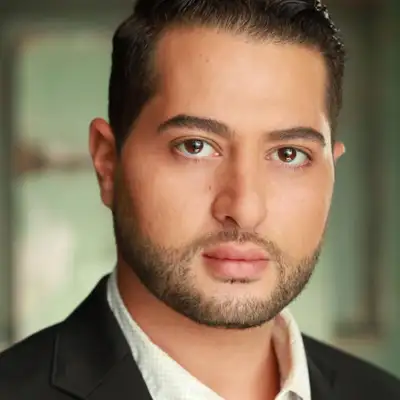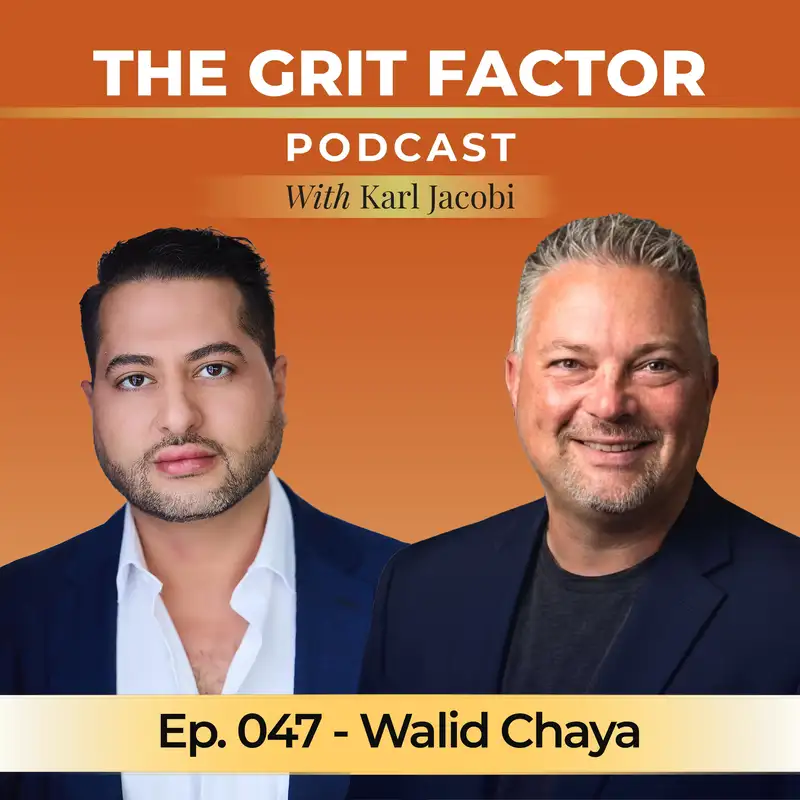
Episode 047: Bet on Yourself Before Anyone Else Sees It with Walid Chaya.
Episode Summary
Walid Chaya grew up in Fairfax County, Virginia, the son of Lebanese immigrants who crossed an ocean with two thousand dollars, no English, and a plan that did not include their son becoming an actor. They pictured a doctor. A lawyer. Something with a name everybody recognized. Then Walid was five years old and went backstage at an Arabic musical adaptation of Romeo and Juliet in Lebanon, saw a bag of money that turned out to be a deck of playing cards, and fell completely in love with the organized chaos behind the curtain. He memorized every word of that show. He can still recite it today.
What followed was a commitment to a path with no salary, no map, and no promise it would ever pay off. And nobody warned him about the gap. The part of the story that sits between the dream and the arrival. Years of doing everything right. The training, the auditions, the commute from his cousin's house in Connecticut to Hell's Kitchen every day through the darkness of a New York winter. The side gigs tutoring students. The PA work on set. The friends at NBC who could not get their own resume to the seventh floor. And the moment he was already in his car on the highway heading back to DC to pack up and quit, when a single text message from a friend with an acting studio arrived and he pulled straight off the exit.
He did not quit. He stayed eight years in New York. He built a teaching career alongside the acting career. He moved to LA. He opened his own studio. Nineteen years and eight locations later, Studio for Performing Arts LA is the official acting partner of the City of West Hollywood. He has appeared on Madam Secretary, The Blacklist, Hulu projects, and award-winning independent films. He is now directing and producing his own feature film, Crazy Rich Arabs, a twin identity-swap comedy that he describes as The Parent Trap meets Crazy Rich Asians with a Beirut backdrop, in which he plays both twins. He told his parents he may not have become a doctor or a lawyer, but he has played both on screen. He thinks that counts.
This episode is for anyone grinding in the gap between the dream and the proof, wondering if they are crazy to keep going.
In This Episode, You'll Discover:
- What Walid saw backstage at an Arabic musical in Lebanon at age five that permanently redirected his life, and why a bag full of playing cards was the most important thing he ever held
- How a Lebanese immigrant family that arrived in America with two thousand dollars and no English became the backbone of Walid's belief in himself, and why he says knowing where he came from is half his secret sauce
- The eight-year New York grind in detail, the two and a half hour daily commute from Connecticut in the middle of winter, the PA work that kept landing him in casting rooms, and why he was already in his car on the highway heading back to DC to quit when everything changed
- Why Walid looks at his resume before every audition, not to impress himself but to remind himself of the evidence of everything he has already built, and why that habit is one of the most underrated tools in a performer's or entrepreneur's arsenal
- What it looks like to run a performing arts school across eight locations with a staff of twenty while simultaneously acting, directing, and producing original work, and why the daunting feeling never goes away no matter what level you reach
- The calculated risk philosophy Walid uses for every major decision, why he never jumps off a cliff but takes one small step at a time, and the directing analogy that makes the big picture manageable when it would otherwise be paralyzing
- Why Walid believes the most important question anyone can ask themselves when finding their path is simply where do you feel at home, and the honest warning he gives students who arrive with blind faith in a direction that has no realistic roots in them
- What Crazy Rich Arabs is about, why Walid is playing both twins, and how listeners can support the production right now before shooting begins in October
Key Takeaways:
- Bet on Yourself Before Anyone Else Sees It. This is the whole episode in five words. Nobody handed Walid a roadmap. Nobody validated the path. His parents did not understand it. The industry certainly did not roll out a welcome mat. He bet on something in himself before any external evidence existed to justify that bet. That is not delusion. That is the specific kind of courage that separates the people who get there from the people who almost did.
- One Tick at a Time. Walid's most practical piece of advice is the simplest. A clock does not jump to the next hour. It moves one tick at a time, every second, consistently, for sixty minutes. The actors and entrepreneurs who make it do not lunge at the finish line. They show up for the tick in front of them. One class. One audition. One email. One day.
- The Gap Is Part of the Journey. Not a Sign Something Is Wrong. Everyone who has ever built something real has spent time in the gap between the dream and the arrival. Most people interpret that gap as evidence they should stop. Walid is evidence that the gap is just the middle of the story. The people who stay in it long enough get to the other side. The ones who leave do not find out.
- Look at the Evidence Before You Listen to the Doubt. Walid reads his resume before every audition. Not to brag. Not to feel superior. To remind himself that he has already done real things. The doubt voice is loud. The evidence voice is quieter. You have to deliberately turn up the volume on the evidence.
- The Daunting Feeling Does Not Mean You Are Not Ready. It Means You Are Growing. Walid says it plainly. Every new level feels bigger than him. That is not a warning sign. That is proof he is in new territory. The surgery feels more daunting than the physical because it should. You have to build the team to match the level, not wait until the fear goes away.
- If Your Circle Does Not Encourage You to Grow, You Are Not in a Circle. You Are in a Cage. Karl said it. Walid lived it. The people who get you to the next level are the ones who can see it before you do. The people who cannot see it do not mean you harm. They just do not have access to what is inside you. Be careful about who you take direction from.
- Calculated Risk Is Not Recklessness. It Is Strategy. Walid has never jumped off a cliff in business. Every major move has been researched, mentored, eased into, and expanded gradually. One location to eight. One program to twenty staff. One self, one city, one act at a time. The bold appearance of what he has built is the result of a thousand small deliberate steps, not one giant leap.
- You Won't Break My Soul. Walid's mantra on the hard days is specific and personal. A Beyonce lyric that came on the radio at exactly the right moment and gave him language for the thing he already knew. Whatever or whoever is trying to take your peace, your clarity, your momentum today, they do not get that power. That is yours. Full stop.
Timestamps:
- [00:00] Karl introduces Walid Chaya: actor, writer, director, acting school founder, son of Lebanese immigrants, and the man who has played both the doctor and the lawyer his parents wanted him to be
- [03:00] Beirut at age five, the Arabic Romeo and Juliet, the bag of money that was actually playing cards, and the organized chaos backstage that started everything
- [07:00] Growing up between Fairfax County and Lebanon every summer, how those annual returns shaped his identity and his Arabic, and the performing arts infrastructure in Fairfax County that gave him a real foundation
- [11:00] Telling his parents he wanted to study theater, why it was not as dramatic a conversation as it could have been, and the John Robert Powers scam that taught him and his mother early about the traps in this industry
- [15:00] Starting his production company and performing arts program at eighteen while still in college, why kids programs became the training ground for everything he does with adults today, and the nineteen seasons that followed
- [19:00] Karl's ad break: The Grit Code Exposed at https://gritcodeexposed.com
- [20:00] The New York years begin: finishing college, teaching and directing in DC, and the decision to move to the city where his parents were also retiring back to Beirut
- [24:00] The Connecticut commute: two and a half hours each way, every day, through a New York winter, while pretending to be a New Yorker and telling nobody
- [28:00] The PA gigs that kept landing him in casting rooms, the NBC friend who could not get his own resume to the seventh floor, and the growing sense that this city did not want him
- [32:00] The highway moment: already in the car heading back to DC to quit, the text that arrived, and the U-turn that changed eight years of his life
- [37:00] What that moment of surprise actually felt like and how empowerment replaced exhaustion in a single text message
- [41:00] The secret sauce: parents who came to America with two thousand dollars and no English, calculated risk, and one tick at a time
- [45:00] Does it ever get easier? The honest answer about skill refinement versus the daunting reality of bigger projects
- [49:00] Karl's ad break: The Grit Code Exposed at https://gritcodeexposed.com
- [50:00] Producing Crazy Rich Arabs: what it means to own the risk, how it differs from working for someone else, and why it feels bigger than him and that is exactly right
- [54:00] Studio for Performing Arts LA, the City of West Hollywood partnership, career consultations for actors, and the integration plan to bring students onto the film set
- [58:00] The influencer generation and the delusional audition problem: why blind faith without realistic roots in your actual gifts is not the same thing as belief
- [01:02:00] Who is Walid when the tank is empty: the dogs, the sushi, the beach, the couch potato days, and the dreams that are still about the film even when he is asleep
- [01:06:00] The disconnect problem every creative entrepreneur faces when they love the work so much it stops feeling like work until it does
- [01:09:00] Grit defined: hanging on till the end, showing up through the thick of it, until you can step back and say wow, I did this
- [01:10:00] The directive: this too shall pass, and you won't break my soul
- [01:12:00] Matthew Stafford's question from Episode 45: do you feel like if you figure this out you will be okay?
- [01:14:00] Walid's answer: I am okay now, I will be okay later, and with all that is happening in the world, we are beyond okay
- [01:15:00] Walid's question for the next guest: if you could give a piece of advice to your younger self, what would you say?
- [01:16:00] Walid's podcast invitation to Karl, Lights Camera Conversation, and where to find it
- [01:17:00] Where to find Walid and how to support Crazy Rich Arabs before shooting begins in October
Resources & Links:
- Acting Studio: Studio for Performing Arts LA at https://studioforperformingartsla.com
- Film: Crazy Rich Arabs (currently fundraising, shooting October through November 2026, follow at @CrazyRichArabsMovie on Instagram)
- Challenge: The Grit Code Exposed at https://gritcodeexposed.com
Connect with Walid Chaya:
- Website: https://walidchaya.com
- Instagram: https://www.instagram.com/walid.chaya
- Facebook: https://www.facebook.com/walidc
- LinkedIn: https://www.linkedin.com/in/walidchaya/
- X (Twitter): https://x.com/walidchaya
Connect with Karl Jacobi:
- Website: https://successwithkarl.com
- LinkedIn: https://www.linkedin.com/in/karljacobi
- Facebook: https://www.facebook.com/karl.jacobi
- Instagram: https://www.instagram.com/successwithkarl
- YouTube: https://www.youtube.com/@KarlJacobi
- TikTok: https://www.tiktok.com/@successwithkarlj
Creators and Guests
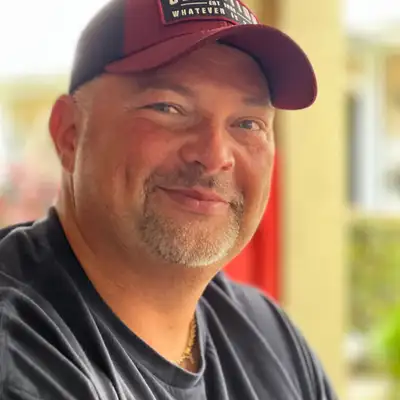
Host
Karl Jacobi
Host of The Grit Factor Podcast, Resilience & Performance Coach, Founder, Entrepreneur, Combat Veteran