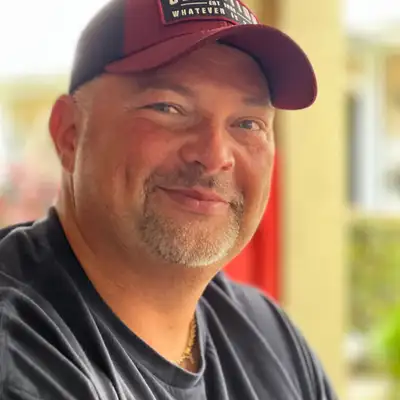
Episode 048: He Asked God to Break Him. The Answer Arrived the Next Morning with Evan Poling.
TGFP Ep 48 Audio
00:00:00 Speaker: Average is the enemy of greatness. Comfort is the enemy of growth. Welcome to the Grit Factor podcast, where we strip away the highlight reel and get into the darkness beneath it. The real stories, the real battles, and the battle plans used to conquer them. I'm your host, Carl Jacobi, combat vet, entrepreneur, resilience and performance coach, keynote speaker, husband and father. I've built, scaled, and exited multiple companies totaling over forty million in revenue. But here's what that highlight reel doesn't show you. Life has been smacking me in the face with a two by four since I was just five years old. Broken home. Constant chaos. No playbook. No safety net. Just grit. And if you're anything like me. You know, you've got another level in you, in your business, your career, your faith, your leadership. You're just not sure how to get there. That's exactly why we're here. Be sure to follow me for more great content, and check out my website success with Karl dot com. Now that's Karl with a K. Now let's get to work. All right. Welcome back for another episode. Today I'm sitting down with a guy who spent his career on the inside of financial system, tracking how money actually moves for some of the biggest banks in the world. Very intriguing. Right? He saw things about business almost nobody gets to see. But that is not the reason I want you guys to listen to him today. I want you to listen. Because he walked away from a six figure paycheck to bet everything on an idea, and he did it with almost no roadmap. Two and a half years in and about fifty thousand dollars of his own money gone, and the people closest to him still telling him to quit. Get a real job. Stop wasting his life. He's in the middle of his fight right now. So no victory lap, no bonus story. However, underneath all of this is a night he actually asked God to break him and remake him. Then watched his whole world come down at once. So if you've ever, if you've ever bet on something before, anyone else could see it and had to keep going while other people you love quietly wondered if you had lost your mind. This hour is for you, Evan, my dude. Welcome to the show, my man. I'm so excited to have you. Yeah, that was a great introduction. Thank you. And I'm really excited to be here. Thanks, man, I appreciate it. Yeah, I'm excited for this conversation because as I was putting together The bio and the guests didn't take my notes and everything. I want to talk about it. I know this show is going to air. This episode is going to really touch some individuals because especially for us dudes, um, ladies, you know, those ladies out there listening. Yes, you can still get some value, so don't immediately tune us out. But there are some things that really resonate with me because I could personally resonate with some of the things you talked about, um, in terms of, uh, pain points and things, your challenges, right. Um, which we're going to dive into here in a moment. So this in a, in a quick, you know, ninety to one hundred and 20s, you know, before biz retire, which is this, you know, built this business that you're building now before any of this, you were on the other side of the banking world, um, investigating how money moves for some of the largest institutions out there. Take me back to that version of you. What did that work show you about business that most people never get to see? What was that life actually like for you before you walked away from it? Yeah. I mean, when I first started, it was super exciting. You know, I had graduated from college with a double major in accounting and financial economics, you know, looking to make my mark on the world. And because I was so busy with the double major and working and doing the military stuff, I didn't get an internship. And so I got into intern doing some contract work and then became a financial analyst, uh, Raising Cane's, which is like a fast food, like chicken finger restaurant and found embezzlement. Like fourteen people ended up getting arrested from my analysis. And that kind of landed me into the anti-money laundering, anti-terrorist financing, uh, you know, transaction monitoring world of banking. Um, and I just remember, you know, so I was, I think the minimum wage was like ten or eleven bucks. And I was making sixteen dollars as a financial analyst. And then there was this contract rule to do these amazing, like investigations. And it was like forty bucks an hour. And I was super excited. Um, I go in there, I know nothing about this industry, uh, start learning about everything that I can absorb all this information. Uh, and then, you know, I start to learn quickly where I'm starting to teach other ways of contractors are coming in. So my first engagement was with Chase and, uh, yeah, that was super exciting time for me young and feeling like I was able to conquer the world. Nice, dude. That's very intriguing. I think we should probably just do a whole episode on that, right? Talk about all the things you, you expose and so forth, especially when you're talking about Raising Cane's. I'm actually familiar with that chain. Um, my son loves that place. It's tasty. That's very. Yeah. Right. Yeah. one hundred percent, man. One hundred percent. Well, dude, let's, let's, let's dive in in, in. Since you, you walked away from that life, right? You walked away from, you know, those paychecks and from the outside looked, you know, would look like a golden handcuff, right? Security and so forth. You decided to walk away from that to do something completely different. Take us to that season or take us to that moment where you took that leap. You know, because a lot of people would think you're crazy, right? They think you're crazy to walk away from, you know, all these different things. Something that's probably exciting pays well, especially based on what you heard from you. So walk us to that moment. What was running through your mind when you said it's time to do something different? Well, yeah, I mean, it's really important to understand kind of the perspective, right? So I had literally found what I thought was the combination of my skills, my purpose within that, financial crimes, compliance and banking. There's you know, there's SA investigation, there's customer due diligence, there's sanctions, there's fraud, there's all these things. And I pretty much touched every one of those buckets, uh, and made a mark doing something pretty phenomenal in each of those areas. So I was really building my resume, um, to be this person that could run, uh, an operation or be a director or even a chief financial security officers. Right. Risk officer. Um, and so yeah, that was a huge, huge shift in my direction. Um, I would say, so that was about a ten year stint that I was in that industry. And so it wasn't a small period of time. Most of my adult and professional career was there, um, about the last four years of it. Um, you know, with Covid and everything else involved there, there was a huge push for work from home and I developed really quickly ways to complete my work efficiently. Um, essentially I lost my last job because so I had a team of ten people. I taught my team lead to do my job. I gave four team members on my team to another team, and I was working about four or five hours a week. And so I created this efficiency in my job. And they were pretty much like, well, why are we paying you to, to do this job anymore? Uh, and so yeah, that kind of ended my career. But during that time, I like to, I like to joke around, I was an acolyte. I was, I was a trainee of, um, the Cody Sanchez's and the Alex Hormozi and really, really kind of fascinated with this world of buying and selling businesses. I always kind of felt like I was one of those guys that would jump into something and do it really well and excel. And I'm like, you know, I think I would make a really great business owner. And to be honest with you, I was very, uh, very not humble person, really thought high myself and like, well, if, that moron over there can do it, I can do it too. I'm just going to jump in an industry, make an impact, and change everything. I'm like the smartest guy in the world. It's going to happen. And that has not been the the reality. I think we all kind of I am I am I alone? Hopefully not. Maybe probably no, no, not at all. I think we've all experienced that to some degree. Right. You know, is looking at somebody else that's successful and it's like, um, if they can do it, so can I, you know, I know I've been there, dude. And sometimes I still have to remind myself where my feet are. Um, let me ask you something, and I'd love to hear your take because I know this is I have a certain direction I want to take this, but I just I heard something I really want to hone in on, especially coming from a W-2 world, right? Or you're essentially, you know, collecting a paycheck from somebody exchanging hours and exchanging time, you know. You know, for a paycheck. Then you going into a, an as an entrepreneur where the roles are reversed, right? As an entrepreneur or as a W2. And this isn't just exclusive to W2. I mean, this could be why, you know, it could be much wider than that. But that system typically rewards busyness, right? Busyness, meaning hours clocked in busyness and tasks that really don't move the needle in things. And so a lot of people take that same level of work ethic, that same, I would say, work ethic, but that same level of busyness. I spent the best way I can describe it into their entrepreneurship world, and they wonder why they can't move their life forward, Right. They carry that same level of hours and production and so forth, and they burn out. I say burn out. I say this, I use this loosely because it's not burnout, it's just misalignment. But I'd love to hear your thoughts. When you shifted, you made that shift from W-2 to entrepreneurship. How did you handle that busy busyness to now you have to be effective what you're doing, not just busy, but effective. Do you understand where the difference is? Yeah. What I'm trying to get at. Yeah. Well, I mean, it goes back to like college. I remember some classes where my college professors would say, you know, showing up is nine tenths of the battle. And that's true when you're working a W-2 job. But just sitting in a chair as an entrepreneur, that doesn't really cut it. Um, yeah, the question is, how did I handle that? And the question and the answer is I, I, I didn't like, I, um, I was trying to make a mark on an industry that I completely I didn't completely understand. I understand way better now. Um, I knew something was wrong fundamentally about it, that it wasn't effective, that it wasn't serving the best needs of business owners. So I got that part right. And I still believe strongly in that. But the way to fix that, the way that I thought to fix that was proved to be incorrect. Um, so I didn't know, you know, I've never done marketing, I've never done advertising. I've never, um, you know, had to do some of these things that I'm supposed to do, let alone moving the needle, like you said in a meaningful way. And, you know, like, I suck at all of these things. Like it's not just one thing I suck at. I suck at fifteen things. And now I got to do all of them. And then I'm sitting here wondering, well, why have I have a good idea? Like good ideas are rewarded in college, right? Good ideas are rewarded sometimes in workplace. But my good idea was not enough. Um, and so there was a little bit of like, what the hell do I do now? I'm glad you said this because I struggle with that too. Right. That's why I asked this because in fact, we just had a call the other day in our in our group coaching call. We call it I call this productive procrastination, right? There is a stream of tasks that we know we've got to do to move our lives forward. It's our business or whatever, you know, just we're just kind of using an umbrella term as our lives, our business, our careers, our relationships. There is those tasks that we have to move those things forward, but oftentimes we don't want to do it because it requires us to be a beginner again. It requires us to be uncomfortable, right? To learn something new, to be uncomfortable. And oftentimes we go back to what we can knock out really fast to get that dopamine of achievement. But that really didn't get anything done right. It just got the task done, but it didn't really move our business forward, didn't really move the needle forward, you know? And that bit me in a tail for for a few years, you know, coming from the W-2 world. And then, you know, where I'm essentially betting on myself, right? So I was just curious how you tackled that man. But, um, real quick, before we keep rolling, maybe life hit you hard. Business fell apart. Career isn't working out. Relationship ended. Health took a dive. And now you're standing in the rubble trying to figure out what the next move even looks like. Or maybe nothing blew up at all. On paper, you're winning, sure, but on the inside, something's off. If you're not in crisis, you're at a crossroads. And the playbook that built the life you have is not the playbook that builds the one you want. Either way, you're stuck. Not broken. Stuck between who you were and who you're becoming. Most self-help just piles more weight on the load you're already carrying. I do not want to do that. I put together a free video series called the Grit Code Exposed, and I want to invite you to check it out. Seven short videos. That's it. The five laws that change everything for me. In every client, I coach the same five that every person who's ever come back from the fire has walked through where they had a name for it or not. No fluff, no ninety minute webinar, no bait, just the free video series. You can start it tonight. Grab it at grit. Code exposed dot com one more time. Grit code exposed dot com. It's free. You don't need any more hustle. You need the next version. And this is how you find it. Check it out. See if it speaks to you. And if it does, I'll see you inside. All right, let's get back to the conversation. Well, dude, let's let's dive into some stuff that I that I had on my agenda because I think, no, I scratched that. I know a lot of individuals can resonate with this because you highlighted on this sense of talking about Covid, right? In the last four or five years, it has gotten extremely easier to get isolated like in this in an era that we live in. We, we, man, we look so freaking connected, right? Screens instead of, you know, in time followers instead of deep connections, right? I mean, you and I could probably have one hundred thousand, you know, followers, that's nothing nowadays. But whatever, you know, a million subscribers or a million followers. But man, we're so freaking alone that, uh, we're about ready to, you know, do something that's dangerous, right? And so this is really what I'm going to take this conversation next because you, you mentioned this on your bio where it was something you battle with. And I want every person to pay attention to this conversation, especially every dude, because we're going to dive into something that's really relevant to us. Let's talk about what it costs you, you know, to walk away from that life, to walk away from that job and that secure career. And because you said your family still thinks that you should get a job, that you're crazy, you're wasting your time, you know, two and a half years in, you know, fifty thousand dollars and so forth. Be straight man. Like what? What has it cost you to keep going, while the people who love you are telling you to stop. And before you answer that, I really want those two to kind of lean in because I can resonate with this. And I know a lot of people probably love to hear your response to this, because the average person would stop. They would stop what they're doing and, and give in and chase whatever they're there. And not that their loved ones are doing it out of malintent. Right? They're doing it from a different place. And I, and I understand that. And I think you do too. That's why we're having this conversation. So talk us through that, man. Yeah, yeah. So the decision, I mean, from the outside looking in, your family is seeing, uh, ten years of a career where I've built kind of a track record and a resume of accomplishments and achievements that pays well, um, to then go after this thing that I kind of know nothing about in all honesty, right? Or at least in comparison to this prior thing that I was doing. Um, you know, I'm trading in, you know, paid time off, uh, benefits. Um, and then there's, there's the, the emotional toil. So my wife, you know, she makes pretty good money in her role. Um, but she's carrying the financial burden at the same time. I'm kind of clueless on what I need to do to push the needle forward. Uh, so there's an element of fear. There's an element of feeling inadequate. Like, man, why is this so hard? Like, am I like, what's wrong with me? Why can't I measure up? Or why can't I? And that's not from her. That's from me. Like, because I want to kind of step up so that she doesn't have to work as much. And at the same time, you know, her and I are getting older. So we were battling infertility. And so then there's questions of is the stress that I'm putting on my spouse. Like, is it my fault? Like, am I causing that? And so, you know, there's really, there's, there's a lot there, right? And so, um, you know, the people closest to you can say the things that hurt the most. And my wife, for the record, has been a saint. She's been super supportive. Um, she's voiced her frustrations. Um, and there was an ultimatum where, you know, by February, I think it was February, I needed to get a job. And so I am working a part time job now even. Um, but I'm actually working, I'm getting paid the least amount of money I've ever been paid in twelve years, which is also a big hit on, on my pride as well. I can imagine. Um, but I'm working for a business consultant firm. Um, and now I'm surrounding myself with people who a, have had successful businesses And people who have helped other business owners become successful. And I sit there and listen to their advice to business owners who are struggling. And so I'm trying to surround myself with a perspective, um, with highly motivated people, knowledgeable people that by just being around them will help motivate me and give me ideas, give me clarity of mission and vision on what I'm trying to do. Um, and that's the reason why I took that job because it's, um, part time job is it helps with that perspective. Mhm. Thanks for sharing that, man. And, and I, and I don't say that loosely, right. I say this because there are a lot of people that are going to listen to this or watch this, that are listening to your story, and they're looking at the same probably crossroads that you're looking at, right? And they're like, well, you know, everybody else is saying, you know, X or this. And sometimes it does come down to swallow our pride and doing something that you know, we don't want to do, but we realize that there is a need for it. We're getting a part time job or doing something on the side while we're still working on our dream to move that dream forward. Right? Yeah. And, and I appreciate you saying that because a lot of people are out there, they think that it's either all in or all out. You know, it's either all in on our business. And I get that mentality to a degree. But until that business is rocking and rolling, you still, especially if you have a family, you've got people that you, you've got to take care of, right? Um, if it's just you, then that's a different story. Right? But you know, if you have a commitment, if you have mouths to feed, if you have a family to provide for, and you're in that season, then we've got to do what we got to do to provide for them. You know, because that's, that's what we're supposed to do. Yeah. And I also appreciate you talking about how. That affected you mentally and still. And I say that in the past tense. I'm I'm sure that's still affecting you to some degree today. Oh, yeah. Absolutely. And there's a lot of people that's probably listening right now that are on the edge of giving in to that voice, right? Man, what's wrong with me? Or, you know, all these different labels, their brain's probably screaming at them because they're learning something new. What, you know, industry that they came from where, man, they, they had all types of achievements, their resume, everything, the titles. And they come in some completely different. And yeah, they're, it's, uh, it gets into a very toxic wasteland in their minds. Right? And, um, anyways, so I appreciate you sharing it, man, because I think a lot of people were battling with that, myself included. Right. Um, what with that, you share something that as I was putting your bio together, it really stopped me cold because I've been there. Um, you said it in a different way, but I, I can resonate with this. You said that there was a season where you asked God to break you and remake you, and then the next day, everything came down at once. The scholarship, the relationship, the car, the job, the, you know, everything. Uh, even a fractured spine, if I remember correctly. So take us there. What was going on inside you that make a prayer like that? Um, and then what it, what did it feel like when the answer showed up in the way it did? It did. Yeah. Um, I gotta give you a little bit of backstory, I believe. Um, so my, my parents divorced at a very young age for me, and my grandparents really kind of stepped in as I was living with my mom. And my grandparents were really those just that couple that really had this, what seemed like a great marriage for us. Um, they, they loved us unconditionally. There was just such a, um, I don't know, just a power and presence with them. Right? When you're with them, you just felt safe. And, um, they were kind. And I was in a season in life where, you know, I wasn't really popular in school. Um, I had just gotten out of the military, so I was a little bit more buff, a little bit more confident. Um, met this girl. And so my, my grandparents are, are very, you know, very Christian, very conservative or were very Christian, very conservative. And, um, they, they kind of found out, I guess from my mom that I had been doing sexual things with, with my, with my girlfriend. And, you know, that broke them because for them, it wasn't a condemnation of my actions as much as it was a kind of a broken heart, that the way in which I built the foundation of that relationship wouldn't allow me to have a fifty five or sixty plus year marriage where there was contentment and continually growing in love and kind of that that atmosphere, like you just you just felt that in their presence. Anybody felt that. And that came from years and decades of building together. And the foundation which I was building this relationship was based on what can I get out of this person versus what can we build together? And, and my grandfather came to me and kind of confronted me about it in a loving way, of course. Um, but it, it kind of dawned on me, like the wisdom that he gave me and the desire for me to have a relationship that was founded on, you know, this, this rock, right? And so, um, it kind of broke me, um, because I really respected him. And I realized that he wanted what's best for me. It wasn't condemnation. It wasn't this, you know, oh, Christians are coming down on you. They're saying that, you know, this lifestyle is bad or whatever. It was a true intent for, for, for wellness and for my benefit. And so, um, so they were staying in my room and I was sleeping out in the, the living room. And so in our house we have like these big skylights. And so something about that. So, so I prayed, I prayed that night, um, because I really felt like I'm kind of messing up and I, and I asked God, I said, you know, like, I, I kind of still want this in this relationship. Like I, I enjoy it, right? So it's just an honest prayer and essentially, hey, I need your help to get out of this. I, I don't want to be this guy anymore. I want to have a trajectory in life that honors you that's influential in a positive way. Um, this is the way I want to live my life. This is the legacy I want to leave. And so from that heart and that conversation, it was literally God, I know that some of the best things in life or those moments when you kind of turn the road. I want you to break me, remake me, rebuild me, reshape me into the man you want me to become. And, and so I'm sleeping out, you know, in the morning, you know, as soon as the light comes in, it's hitting you in the face. And it's kind of like an orangey glow. It's almost kind of like this. You could kind of think of like a video game, like the perfect lighting, the angle. You kind of felt something weird, like something was. Yeah. Huh. Something different. You know, the next morning I wake up, I'm like, all right, this is a little weird, but I'm like, all right, just, you know, get up, get ready. I had some things to do. Sure. I eat breakfast like an hour later, I get a call. I believe it was from it was from ROTC. So I was trying to so I was in the military. I was trying to do ROTC to get my scholarship at college. And they said, look, you're not going to get a scholarship. So your scholarship is no longer on the table. You've lost that. I'm like, oh, crap. Well, I got to go to college in a month. Like this is. Yeah. Okay. What did I do? Crazy. About half an hour later, I get a call from my previous job I was working at at a gas station, and I'm like, well, uh, I called in and said, hey, what's my schedule? Actually, I called them. I said, hey, what's my schedule for the week? I want to come in and start working because I was, I was on a trip for a couple of weeks with my girlfriend at the time. Um, had just gotten back about the week prior. And, uh, they're like, well, you're no longer on the payroll payroll. You, we let you go because you went on a vacation. I said, well, I told you guys about the vacation and you know, all this stuff, but like, no, just come and get your last check. Like you're, you're no longer work here. Like, all right. Well, the gas station was next to my girlfriend's house and I said, hey, I'm going to come, I'm going to go over and get my paycheck and let's hang out. I'm kind of it's been kind of a crappy day. I just want to hang out. Okay. Yeah. So I go get my last paycheck. I go to her house and then we're talking. And so then we're driving somewhere. And they had repaved this country road and it was like the loose kind of gravel. And she, she made a comment, she criticized my driving and I was just kind of being facetious. I'm like, like this. And I kind of jerked the wheel. Next thing I know, the car whips and then I end up in the ditch, completely crunched the front end of the car, the bottom of the car comes up, brakes like literally shatters her her heel. I break my spine. Um, so we, you know, we go, we end up going to the hospital. Um, and then like a week later, her dad. And so they ended up suing me for like the reconstructive surgery and everything. So this is all, all in a span of like a day and like, and then the lawsuit of a week and I'm just sitting there like, okay, well, thanks God for answering the prayer. This is not exactly how I would do it, but, uh, okay, you're going to do something. You're gonna make something good out of this, right? And so yeah, yeah, fast forward through college. Um, I ended up going to college with a scholarship. By the time college is over, I have no student loan debt. So through scholarships, through the military, through a generous great uncle of mine, literally, and my mom, my own contributions, like no student loan debt. So it was as if I had gotten a scholarship. Um, you know, I had worked through some of the issues and kind of dependencies on other people and relationships, you know, like women and stuff. Um, was getting mentored by a pastor kind of changed. I was still, I was still at that time. I had, I always kind of describe myself as one foot in the bar and one foot in the world. Um, but I ended up meeting my wife and that was a whole nother crazy prayer thing too. Um, which I'm still married to today. Um, and so out of that was a renewal and a trajectory that really did, I think, kind of reshape my life and just my experience with God and faith. and a very profound way. Wow. Interesting. One thing you mentioned a couple of things which I fail to catch. Uh, you said you're a veteran, so thank you for your service. Um. What branch? I was a Army National Guard. Okay. Awesome. What was your MOS? It was a sixty eight whiskey combat medic. Combat medic! Okay, awesome. Uh. All right. Prior, you know, I'm Army here, so it's cool. Oh, cool. It's good to meet you. Yeah, man. Well, cool. Well, somewhere in that rebuild, your whole relationship with money flipped. You told me that money is a result, um, not a goal. And that the people who chase it as a goal will compromise everything to get it. Where did that belief get forged? Was it in the financial crimes work was watching people cross the line. Or was it something closer to home? Yeah. That's a you know, some people may or may not like the Bible, but the, the, the core thing that I want to really kind of highlight the Bible talks about money. One of the topics more than anything, it's not that there's anything inherently wrong with money. That's true. But the honey, the money really speaks to the condition of the heart. Um, money represents power, influence, um, security and something other than like God. Right. And so there's, there's a lot of ways that it can be transformed into something that's bad. And I think, um, over a period of time, especially in financial crimes world, like the, and then like, even as the Raising Cane's financial analyst, one of the most successful, um, general managers out of our thirteen location, um, was the one embezzling money out of the out of the drawer. And for him, um, he wanted to reward himself. And so for him, the heart condition was, well, I deserve this. I'm doing the best. I'm going to take what's mine. And so if we, if we're driving a business based upon money, a, we will, we will switch gears and jump on a different boat at any time when we feel like it's convenient for us. And this is why we have like shiny object syndrome sometimes go here, go here. This opportunity looks better, but the grass isn't greener. It's still fertilized with shit right on whatever side that you go to, right? It's still crappy either way. Um, and so yeah, or you'd be willing to cut corners, um, to hurt people, to do crappy work to get it if money's your objective. I heard a sermon and I'm going to butcher this, but it talked about in Genesis, it talks about man working in the garden. And then there's a there's a passage talking about the the gold, there's gold. And so the reference there is kind of like the money or the richness of the area. And so the work came first. So, so service produces money. It's a result of good work and service. It's not the other way around. Um, and we have a fascination in our society to pursue money at all costs. And I think if you are, if you have a mission, a vision, if you're accomplishing it and adding real value to the world, what will end up happening? The money will naturally flow as a result of that. I believe that's so true. I, I agree with you. I, I, I've seen that multiple times in my own life, right? In full transparency, I found myself sometimes chasing money harder. Right? Um, and I found me personally, I love to hear your thoughts on this. I found if I chased money, if the harder I chased it, the harder it was for it to come, right? Um, but if I just chased a mission, if I just chase of being of service, being useful and providing value, um, the results would be inevitable. And results being one of my mentors a long time ago called money certificates of appreciation. Right. Um, you know, and I, I, I firmly agree the, the less you focus on money and the more you focus on just serving people and being of value and increasing your value in the marketplace, you know, the money will flow. Um, and to your note, you know, biblically, um, you know, everything in that book is, you know, there is nothing in that book that will steer you wrong, right? Business relationships, everything, um, is, you know, is the best operator manual that you will ever find, you know, and to, uh, and it's, it's applicable to any area of your life. Right? So. Right. Love that you mentioned that. So you, you got so you had some people mentor you, you got mentored by a pastor. Um, and I'm sensing that there's community that came into play in here at some point in your life, because I really want to dive into this, um, because you said you can't win without community, that you will always need somebody, right? For a guy who's been grinding mostly alone, myself included, I mean, I, I have to intentionally put myself out there, um, because it's so easy to get isolated in this world. That's a real mission, right? So what does leaning on community actually look like for you now? And give me, if you don't mind, give us a specific moment where it carried you when you wanted to walk away. Yeah. Um. I think it's, I think community is important. There's a saying that I heard growing up, it takes a community to raise a child. And I always thought that was kind of the dumbest thing ever. But then I realized that there's a lot of wisdom in it. Um, I think that having people that you can rely on that will push you, that will speak truth to your life is important. For me. It's the community of church, right? Community of other people that are on mission, similar mission trajectory that I'm on that can spur me along on those things. Um, you know, a recent struggle that I've had, well, it's a struggle that I've had all my life and I don't know if can we, can we talk about the topic, the forbidden shame topic? Yep. That I was leading right into that. So let's do it. All right guys. So if you're, you know, ear blockers on if you're if you're fragile, but here, here it is. So, you know, when I, when I was a kid, I discovered pornography, uh, very, very early on. And as a kid, like the dopamine hit the. The feelings that come with that is huge. And a lot of times you don't know how to deal with that. But for me, it was a a coping mechanism to escape whatever I was feeling because I didn't know how to deal with that. And I eventually went to some counseling. But I don't attribute my success to counseling. But one of the things that was said to me was that, Evan, you as a child, you coped with things with a child, like a man like solution. Um, but that that's not meant for a child to use. And as a man, you have to deal with your problems like a man. And so, um, a lot of times we'll carry from our past habits or patterns that served us well as a, as the old version of us. And, but we have to realize that there are, are things that we have to grow into. And so, um, for me, like I couldn't walk into a room without being an aimbot. And aimbot is funny because I volunteered with the youth and it's a video game reference where the controller or the or the crosshair automatically aims onto your enemy in the video game. And so aimbot is with your eyes. You're, you're, you're locking on parts of a woman's body and kind of like sizing her up or thinking about her. And because I was training my brain to view women as an object or something for my own pleasure, and because I use that to cope with. And so then I'm training my mind. So in the real world, I'm thinking that way. And then, you know, when, when, whenever I would be faced with trial or difficulty, I would find myself being more irritable, more angry, because I didn't know how to deal with the emotions. I had never really sat down and experienced them, learned how to cope with them healthy. You know, as men, we're kind of told to like, be tough and deal with it. And yes, I think there's some element of that's true. Like we need, we, you know, the Bible, someone says you have men have broad shoulders to carry broad loads, but at the same time we have to be able to know our emotions and experience them. The counselor also made may notice to me that I didn't even know my body. So like when I was getting upset, I didn't even know my body tensing up or how I was raised, my voice or all these things. Like I couldn't even feel what was going on because I was so numb. And so going back to the community element of all this, circling back the I had tried to pray it away. I tried to read my Bible harder, I try. I did all of these things in isolation and I would hide it because I don't want anyone to know that that was me, that I was that guy. But when you speak something you're struggling with out loud and verbally to other people, and they hear it and it loses its power, its grip over you, something about it will just diminish and disappear. And so it was really important for me to get into a community of safe people that understood my struggle. Um, and that when I spoke my hundred pound burden for them, it weighed like two pounds. And so I, I had all this freedom and they were barely carrying any weight. And so that's the power of a community in areas like this. Um James five sixteen says, confess your sins to one another so that you may be healed. And the problem was, is I'm, I was unwilling to share what I was struggling with, with other people. You know, this is not like Catholic priests, you know, that's not what it's talking about. It's talking about the real vulnerability of, uh, making your sins known and then allowing it to lose its grip over your life. And so, um, yeah, without that, you know, I would still be locked in isolation. Um, that community helped me get into the gym and find a healthier way to cope with some things. Um, but to strengthen my body for service of others like, hey, Evan, I need help moving something. Okay. I'm there. I got you. Let's let's work out together, you know? Um, yeah. And so community is so important. And then, I mean, we can, we can wrap that up into business. But I want to give you an opportunity to respond. Yeah, dude, this is this is perfect. You know, and this is exactly where I want to dive into because, um, I, I can relate, you know, as I go back and recall, um, I had a problem with that, you know, and I think a lot of guys can resonate with this. I can't speak for ladies. Uh, so sorry, but, uh, but I can't speak for the dudes out there. I think a lot more than they want to admit. Deal with this. And I also know that a lot of them want to do something about it because there is no, uh. How do I say this? There's there's no, um, Uh, I can't think of a term I'm trying to come up with, but it's it's embarrassing, right? I mean, it's not like he was going to church, like, yeah, I, you know, I have a problem with porn, right? And you'll forever be judged, you know? And so it got to be delicate, you know, for me, you know, as I'm hearing you talk about him, it's like, man, that took a lot of courage to say something, right? And so many people think that there are only ones dealing with that sad problem. And carrying that weight is so freaking heavy. Right? It is. It gets you so exhausted. It's not the sleep kind of exhaustion that sleep can cure. Right? But what do you say to the guys out there that you know, that are listening, that are like, man, okay, he just, he just, he just said this p word, right? Um, not that one, dude. Anything else? Pundit. Pundit. Uh, yeah, I know. A nice play of words right there. Right. But you know how what? How do they do that? Like how how do they free themselves from it? Talk to that guy out there who's struggling. They see it being a problem. They don't know how to let go. They don't know how to process their emotions. I've been there, you know, and I unfortunately got it from my parents, my dad. And I'm not faulting him right because he was brought up a certain way. Those, you know how he was programmed. And I want to think and believe that he did the best he could in my life, right in bringing me up. And I love him to death. I he's a very hard working man and so forth. So there's no nothing against him. It's just how we were brought up with the problem of race. So for us, that didn't have that kind of program where we're exposed to that, and we use that as a coping mechanism. How do we free ourselves from it? Yeah, I think so. The Bible talks about every sin occurs outside of the body, but sexual sin is inside of the body. And so there's there's a level of seriousness. You know, going back to my prayer with God, because I was committing sexual sin, I asked the prayer for God to put me on a trajectory. And he was so happy to oblige because it it's better for me to have experienced all that heartache than continue down that pathway of sin. And so the first thing is recognizing the seriousness. A lot of times guys will say, hey, this is not a big deal. I'm not having sex with anybody. I'm not hurting anybody. That's the first lie. Um, that's not the shame. But you have to recognize that it is a problem. It destroys marriages. There's so many guys in my group with marriages that are currently on the rocks or have been completely obliterated. And so it will steal joy from your work, from with your kids. It is a serious problem. And like, for example, if you have a flu, you go and take some meds. If you have cancer, you cut it out and kill it. So this is cancer. So there is a different type of action and response to something that will ultimately kill you. That's the first thing. The second lie to demolish is that no one else struggles with this. Seventy percent of Christian men, Christian men struggle with pornography, seventy percent. And so if men who are trying to live by the Bible and by truth and really do have a genuine heart to follow God are struggling with it, then everyone's doomed. We're all doomed. And this has a lot of power. So you're not alone. And there are people who understand. There are people who can help. The third thing is, is find a group. What I found in Bible studies is, is that we can talk about Jesus, but we can't talk about porn. What I've also heard is in groups like AA Sexaholics anonymous, you can talk about porn, but you can't talk about Jesus. And so for me, I had to find a group that merged the both. There's a group that I attend. It's called revive forty. Revive forty dot com. It's specifically to Phoenix, but they're trying to expand nationally. But that group has been awesome. It's been around for twenty five years. A lot of men have found healing and restoration and freedom. I'm about a year, half and a half without porn or masturbation in my life. Um, and so I found freedom with that. Um, and it's also helped women find, um, there's a group called beloved, which is, uh, healing from betrayal of the wounds of the hurt that the husband has caused to them. And so a lot of marriages have come back together, even through adultery, through like what you would think would really just shatter lives. Um, and a lot of marriages have come back even stronger and better than ever before. And so there is help out there. You just have to be willing to take the steps and find something and share. Share with something. I found the one on one. Accountability has not helped. It's the group of like twenty men. Everyone's there. There's kind of this. Just this mission. There's somebody in that room you'll connect with. Right. Um, and that has been super, super helpful for me. Mhm. Thank you for talking about this. You know, and, you know, I, I know, you know, if I'm telling you I'm one hundred percent comfortable, I'd be lying, right? I mean, but it is something we do need to talk about. It is something that we need to put out there. Because to your point, I didn't realize that's a high number, dude, seventy percent a Christian man. Dude, that's that's forty million in the United States, forty million Christian men. Yeah. That's the that's the number. That's why it's called revive forty. That's crazy. Yeah. Mhm. Wow. Yeah. I'm kind of speechless, to be honest with you, because, you know. Yes. I mean, I did recognize that the problem was rather big. It's rather substantial. But when you put a number behind it, it's like. And then you say, you know, of the Christian community, it's still a big problem. Yeah. And yeah, it just kind of puts a different perspective real quick before you go, if you're still with me this deep into the episode, something in it hits you. Maybe it was the guest, maybe it was one line. Either way, you're still here. And that feeling in your chest right now, that's the signal. Most people get a signal like that and do absolutely nothing with it. They close the app, life rushes back in, the moment's gone. Six months later, there are the exact same spot. I don't want that for you. So I put something together. I want to invite you to check out a free video series called the Grit Code Exposed. Seven short videos, the five laws. I walk every client through, the same ones that rebuilt me when everything else fell apart. And if you listen closely today, you heard them running underneath the entire conversation because everyone who's come back from the fire walks through these five laws. Some find them on their own, some get help, but the laws don't change. Free video series. You can start it tonight. No fluff. No ninety minute webinar. Just the series. If you're going to do something with what you heard today, do this before life talks you out of it, go to grit Code exposed dot com one more time. Grit Code exposed dot com. And hey, before I let you go, thank you for riding with me this long. It means a lot more than you know. Thank you. Something I want to mention real quick, because you mentioned this a few times, and I like to get your take on this. When we oftentimes ask for something, we think of a certain result of what we're going to get right. For example, if we ask God for patience, which is nowadays, I don't ask for that because guess what he's going to do? He's going to give you an opportunity to develop patience, right? So as the phrase goes, be careful what you wish for. But. As you're praying for these different things, you know, you're, you're praying for, you know, the, you know, this, this change and praying for, you know, whatever is in a way to remove what were you expecting to actually occur when you made that prayer? Like walk us through that moment. What were you actually expecting in an at time. Uh, I kind of thought there would be a slow burn, you know, just like, okay, over the next ten or fifteen years, it'll make me a better guy. And, you know, I'll keep sleeping around, but eventually I'll get over it. And, you know, I just, I don't know, I kind of haphazardly went into that prayer, uh, without the fear of the Lord. Um, but, you know, it wasn't a and it's cool to see the redemption. Like I really wanted to point to the fact that I, you know, graduated college essentially with no debt, you know, eventually got paid off like six months or a year later, but essentially with no debt. Um, you know, found the love of my life the most amazing woman. So there was so much redemption in that period of time, you know, closeness to God. Um, that looking back on it, I would never have traded that horrible experience I had and I never would have looked at that. I don't look at it as like God was horrible or this angry. Of course not God. Yeah. He, he wanted what was best for me. And I was allowing him to work in my life. And so, um. Yeah, I mean, God, God wants that. Like, he he's all for it. Yeah. I'm often reminded of a phrase. I forget who it was, right? But even in my own life, I've had boulders placed by God. And it was the thing I was actually hoping for was the best thing that never happened to me. Yeah. Right. It was the best thing that never happened to me, because the things I was actually hoping for, praying for were actually, if they were played out, would be catastrophic for me, you know, and it's oftentimes not years later until you realize, man, I'm so glad that that path didn't go down the way it was supposed to go. Or wait, I wanted to go down. Right. And, uh, that's such a great point, man, because, you know, when we ask for something and if we want it, uh, be careful, right? Because it's not going to be on your timeline. It's going to be on his and it's going to be likely a boulder. He's going to drop pebbles at first to get your attention. Then it's then probably be a boulder to get your attention. Fast forward a little bit, man. Or maybe it's not so much of a fast forward, but there's a second rebuild happening right next to the business. You've been getting your body back and finding an addiction that most men that won't say out loud, we just talked about. So how does discipline you're building in private connect to the man trying to build business biz retirement public? Or are those two different fights or are the same? Yeah, I think I think there's a physical, emotional, spiritual aspect to anything. Um, the physical, you know, getting back in the gym has really helped with focus, uh, confidence. Um, and then even the camaraderie with some of the guys that I go to the gym with and work out with. And so that's, I've been doing that for almost a year now. And I'm, I'm the strongest and the most fit I've ever been in my whole entire life. And so even when I was in the military, which is which is really great to say and great to experience as well, um, Bizzarri has been more of a, and I think it's another kind of a lingering issue, not issue, but a challenge that I've struggled with. Um, I always really scored high in school and I was really one of these kids that didn't have to work hard. I could sit in a classroom, ace all my tests, you know, um, I studied like ten hours in college. Well, it's, it's a double edged sword because yes, it's great because I didn't have to do some of the same things, but I didn't learn the skill of working hard and failing and the resilience behind that. And so this is really been kind of one of those, those things for me where, um, you know, I've, I've also coped with distractions, you know, doomscrolling or playing video games. Um, and so coupled with the lack of work ethic or maybe not. Work ethic is the right word, but the persistence to stay on track and kind of just go after it. It's like I can work hard when I'm focused, but that focus has been really hard. But then you compound building a business with I have no idea what I'm doing. I suck at everything. I'm not getting any kind of positive reinforcement or feedback on my efforts. Right. And so am I doing the right thing? Do I just need to do more of it? Should I shift it over here? Right. So you have all of these internal conversations. You're trying to figure out what the heck you're doing. Um, and so yeah, like going and busy retire, I made. So the big assumption I made was, is that majority of business brokers, um, as a third person in the transaction between buyers and sellers of business, um, it's just inefficient and it's not to the best interest of the business owner. I still believe that's true, but I would refine that thesis a little bit more. And so that's kind of the journey I'm on. Um, yeah. Interesting man. Well, fast forward to today. Current times. Right? And you you kind of brought this up. I really want to pinpoint it. You know, you're working on biz biz retire. Uh, you're bringing in a CTO and you're doing all these amazing things, AI driven services. What are you working on or what are you most fired up about today right now that the world hasn't yet seen from you? Yeah. Uh, part of me wants to keep it under wraps. Part of me wants to explain it from the rooftops, but, um, because of my budget restrictions that I've, they've kind of been arbitrarily placed on me by my wife, you know, God bless her. Uh, but that, uh, lends itself to creativity. Like, you know, I'm not doing the traditional advertising and things like that. I want to, I want to create a platform that connects business owners, business buyers and business advisors together. And I think I think most platforms don't do that most platforms. So if you look at like my major competitor, which I will not name, but they ninety percent of their customers are business brokers who list business for sale listings on the platform. And I think, um, business owners don't know any better, right? There's so many other advisors that can help them in a much better way and a much wholesome way that will elevate their business. Um, and I'm learning that in the business consultancy firm that I'm working for, and I don't want to provide those services. I want to be the guy that connects all of those parties together so that the transaction, the, the owner gets the most value, the buyer finds the best businesses and is able to work directly with the owner. No middleman, you know, buyer, broker, broker, owner, owner, back to broker, broker, back to buyer, like that's super inefficient communication. Um, and then, you know, advisors that can advise both of those parties to be successful, both pre-sale during sale and post-sale the business. And so really working on creating a connection point for that. And so that's, that's what we're working on right now. Nice. Love it man. I can definitely see a need. And I've been in business for over twenty five years, sold multiple companies, started a scale and exited them all and bought more businesses and exited those. And, uh, so I could definitely see a need in that man for sure. So you pointed out that, uh, you know, part of your mission that, uh, businesses go up for sale but never actually sell. And you mentioned Cody Sanchez. You mentioned, you know, I know Cody talks a lot about buying boring businesses and, and stuff of that nature, right? For the owners listening right now that poured their life into a business that has no real idea of how to get something to show for it. Where do you send them? You know? And where do they where do they find out how to proceed and what do they do for their business? Yeah, this is a great question. You know, I think the owners, if you're owning a business, you hear, hear my voice. Um, eighty percent of businesses that go to market, whether the business owner takes it to market themselves, they go through a broker, whatever eighty percent of those will never sell, never. There's, there's no chance that you'll ever sell it. Um, and it's because the owner holds on to their perspective of the business where there's more of an intrinsic value or a, um, you know, value that is not actually based on reality. And then the buyer comes in, they look at all the numbers and the owner's like, well, you know, we don't advertise and it's word of mouth. So everyone loves us Or hey, well, um, you know, there's a lot of potential here, right? You know, so I want to. Yeah. So the buyers are buying the future potential, but they don't give that value to the owner. The owner doesn't get the value, the potential future the buyers do. And so the owners try to capture a lot of that. And they think that they deserve that. They only capture the value that they've created. And a lot of times what the owners created is a, is a one person reliant business model with policies and procedures that are a mess that no one knows what they're doing. Uh, yeah. B players or C players in an organization that have not been trained or not easy to work with, they don't have legal contracts in place to secure suppliers or, you know, to sell to customers. Um, you know, so there's, there's all these problems and an owner thinks, well, hey, it's been doing well for me and I have all this stuff locked up in here. Why can't. Why isn't it valuable to a buyer? Um, you got to look at your business as a product, right? When you go to sell something to a customer, you package it in a nice box. You have instructions. It's easy to to use and to understand, right? And, but owners don't package their business in that way where buyers like, oh, look at this, look at this beautiful box of chocolates that I just, I got to swipe the credit card for. Um, and I think that's where they're really missing the mark on selling their businesses. And that's why their business will never sell. And then they've done something for forty years. By golly, they're never going to let an advisor come in and help them, uh, tell them what to do to make the business sellable. And so for that reason, they'll, they'll never sell. There's a lot there. But that's unfortunate, isn't it? Yeah. That's unfortunate man. I, I, I have actually turned down quite a few businesses because of that, you know, to because it was it, if I bought it, I was buying a job, you know, I wasn't really buying a business. I was buying a job and I'm at the stage. I don't want to be an operator, you know, I don't want to be in that business working twelve, fourteen, sixteen hours a day so that that time of my life is gone. Uh, yeah. You know, I have no, no desire in that. Well, I mean, this has been such a good I was going to touch on that real quick. I think that there are some people that should be operators. Some people should go from a W-2 to become an operator. Something's there. They can figure it out. But then maybe after you sell your first one, you're no longer wanting to be an operator for you. You know, brought it up to where it needs to be. And we need a, we need a way that we can finance those small businesses for the next generation of entrepreneurs that don't have a bunch of capital. And so I do. That's one reason. That's one thing I do like about Cody's model of seller, um, owner financing, right? But also on the businesses that are kind of self run, you're never probably hardly ever going to get any of those one hundred percent seller or owner finance. And so, um. Yeah, I guess I'll leave that with yeah, I agree man. That's great wisdom right there. Great information. Thank you. Well man, dude, where can you know for those that are, you know, they, they heard you either they want to connect with you or learn more about you, what you're doing with biz or they will support and encourage you or maybe say thank you for what you said today. Where can they find you? How can they connect with you, man? Yeah. I mean, you can check us out biz dot com, but, uh, my most used platform is probably LinkedIn or X. So you can find, uh, find me there on LinkedIn, my personal also biz retire and then biz retire, um, at biz retire on X. Awesome man. Thank you so much, man. I'll be dropping all that in the show notes as we're wrapping up, man, I've got some rapid fire questions, some of these I've prepared you for. Um, in the green room in this season that you're in building business attire and things you're working on, how do you personalize or how do you personally define grit in this season of life that you're in? Um, grit is holding on to a greater purpose and doing everything you can to, to move towards that in a, in a reasonable and sometimes unreasonable manner. Mhm. I like that unreasonable and reasonable one hundred percent true. Awesome. All right. When you're in the trenches, man, lights are out. What what quote or directive or even scripture do you find yourself, you know, coaching yourself through those times? Is there a quote or scripture or anything that comes to mind that, uh, helps you get through those times? Well, uh, my faith is always my compass. Um, when I, when I question decisions, but if I if I'm faced with a hard decision, I remember kind of this dialogue of choose your hard. And so it kind of goes like this being fat is hard. Being fit is hard. Choose your hard. Right. And so I think we always come to a crossroad where we have two hard choices and we have to choose which hard we want to choose, and we have to go after it. One hundred percent agree, man. One hundred percent. Mhm. It's been a good man. It's really good. Last question comes with two parts that I prepared you for in the guru. Now, those that are watching listen, especially if you're listening or watching for the first time, guys, I love to offer my guests opportunity to challenge my next guest with a question their own. And they have no idea who the lineup is. So Evan has no idea who the next guest is, who this question is going to be for. So you just have to tune in to find out. So my man, Doctor Matt Modi has Rudi, if I said that correctly, had this question for you, was there ever a moment where you have quit or considered quitting earlier? Have you ever stuck with something for longer than you probably should have, because you were having trouble even considering a change, and for what that might look like? Oh. I told you these these questions have landed perfectly for every single guest so far. Yeah. I mean, I think that's my career. Um, I question quitting it so many times. Like you said, the golden handcuffs. And I realized I needed I was built for more. I felt a conviction from the Lord that I had more to give the world. And I needed to take a step of faith. Um, and so I had to, I just had to do it. I had to step out and start this journey. And yeah, so I quit it and I and no, no results yet, but I'm hopeful that there will be something good that comes out of all this. One hundred percent man. I'm glad you said that. You know, you consider quitting every day, right? I mean, I know I've been there and businesses and everything. I don't think there was a day that, uh. You know, I just want to quit less, right? Um, I just say, okay, one more day. Tomorrow's a new day. Just one more day. We're about quitting tomorrow, right? But, um, just push it off till tomorrow, and you'll be good. Yep. That is one area where procrastination will probably help you. I'll quit tomorrow. I'll quit tomorrow. I promise. Tomorrow. Yep yep yep, one hundred percent man. All right. Man, what would you love to challenge my next guest with? What would be a question that you would love to drop on him or her? Yeah. The question I would challenge the next guest is, uh, imagine your funeral. When people get up and recognize you, what will they say about you? And is what they say about you the legacy, which is what you want them to say about you, the legacy that you're currently building? Ooh, that's deep man. That's good. That's deep man. I'm looking at the guest lineup and it is perfect. And I can't tell you who it is, so you just have to tune in and see how it plays out. But man, that was so good. Well, dude, man, I really appreciate you sharing this last hour with us, man. So much amazing information here, especially for, you know, for us dudes that struggle with some of the things that we struggle with, you know, porn addiction and, um, isolation, especially with those two combined. Um, it's even just like pouring gas on the fire, right? Absolutely. So thank you for coming here and being vulnerable and sharing all this because I know how hard that is, man. It's not something. Every dude just goes in and says, hey, I suffer from this. You know, um, it's kind of shunned upon. Um, so thank you. Appreciate you having the courage, man. Yeah. Thanks for having me on. It's been a pleasure. Yeah, man. Absolutely, absolutely. All right, guys, those who are listening and watching the gap between average and excellence is just action guys. Even in perfect action. Don't just listen to Evan. Take one thing he shared today, of all the things he shared and use it with the next twenty four hours, that is the cost of listening to this show. Use it today. Be the reason somebody doesn't quit today. Don't just keep this episode to yourself. Someone in your circle needs this right now. Send them this episode. Evan again, my dude, thank you so much for stepping in, man. It was an honor to have you. Thanks.
Creators and Guests