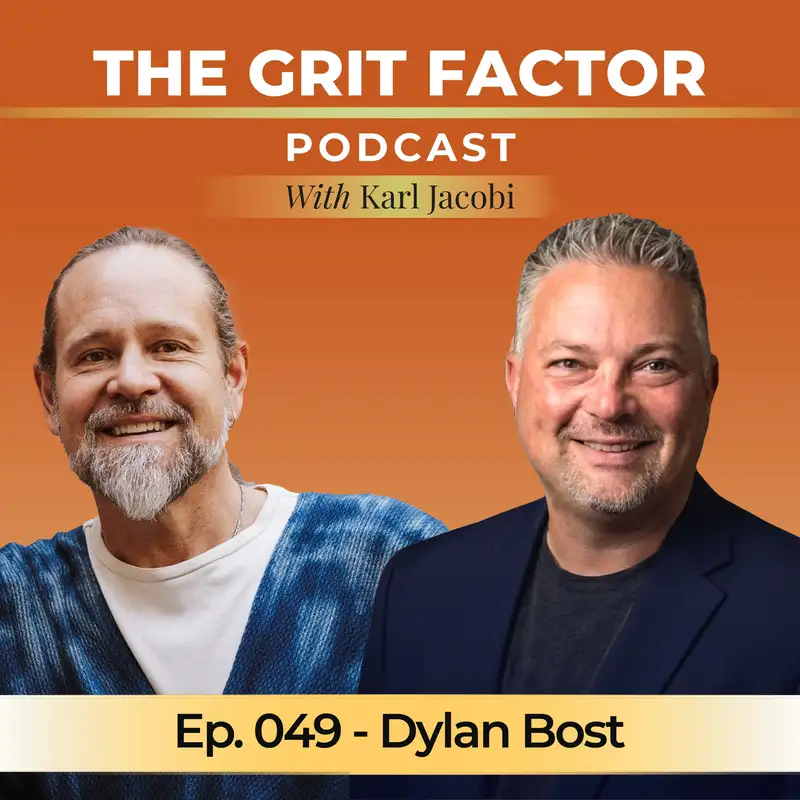
Episode 049: Thirty Years of Winning. Then His Wife Said Call the Bankruptcy Attorney with Dylan Bost.
TGFP Episode 49 Video
00:00:00 Speaker: This is the fun part. To me, it's like, what logistically are all the treat this as an enjoyment, right? It's like it'd be like saying who would talk themselves out of college if they actually knew the amount of work it would take to go through four years. All of us would. Right? But, but instead document it, say, well, this here are the I did this for my company, Sony HQ. Right. Um, I had started a company in the past, but we all know where that ended up. And I wanted to do this differently. That's out of my head. I chunked that down into basically an eight week process. You choose how many weeks, how many days you want, right? But for me, I was like, if I just do these things this week, and then I took that to days. So I had X amount of things that I literally had to do. And I look at it like this. It's like going to the gym. No one listening to this expects to go to the gym two days and come out with big muscles, right? And to be twenty pounds lighter. All right. Welcome back for another episode. Today, I am sitting down with a guy who spent about thirty years building things architecture first, then Disney, then his own agency, and now he runs a company and has a book coming out, which I know he's super excited about. We're going to dive into, but that is not the just the reason I want you to listen to him today. I want you to listen because back in two thousand and eight, he watched the business he had built come apart. And what came apart with it was the man underneath it, the one who figured it out, the one who held everything together, the guy everybody called when something was hard and nobody could tell. He performed confidence in meetings while in the afternoon. Drink kept creeping earlier, and from the outside he looked like he was winning the whole entire time. His clients. Not his friends, not the wife and the three kids son it across the dinner table from him four years after that. His wife looked at him and said, babe, it's time to call the bankruptcy attorney. So if you've ever had to be the person everyone counts on, and you've quietly wondered how much longer the whole thing is going to stand before something gives this hours for you, Dave and both my dude Dylan, both my dude, welcome to the podcast. Thanks so much, Carl. I really appreciate that. I'm excited to be here. Yeah, man. Me too. I'm excited for this conversation, especially in listening or I say listening, putting this stuff together. It really building this episode. I'm really excited to get into this because this is the epitome of what a lot of high performers deal with, right? Is, you know, from the outside, we look like we've got it all put together. We're attacking, we're chasing life and we're stacking wins. But inside something's off. Something's off kilter. So, man, take us back, you know, before two thousand and eight, because I think this is where it actually begins. If not, correct me if I'm wrong. Yeah. You said you spent years living between two selves. One knew exactly what was, you know, what was expected and how to stay in motion and acquired to one underneath, carrying questions you didn't know how to ask. Paint us a picture of that guy. In the years before the crash, what was life like when performing that version was still working? Yeah. You know, the interesting thing is you have to hold two for me. I think you have to hold two different thoughts or lines of reasoning here and that, um, I didn't come to the realization that you just so eloquently put until after, you know, until maybe a couple of years, even after that whole crash. I didn't it's not like at the time because people ask me, you know, we see this in TV all the time, right? The guy has the thing. The guy goes, ah. And then he starts to build, right? Yeah, yeah. In my experience, that's not what happens. That doesn't happen in any situation in my life. It takes me time. You know, in the medicine world, they talk about integration. Um, this time when we have enough space around what has happened, good or bad, to actually understand what that means to us. And if we go down the, you know, the medical idea, right? It's like our nervous system is this giant antenna and, and, and it takes us a while until we kind of kind of step outside and go, oh, that's what that meant. Um, so, you know, so what that looked like is to me is looked great. You know, it, you know, it felt great. You know, it felt great. I was, you know, we had two houses and the Range Rover and a burgeoning business and, you know, excited to, um, you know, and, you know, in the world of agency life, it's, you know, it's it's the rubber hits the road, man. You know, you're doing everything, but you get these spikes, these, you know, on both directions, right? You get to experience these. I won this project. I finished this project. Um, but then, you know, you're back on that roll again or oh, we've, we've got this huge crash or this problem that happened or this client's unhappy or whatever, but, um, but in general, no, I mean, I was, I was running now I know this pattern, right? I learned early in life and, and this is it in the US, right? And it's even worse today, I think where, you know, we're getting kids on their path in preschool, right? We're deciding, well, if they don't get into this school and then this school and then this school, life's over. So we're already putting tremendous pressure. That wasn't necessarily the case. But, you know, I was born in the early seventies and, and, and that program still existed then. And so, you know, now during this time, I'm running this general pattern of this is what you do. A provider does this. A provider gets up, he goes and works. And then, you know, the great thing about work is unlike our personal life, it provides real time, honest binary feedback. Right? And that's not the case. And so that's easy to me. I can process that. I get that I'm like, do a good job, good job, do a bad job, scold. Okay, I can now take that information and do a new thing. And, and, but at home, you know, it's really uncomfortable. I hadn't had those things modeled for me. I didn't know how to be other than the getting married part and the making money to funnel into the house. I didn't really understand what being a husband meant. Um, and, and I definitely didn't understand what really being a father meant. Yes, the mechanics of it. You get kids up, you dress them, you, you know, you feed them, you clothe them, you do all the things. You're there to support them. But even there's a depth to that. I didn't really fully grasp. So to answer your question, no, I mean, it felt great until it didn't. And you know, that started with this, what I call this existential, um, question I had for myself where at that time everything's great. I literally remember standing up in my office one Tuesday afternoon, sun coming through the window. And just for whatever reason, just standing up, I looked at this painting I had on the wall and it was like, what am I doing this for? Like, yeah, well, I mean, like, and then in the fear that struck a chord with just that question, because I couldn't answer it, I didn't know who to ask. Like, who do you ask? You know, it's like, and then you sound unless you're, you know, probably hadn't experienced real vulnerability at that point. I mean, I traipsed through that world a little bit, but, you know, who do you go to and say, you know what? When they know from the outside, it's like, you got everything. Who are you to say? It was like, well, I didn't even understand what that question meant. And so what that did was I think it, it really stuck a wedge in between what, you know, now, I can't really run that program anymore because part of my heart isn't in it because I don't know why I'm doing it, you know, whereas up until that point, I didn't really have to know why I'm just running it, right? I'm just like, yeah, sure, get up the next morning, do the things. Yep. Collect the money. Woo, yay. Get the award, you know, and wham bam. Thank you ma'am. Yeah. And so it's really, it was an interesting thing that, um, that, that, you know, to this day that was like the beginning of unfortunately about like you said, a four year period. Um, because I didn't, I didn't, you know, respond to that in a way of true investigation. I didn't go say, well, who can I talk to about this? I didn't realize the true like I felt the gravity of it, but like my, you know, like my programming, what you do with that is you just push it down. Yep. Tomorrow's another day. I'll solve that tomorrow. And you know what? You mentioned it drinking. I don't recommend it, but drinking helps, right? Because it's like one drink for me meant. Oh, yeah, I don't have. That's definitely a tomorrow thing, you know? Yeah, absolutely. I mean, I don't care what anybody says. That's the reality. It's like and yet we know tomorrow never comes in that situation. And at some point tomorrow can't be the answer, right. I mean, at some point the thing's going to come knocking in whatever format. And it did. Mhm. Mhm. That's so good, man. I appreciate that explanation. Especially I there's so much I want to pack from that man. But one of the biggest things that I, I want to take away from this. And I think it's gotten worse by the day. Not only just what you explained with the, the children aspect of it, right, in getting them in the footsteps. But I think one of the biggest things that I am of the belief of, and I say this routinely now, that the climb in in our lives is the most like, we have never been the loneliest in our entire lives. Like, we can appear so freaking connected, but yet be so lost at the same time. And this is what makes this situation so much more difficult, right? Is you're on this climb, you're on this trajectory and outside looking in, man, you're like, I should have it all together, right? You just have this sense of like, man, I should have it all together. What's wrong with me? Yeah. And there's not anybody that you can go to to be like, what's up bro? Right. Like when you first starting, it's everywhere, like encouragement and so forth. But when you start achieving that circle gets very, very small. So you know that, you know, once you discover that, then where do you take that? Like what was like? What was your next steps? Like what? Walk us through those next moments. Like what was that like? How did you handle it? You know, I mean, again, I ignored it. I'm head in the sand. I did, you know, at very least I did start to read some things, right. So I did start to and I have an incredible partner. Um, who? My lovely wife, Kim. Um, you know, who did know all the things. I didn't listen to. I thought a lot of it was, you know, bullshit or mumbo jumbo, but it, some of it stuck, you know? And there's ego in there. There's no doubt, you know, how could you know? And but, you know, I didn't do a lot of things. I did, um, I did start to read that one of the first books I read tick, not Han. It's this beautiful Vietnamese monk. Um, and he's written prolific. He passed a couple of years ago, but peace is every step. I read that book and I liked it so much I reread it probably at this point ten or fifteen times. I kept copies of it. I would hand it out. And so there were things in that book that that really started me down a path, though it didn't unfortunately, help push me to like make bigger steps, right? I mean, because when I look at it, you know, the recap of everything, I could have avoided bankruptcy. Like we could have avoided a lot had I gone to talk to a mentor, um, found someone and there's no doubt there was someone. It could have been my wife, right? I mean, yeah, that was there was a big gap there that, that, that I missed. But, um, but you know, what happened from there was just a really unfortunate kind of slow, I mean, just horribly slow, um, drawn out process of, of, you know, releasing the company. It was further impacted. Everything Would have been okay. I think, um, you know, or could have been. Well, I say this had two thousand and eight not hit with all the financial issues and the housing market. We lost a, we didn't lose just a tremendous amount of business. We actually lost about a third of our annual revenue, um, in, in income. That was due to us because of that. So what that did is that kind of lit a fire under. Now, there were real problems that were not just internal that I also didn't know how to deal with. So it was a shuffle game. I was like, well, if we do this, then we don't have to do that. And, and the thought of the thought of firing people or letting people go was so horrific, right? I mean, it's like, I couldn't imagine that. So I could have done that. I didn't do that. Right. We could have scaled back. We didn't do that. I just like rode it out to see. It's almost like, I wonder if we can make it. And the answer was of course no. Um, but yeah, but that was, you know, and that culminated in just like you said. And and it, it was it was objectively awful, like, right. I mean, there was no like, oh, well, it could, I mean, it's, I drove it until the unimaginable point of anybody on the planet would have said, how could you have let it go that far? Right. I mean, it was literally like my wife saying, Dylan, you have to come to do this. And me still saying, no, no, no. I mean, I still don't understand it. But then again, by that point, I had gotten into this chasm of fear where like, tomorrow was this void of I had no concept of what was going to happen. Like it was just, I'll scramble through it and then maybe, hopefully something beautiful will happen. Like instead of. So here it was. I wasn't owning my own agency to actually do anything. I was literally letting the world happen to me without making an issue. I mean, that's it. It was a pure reaction of maybe something wonderful will happen that will turn this around instead of taking any responsibility for it and actually making something happen. So there's no doubt there are a hundred paths that could have been better. Yeah. Yeah. Well, man, that's so, so good, man. Well, I mean, to your point though, right? I mean, real quick before we keep rolling, maybe life hit you hard. Business fell apart. Career isn't working out. Relationship ended, health took a dive. And now you're standing in the rubble trying to figure out what the next move even looks like. Or maybe nothing blew up at all. On paper you're winning, sure, but on the inside, something's off. If you're not in crisis, you're at a crossroads. And the playbook that built the life you have is not the playbook that builds the one you want. Either way, you're stuck. Not broken. Stuck between who you were and who you're becoming. Most self-help just piles more weight on the load you're already carrying. I do not want to do that. I put together a free video series called the Grit Code Exposed, and I want to invite you to check it out. Seven short videos. That's it. The five laws that change everything for me in every client I coach. The same five that every person who's ever come back from the fire has walked through where they had a name for it or not. No fluff, no ninety minute webinar, no bait, just the free video series. You can start it tonight. Grab it at grit. Code exposed dot com. One more time. Grit code Exposed dot com. It's free. You don't need any more hustle. You need the next version. And this is how you find it. Check it out. See if it speaks to you. And if it does, I'll see you inside. All right, let's get back to the conversation. You learned a lot from that season, right? You learned a lot about you, who you are and the lessons learned. You know, in. I hear a lot of people say this, and I agree. It's not failures, right? It's mistakes that were made and missteps that were made that you took away from that to then build something much greater that you can withstand better, right? Or that you can, you have a better responsibility of growing, right? And so that's the way I view it, right, is you went through that season, you learned, um, all the important lessons, you know, as a business owner, as an entrepreneur, and just as a general human being. Right? And you look back, man, I think this plagues a lot of people where they're call it, we'll call it fear. You know, they're scared, right? They don't know what to do. So they just ride the storm out and hope for the best, you know, and, um, and oftentimes instead of, you know, putting things in their own like control, like you were saying, they'll just hope and pray and, and, um, and unfortunately, more often than not, it actually makes things worse. Yeah. Right. So this storm hits, right? You know, the market takes the business apart from the outside. It looks reads like an operational problem. You're starting to allude to a deeper issue. Um, told me that, you know, it's not what it was in that sense. So take me aside what was actually come apart while everyone around you thought they were watching a business struggle. Like what was the root of all this was actually come apart? Well, yeah, I mean, I think the root was not, you know, it was for the first time in my life, when I look back on it being out of alignment with with any kind of purpose, right. So even though it was good. Um, and then, then the, then the, the outside pressures, you know, I can't stress it enough. There's no blame on that. The reality is that was just, you know, happenstance that just that it would have failed anyways. It probably maybe it would have taken longer, maybe it would have been uglier, right? It's like, yeah, you know, I mean, I don't know, but true. Um, what I learned from that is there was an alignment, there was a general core alignment problem, not just with my career, but with my life. Right? It was, it was. I had put all my eggs in this work basket. Um, I was doing like I said, I was running the pattern. The program of this is what you do. This sounds good. This brings money in. But without ever asking myself, am I happy? Or more importantly, do I experience joy? Like not not am I on the surface, not the win, not that that high that we all get when you close that account or whatever, that that stuff's great at this really, this, um, person I know that I've worked with that I love he would he, he used to say, you do not want to be on a roller coaster. That's, you know, it feels really good when you're up here and it feels shitty down here. And it feels really it does what you want to do. I mean, this is a Buddhist thing, right? You want to live right here in contentment because the reality is there's there's joy in that. It may sound boring, but in reality is doesn't mean that you're not experience joy and happiness, but you don't experience like those that the high end feels good but is detrimental, just like the low end is. And you know, and so I think that's the that's what it came down to is a misalignment with the fact that I hadn't really asked myself, what do I want out of life? Not just what do I want to do? I think that's the question. It's like we ask ourselves, we're at a dinner party. We're like, what do you do? And I hate that question. It's like, well, yeah, then that's your identity, right? It's, it defines who you are. And it's most often not. And most people, I think today there are many, there's probably a higher percentage of people that don't actually do anything they love, but they do it because they need to provide. And that's a necessity. And so but we wrap so much up. So I hadn't asked myself the question. I definitely had ignored the fact that part of who I am is being a dad and being a husband. And that really didn't get factored in. And so it comes down to just an alignment issue, right? Yeah. And so as I started to rebuild, it came from that place. It's like, what do I want my life to be like? Not what do I want to do? Um, that's so good, man. That we could probably just stop it right there. But that, that, that that's, I think that's a huge missing piece for so many people, right? Is there's, there's so. I don't know how to describe it. All they know how to do is survive and just go through the day, live automatically and lay down, go to bed, wake up. And it's like the instructions on the back of the shampoo bottle, rinse and repeat. Yeah. Right. And one thing I snagged from this was that I, I loved how you called it this equal state here. I talk about this in the emotional resilience part, right? Because you're so you're so right in this man. We go into this roller coaster effect of the highs. We get some wins. We, you know, we're feeling good and so forth. And then we're down here, right? Something happened. Maybe. Maybe we lost a client. Maybe we lost some money. Maybe we got some news. And in those moments though, man, we think this is what life is like, right? We're we're in this high. We think that's the way life is supposed to be when we're in this low, we think, well, I guess this is life for me, right? But that's just the human experience. And to your point, I agree, man, we've got to be in that equal state as fat. Get back to the equal state as fast as we possibly can, because that's, that's where life is right there is getting back to the equal state. And it's hard, right? It certainly is hard. But talk to us about this core alignment of life. You know, because I my ears perked up when I, when I heard you say this, I know a lot of listeners out there are hearing. It's like a lament of life, like what's still talking about here. Like, what's what's he talking about? So talk to us about what do you mean by core alignment of life? I think I know what you're talking about, but spun out for the audience, man. Yeah. I think, you know, it's getting real with. It's a lot of personal investigation, right? It's like getting real with yourself and. And look, I get it right. I mean, I'm not asking someone to change careers or change their job or to leave their partner, but these are questions you need to ask yourself. Like I, to me, it comes it's very simple. And a lot of my coaching leads to this. And the book leads to this. It's like, do you experience joy regularly? Ask yourself in the last week, can you tell me that you've experienced joy at least once or maybe every day? Like, really? You don't have to answer me. But for you, can you say not? Did you laugh at something, but like, were you were you uplifted Internally. And if not, then you need to start figuring that out. And that starts with what does my you know, what does my life look like? Like? Meaning if I'm going to do, I'm going to, you know, for the next thirty years, if I'm going to do you know, something every single day, you know, not that not even referring to work, right? But here's the path that I'm going to lead, like, right. What does that look like? And, and I think asking yourself, so there's the positive end of it and then there's negative end. What do I not want to do? And a lot of people you can easily for me it was easier to start with that. Right. It's like, well, I don't want this anymore and I don't want that anymore. You write that down and then and it's and then it's looking at you may it's in you. I mean, there can be an equation to this, right? You may the end of that road may be a real decision of man. I don't want to do this anymore at all, ever again. So it may be that you have to completely step back and start over. But you know what? That's all right, I did. Mine was a forced way to do that, right? I mean, I don't do it that way. Ask yourself these questions first. Right. I mean, but here's the and I talk to kids about this today. It's like what I know now is that you don't live one life right now. I mean, you can you can live ten different, really distinctly different lives right now. I mean, I've worked in architecture and design and agency. I do all technology. I just wrote a book. These are all very distinctive, very different, you know, worlds to live in. So people are different. And so getting so wrapped up in, in, in that next thing. And what it is, it's like it's most important that, that you recognize that you can make a decision to change that thing. But the point is you have to make the decision, right? It's no more Yoda says this, right? There's no try, right? Yeah. You have to actually the biggest thing. But it's easy to write. We get it caught up in our head that, oh man, it's going to if I do that, like when we left the country, people would say, oh, how in the world did you get your head wrapped around that? How did you know? You know, what was it? A lot of work. Yes. But the most work was in our head, literally just saying, you know what? We can do that. We're going to do that. And then you know what? What followed that nine months later is it happened. And and we kind of thought about it. Yeah. But we thought about it. We could have thought about it for years. And that's what that's what we do though. We think we're in that job or we're in that relationship. And, and we're like, oh, I can deal with this. But the question is, is like, do you want to be on your deathbed wishing to God that you had changed something thirty years ago? I don't and I mean, so that's the guiding principle. So it's getting real with, you know, to, to get aligned, you have to first decide what you want and like clearly define that. Um, I love this for anything to happen, right? We need to know where we are. That's usually pretty easy. I'm sitting right here and then I need to know where I want to go. Um, you don't have to know how to get there. The point is, you need to know though. You need to have a target, and then you need to take the first step. And and I love it. It's all micro decisions after that. You know, it's all, well, I'm a little off course. So I'm going to make a new decision and get back on course because my target is there. So whether that's in you know what they're most likely for some people are some very hard decisions have to be made. But here's what I guarantee. On the other side of that is joy is excitement is waking up literally every day and going, I love it here. I am happy with who I am and and I'm happy with this direction. I'm not, oh man, I gotta answer those emails and talk to this person and I've got this thing. My wife will never understand me when it comes, you know, it's not that anymore. And yeah, don't get me wrong. I mean, we have stuff in our family all the time. Sure. But to the point, I love the one thing I want to mention on, you know, the roller coaster thing when we're constantly loving that high. Guess what happens on the low end of that? We're so uncomfortable in there that we're paralyzed. We're so we we want to avoid that at every point. And so that's the problem. We, we lose our ability to deal with those lows. We get so uncomfortable that we just avoid. And that stretches the low point out. So I mean, that's the that's the point is, is staying true to that. That's so good man. I, I, I agree wholeheartedly. I love what you said here. You know that don't worry about the hows and so forth. Talk to that person for a moment. Right now that's probably in that they're in that situation right now. Right. They're they're either in a career or in a business or a relationship or whatever life they're in. Right? They think that's all there is for them. You and I know differently, right? But to that person that's listening or watching right now, they're thinking, yeah, okay, I hear what you're saying, right? But so many people, they get lost by all the house, right? As soon as they say, okay, I'm going to start doing, I'm going to, I'm going to. All right. Yeah, that sounds going to do that. Then what happens? You got this whole hamster wheel of how, how how how how, how right. And before we even freaking five minutes later, we talked ourselves out of it. Yeah. Right. So, you know, talk to that person right now sitting and listening to you. They resonate with you, right? But how do they take that first step? Like, how do they get over that fear or the uncertainty of just taking that first step? I mean, what, what happened for you? Like, how did you do it? Well, yeah, I think the, the first thing is to reframe fear, right? So fear is this really awful thing that that we give ourselves over to and can consume us. So the first thing is to reframe that. I think Mel Robbins says this, you know, that she calls things, you know, excited. You know, it's like scared and excited together. Um, she talked about it when she'd go out on stage and I think about that a lot because if you really, you know, dissect it, you know, fear is, is, is literally this chemical reaction happens in us. We can choose to look at that however we want. We can choose to not go down the path or we can choose to say, you know, that is, I'm going to I, I'm going to treat that fear as, yes, I feel it and I'm going to understand it. First of all, I'm going to acknowledge it. I'm not going to ignore it. And then I'm going to use that as fuel to do something with it. And here's the other thing that is not getting trapped. Listen, I do I have tackled more things in the last year, um, five years than I have probably in the previous twenty, many of them I had never done before. It. All of them I could have. To your point, talked myself out of. Had I started to think about all the things I don't know how to do. I'm working on something today I've never done before. Huge project and. And I'm choosing to look at it like, well, I have the willingness and this is what I've always done. I have the willingness to learn during this process, um, have the willingness to, and I'm smart enough to, to respond when things happen that are not good, to not ignore them, to address them and to move in another direction. So the point is, I think once you define that direction of where you want to go, you know, the mechanics of it to me, are you right? I get everything out of my head. The less stuff that's in my head, the better. Right? In your head. Yes. The brain has one job to solve problems if you don't give it a problem to solve, of which we don't all it's going to sit there and invent its own, and it's going to talk you out of things. So here's the thing. You know, you decide I want a new career path. Well, that is, I want to be a fireman, whatever that is. You decide what you have to do. You know, you figure it out. This is the fun part to me. It's like, what logistically are all the. Treat this as an enjoyment, right? It's like, yeah, it'd be like saying who would talk themselves out of college if they actually knew the amount of work it would take to go through four years. All of us would. Right? Yeah, exactly. But instead document it, say, well, this here are the I did this for my company, Sony HQ. Right. Um, I had started a company in the past, but we all know where that ended up. And I wanted to do this differently. Um, when I started my first company, I didn't really know how to run a business at all. Now, arguably ten years later, I knew, but I also knew a lot of things that I, I knew there were a lot of things I didn't know. So I started to document. And I think I ended up with about eighty or ninety different individual things that had to be completed in order for me to actually have a functioning company. I mean, the name and the logo and the all the things. And, and when I granted, there's a step where you could say, oh, crap, I'm not going to do that. You know, I mean, but the important thing is to. Now that that's out of my head, I chunk that down into basically an eight week process. You can choose however many weeks, how many days you want, right? But for me, I was like, if I just do these things this week and then I took that two days. So I had X amount of things that I literally had to do. And I look at it like this. It's like going to the gym. No one listening to this expects to go to the gym two days and come out with big muscles, right? And to be that's so true. Right? Yeah. But we yeah, we do know that if you go an hour a day for three days a week, that somewhere magically at the end of eight or nine months, those goals will be achieved. It's the same process. So I literally would every day get up. I would tackle the some days it may have been an hour, some days it may have been four or five hours, but I would literally do those things. Celebrate that I had done them, not worry about the thing for tomorrow or next week or next month. Right. I literally would do those things. The important thing is to celebrate it though, too, right? Some of them sucked, right? Some of them right in a business process or some of them, you know, seemingly didn't push you forward at all. But the reality. Every day I was like, man, I did my thing. I checked off my list. And you know what? Magically at the end of that eight weeks, I had a functioning company. We had customers, you know, we still had a lot of new things to do. But the point is, that's the take a step, right? You can't go across the river in one giant leap. You can take one step at a time, though, and be careful. Maybe that rock is slippery. That's cool. Choose another one. Yeah, but that's the thing. It's like you. You have to understand all the pieces. But to me, you can only focus on one thing at a time. And so. But celebrate it along the way. Be happy with that progress. That's so good, man. I agree man. Celebrating the progress. And I think this is where so many people they get um, I don't know the term I'm trying to come up here with, but they essentially lose. They lose motivation. I hate to use the word motivation because motivation is a feeling, right? Sure. And so, um, but they lose motivation, you know, or lose sight of the process. They lose sight because they're not seeing the scoreboard reflect the results that they're putting in. Right. Mhm. You know, and so I love what you said here is celebrating the win of executing on a process, right? Uh, that's something I've had to really, in this season of life that I'm in and I think I can, you can resonate with this or relate to this is focusing on the progress or focusing on the, you know, on, on, on the process that will give me the scoreboard eventually. It may come up in six months, or it may come up in six years that I can't control, but I can't control my behaviors and how I respond to the events at hand. Right. And so to that person. Talk to us. I mean. Is there is it you say celebrate the wins, right? Does that really help? Does that really, you know, talk us through, you know, based on what you understand, what you know, in your experience does really celebrating the wins of executing really help because a lot of people are thinking, yeah, okay, whatever. It sounds kind of stupid. Sounds kind of foo foo. I'm celebrating a win. Right? But talk to us, talk us through that. Like, what's the psychology behind that? Yeah. So here's the thing, right? I mean, okay, so let's say you've decided on this really big thing and, and, and, and I hope most people have achieved something in their life, right? Yeah, yeah. How it feels really good when you've done it. Right? Yeah. But then that fades really quickly. Right. You go in the Stanley Cup and I haven't done that, but I'm sure those guys after a week of that are like, okay, now what? Well, yes. Yes. The fun part is the stuff doing it right. The the incredible part. But we. And that's something now I know. And so like, I just wrote a book last year and I can tell you this, that is one of the longest, most arduous processes I've ever experienced, if not the most. Right. I can relate there seemingly no, like, like you can work for days, in some cases months and go, where am I? I don't there's nothing. I can't even look at this thing. What is it? And and yet what I did constantly is, is I mean, every day is, is look at the screen and think about what I just done and actually like, know that because I could project myself forward and I do this with every project now I'm like, even The best part is when it gets super hard is going, you know, this is going to be the thing that when this is done, I'm going to somebody else or I'm telling myself, remember that thing that happened that I overcame? Like that's the sweet stuff. Like that's so yeah. Celebrating it. Celebrating the wins. Celebrating more importantly, even the losses, the failures, the mistakes, the messes up the, you know, because at the end of the day, it's like the, you know, blowing out the candles is like that. It's like you, you get the thing launched, you know, you change the job, you whatever the thing is that whatever that mountain is, once you're over it, you're now looking for another one. So the point is, it's like realizing the incredibleness of that work to get to that point, because that's not something I was so focused for so many years on the end result. And the problem with that, when you're focused on the end result, you can't be present in the moment, right. Because I'm I'm projecting forward constantly. And that's where I lived. I was that's where the anxiety came from and all the things. Right. Is, is that I was constantly like, when that comes in, when this happens, oh, that's the thing. But I wasn't experiencing the cool things that were happening in real time. Right. And, and you kind of grieve those, you get to that point and you're like, oh, man, that was a cool, you know, you know, and then you two, you, I mean, the ancillary part of that is you actually miss out on your life because, but, but when it comes to the actual thing, it's like, you've got to. Yeah. I mean, that's the, that's the, that's the fun part is all the stuff that happens in between. It is. I agree completely, man. It's the journey of the process, right? It's it's not the destination. You know, whether it's, you know, the milestone or, or whatever it is that it's really the process, the journey on that road, right? The journey of, you know, real quick before you go. If you're still with me this deep into the episode, something in it hits you. Maybe it was the guest. Maybe it was one line. Either way, you're still here. And that feeling in your chest right now, that's the signal. Most people get a signal like that and do absolutely nothing with it. They close the app. Life rushes back in. The moment's gone. Six months later, there are the exact same spot. I don't want that for you. So I put something together. I want to invite you to check out a free video series called the Grit Code Exposed. Seven short videos. The five laws. I walk every client through. The same ones that rebuilt me when everything else fell apart. And if you listen closely today, you heard them running underneath the entire conversation because everyone who's come back from the fire walks through these five laws. Some find them on their own, some get help. But the laws don't change. Free video series. You can start it tonight. No fluff. No ninety minute webinar. Just the series. If you're going to do something with what you heard today, do this before life talks you out of it. Go to grit Code Exposed dot com one more time. Grit Code exposed dot com. And hey, before I let you go, thank you for riding with me this long. It means a lot more than you know. Thank you. Of the working with people, you know, learning things, making the mistakes. And I think this is where a lot of people are afraid to do something different because for so long, and I like to hear your feedback on this, they've been on automatic for so long, either in a career or life or something, and they're afraid to start something new because it forces them to be to become a beginner again. Some. Right. And so you're a beginner again. What happens? You're afraid to look stupid. You're afraid that you're gonna you know, you're afraid of judgment. You're afraid of this. And and all these other fears start to come out right? So how do you encourage that person? What do you say to that person that is afraid to do something new because it forces them from the expert zone or just the familiar zone, right? Because you know how our brains work. Our brains are meant to protect us. Anything that's outside that. Yeah, something's wrong. Right. Which you and I both do differently. But how does that person recognize that fear of like, when they go into something new, that it's a good thing? Or is it a bad thing? Yeah. Yeah. Well, I think trying it out with low stakes and low stakes environment. You know, first, you know the reality. I mean, I look at it very differently and I totally get what you're saying. And I understand that, you know, for most people that for maybe some people that there's something really uncomfortable if I'm at the top of my game now, why would I want to do this? Well, maybe you wouldn't, I guess is the first thing. But if you if you I go back to if you can honestly answer to yourself that you think you're misaligned or you don't experience joy right, then you owe it to yourself to entertain something different. That could mean anything. That could mean starting completely over or starting at halfway. But I look at that as I actually look for those opportunities now. I mean, it's like I told you, I'm working on some projects now that, you know, a few years ago I'd have no business doing. Right. But but the reality is I look at those as really wonderful opportunities to like, I'm, of course, I live in Mexico. And so I'm also trying to learn. I'm learning, not trying Spanish right now. You want to talk about something uncomfortable? Is is learning a new language. So try that. Try things because it's about training yourself, right? It's about training yourself to be okay with change. So maybe don't quit your job and then try to be, you know, a fireman tomorrow, right? Maybe try stuff with low stakes to get your nervous system acclimated to you know what? Change actually does feel good. Yes, it's uncomfortable, but here you got to reframe that, right? Yeah. We lived with this. I love this, right? Because we lived in that environment. All of us did. Most most people kind of age out of that in their mid twenties. Thirties. Right. It's true. But until that point, it's all uncomfortable. Right. I don't never been to high school. I've never been to college. I've never had this job. I've never done that. I'm doing it all wrong, by the way. So yeah, we get really used to that. And then we settle into this world of. But I think it comes down to if you're happy in that loop and maybe it's a beautiful place, that's cool, but if you're not, there's only one choice being uncomfortable. So work into it in some low stakes areas where you try, I don't know, try extracurricular things, try pottery, whatever it is that you think sounds silly. You know, my friends joke with me because my wife had me. She didn't have me. She invited me to a, um, to try ballet classes a few years ago, and I was like, you know, I'm not going to do that. And not for any reason, not any reason other than I didn't really wasn't interested in it, but I did it. And it was one of the hardest things physically I'd ever experienced. I mean, you can't imagine the smallest little movements with your foot and leg. How I mean, much harder than any gym workout. And so but I look at that like that's, that's an example of how you can try things outside your comfort zone and, and start to give yourself an understanding of what it's like to do. Maybe choose not to do, you know, not to bash golf, but golf for four hours or six hours over the weekend. Choose a different thing that you have no clue how to do. That's a way to work into that, to give yourself an understanding. But the reality is I find that discomfort and it's why I start businesses. I'm perfectly comfortable in the environment of not having a clue what tomorrow is. You know, I mean, it's just, you know, that becomes part of the joy to me. But I think that's you got to work into that and the low stakes ways to do it. That's so good. I think that's the missing piece in so many people's lives. And I realize that from my own was, you know, being being comfortable, being uncomfortable, right? Because there is a certain point in our lives where we can get complacent that life just just becomes automatic and we lose sight of things, right? To continue growth, whatever it is, it's either in our relationships or businesses, careers, whatever it may be. It's not really important. But what's important is, you know, focusing on the reps of just putting yourself in environments to learn new things. Learning a new instrument, learning, you know, learning language, learning all these different things, reading, you know, stuff of that nature, things that's yeah. To your point, don't quit your job. Don't call me and say, Carl, I'm blaming you because I quit my job and I can't provide. Uh, yeah. Be okay with looking silly, right? Yeah, exactly. You know, and I get it. I mean, all of us have been in that place. Some of us are still in the place of like, well, I know all these things, and I don't want to look like, I don't know, something. I lived in that place for a long time. Man, that place gets you down the wrong path every time. But here's the thing. Maybe choose that thing that does have you looking silly, and then that's a whole nother dimension of being. You want to learn some stuff about yourself, be okay with the guy who knows the least in the room. And, and, and here's the cool thing. You get to practice this level of vulnerability because you get to say, hey, man, I don't know how to do that. Can you show me? Yeah. And then you will get back a good response. You will find that person that's like, hey. Sure. And I mean, that will give you that'll teach you how to be a teacher, right? That'll teach you. So but that's the thing. It's like, you know, open yourself up to that level where you just get to be absurd. Try, you know, go to acting school, right? Whatever it is. But, um, yeah, it's important. Love it man. I agree, man, I agree. You threw this out there a couple times. You got this book called Seven Mirrors, right? And you described it as a framework for people who look successful on the outside, yet quietly feel off course on the inside. And I think that was a large part of my life for so long. So, you know, walk us through real quick, you know, what does it, what does this book do? Like, what's your goal of this book? Why should somebody pick it up off the shelf? Because this is an area that I think a lot of high achievers struggle with. You know, is this area. So talk to us real quick about this man. We've we've basically touched almost every major topic in the book. I mean, the reality is it is to do what we just said. It's to help people recognize patterns. Right? It's, it's and I look at it, it's, it's probably not a framework as I've been steering away from that word and looking at it. It's more, I call it a recognition practice. Um, it's, you know, it's not about to me, it's not about therapy and it's not a kick on therapy. I'm just not a therapist. No, I claim to be. Um, but I'm with you. What I do believe is people aren't broken. They have forgotten who they are. Right. And and that's that's who I was. I literally had from the time and this is what I had, this core belief that we're born perfect. And you know what? It's just the way life is. We're conditioned from the day we're born until we choose to go, huh? Is this right for me? You know, we. And until that point. Now, that might be when you're eight, it might be when you're eighty. Um, but or it might never be, but um, it's true. What the book is meant to do is, is it's a collection of personal stories that, that, that help hopefully connect me with the reader. Um, and introducing this idea of, of, you know, what? Here, here's how I saw this thing happen in my life. Here's what I recognized from it, here's what I learned from it. And more importantly, now, here's how I don't do the same thing over and over and over. Right? It's, I've, I've recognized this pattern that was so baked in that I had no awareness of it. And when I had an awareness, it was almost just jarring. But once I accepted the awareness of it, I decided, you know what? I don't need to be that person anymore. I don't have to have those behaviors. I don't have to be triggered by this. I don't have to, you know, I don't have to talk with people the same way. I don't have to make the decisions the same way I can choose to be different, but I couldn't do that until I had an awareness of that. But so it addresses a lot of things in there. It addresses you brought up I love you use the word, you know, um, you don't need kudos from me, but I appreciate your use of the word respond. You respond, you know, this, this idea of responding over reacting. Um, and those two words are so close together, but they couldn't be any further apart. You know, we react all the time until we choose to respond. And when we respond, it is with clarity. It's with love. It's with intention, with reaction. It is not. It is everything that we've ever been told in our lives. It's everything we've ever witnessed. It's running a pattern. And so the book is really meant to open that door and hopefully, um, you know, help someone look at their own lives and help them go, man, maybe I am. You're right. I am doing this in my own way. And then there's some practices and things, um, some, some tools that have helped me and still helped me. I'm on my path to, of continuing down that. So yeah, love it, love it man. Thanks for sharing all that dude. Um, fast forward, right? I mean, you've done all you've got this book out. You're, you've, you've got your business well underway, right? You've certainly rebuilt and what are you most fired up about today that the world hasn't yet seen of you or anything that you haven't done yet? Like what's the what should we be fired up about right now? What should you be fired up about right now? The world hasn't seen, you know, I mean, there's some fun stuff on the Sony HQ side and there's some fun AI stuff. But I got to be honest through through writing the book, I've developed, um, a coaching platform and, and I'm super pumped about it because I took a look at and I've, I've purchased a lot of these things in the past. I do one on one coaching and other things, but I wanted a way to make this accessible to a lot of people. But I also looked at how many times I've purchased these coaching things, right? And I log in and the people are fantastic, but the stickiness is not there because I got a video of them. It's great. And this is no, listen, this is no slight to any of those people because it's great content. But the failure to me was for my style of learning is I watched this video and then I've got some paperwork to do, some questions to answer myself. And, and I would do it. And then it would kind of trail off. And I would never really finish any of these things. And so I have had this great advantage of working deeply with, with, with AI, with, especially with Claude in the past year and a half and, and to a pretty intricate level and developed a lot of business intelligence products and things. And I thought, honestly, I was like, I should be able to because I've, I've essentially done some things with Claude that help me with decision making, right? It helped me understand myself. And one of the things that I've recognized is if you. And the caveat is if you know how to do this, you can't open up Claude or ChatGPT and say, what do I do about this? You know, and this is obviously, yeah, this is obviously for a whole nother podcast and a lot of other information, but essentially I encapsulated all of that learning. And I said, well, I've written this book. So rather than me roll out this video and just kind, of course where I need to build in a way to have this connectivity, this reflective mirror conversation. And so that's what I did. I literally built, I took everything that I talk about in the seven mirrors, and then this kind of basically five part strategy system. And I built an AI system that is built on top of Claude code, and it's all on my website. So basically when you purchase that, you go in and you have a conversation, it's a lead conversation. There's an initial question. You answer that and it's pretty amazing. I got to say, I've had a few people go through it and I had my kind of fingers crossed, or I was kind of like a half winky face. Is this really going to do what it's supposed to do? And it and it delivers it. The idea is it it on your own pace allows you to walk through without my kind of filter on it. Um, you simply sit with some of the things you're dealing with and work through them and, and then have some practices on the back end that kind of even help deepen that, that, that way of you kind of acknowledging what you're, what you're dealing with. So that's, that's what I'm most excited about and seeing that fully realized. And honestly, I gotta say, seeing people heal themselves, right? Seeing people step into there's nothing I like more than, you know, hearing that person say, man, Dylan, I'm doing this now. I'm like, yeah, man, that's awesome. You know? Yeah, I agree. Yeah. That's awesome dude. Heck yeah dude. Thanks for sharing that, man. Well, dude, as we're wrapping up, man, I've got some rapid fire questions for you. It's been an amazing. I can't believe it's been an hour already. Yeah. Time flies. Um, in this season that you're in, man, what is your purse like? How do you personally define grit in this season that you're in right now? The willingness to look at, you know, the willingness to look at your patterns, the willingness, willingness to look at your failures and honestly decide to keep moving to, to do it differently. I mean, that's, that's it. I mean, that's because you have a choice. You can wallow around in it or you can. And look, we're all creators. Everyone listening to this has this unbelievable ability to make anything happen in their lives. And so true. It's not going to happen right away. But and, and hey, enjoy the failures. I mean, I can honestly say I wouldn't go back and change mine. There's I can agree. Yeah, I can relate and agree one hundred percent, dude. All right, man, last two questions. When the lights are out, you're in the trenches and you're in the thick of it. Is there is there a quote or directive or even scripture that you tell yourself to pull you out of those moments? Is there anything that comes to mind? Yeah, I mean, a couple of things. Probably the first thing is, and this is something daily is this is not permanent, right? You know, literally this, this will change in the blink of an eye. Um, and what aids that, what comes right after that honestly, is smile. Tell myself to smile. Tell myself to take a deep breath and then walk slowly. Mhm. Yeah. Love it dude. Yeah. Love it. This isn't permanent. Smile. And man, I love that dude. Yeah. Here's the thing. The the the permanent. And this goes both ways. I am. The good stuff isn't permanent, and the not so good stuff isn't permanent. But being okay with that. But it is wonderful though, because we have a tendency to attach to this thing is going on right now and I will never see the end of it. You will. Yeah you will. It might be tomorrow. It might be in a week. But it's not forever. It's so true man. I agree wholeheartedly, I agree man. It's been a great conversation, man. It really has. This last question comes in two parts. I've already prepared you for those who are listening or watching, especially if you're listening or watching for the first time. Guys, I love to give my guests an opportunity to challenge my next guest with a question on guys. The lineup is completely anonymous, so Dylan has no idea who this who's getting this question. And so far his questions have landed perfectly. So, Dylan, no pressure, my dude. All right. My previous guest, Evan Poling, had this question for you. And I think this is very fitting. Imagine your funeral for a second when people get up to recognize you. What would they say about you? And is what they say about you is the legacy that you're currently building today? Wait, what would they say about me? Yes. So imagine for a moment you're celebrating your life at your funeral. When people get up to recognize you, what will they say about you? And is what they say about you the legacy that you're currently building? Yeah, I love that. I have a practice that encourages people to write their own eulogy. And so. Oh, wow. Yeah. I think that, um, first of all, yes, I'm on that path. Oh, man, I get a little emotional. Um, um, it is, um, that he, he helped people heal themselves. Mhm. Yeah. That he truly made a difference in my life. Mhm. That's it. And you know what? I think that is one hundred percent. Not a couple years ago, but one hundred percent. The path that I'm on today and I'm super excited about it. Yeah, I could, I could feel that, man. I can feel that. Mhm. So good dude. All right. What would you love to challenge my next guest with? Your turn. Yeah. You know, the first thing you told me this earlier, and I was like, what in the world? But I love it. I love this because what came to mind is I'd love to, to hear them answer the question, if you could change literally one thing about the world, like, and it would change in the blink of an eye, big or small doesn't matter. But and it's only one thing. Um, not like I need five more things, but yeah, what, what would that be? Mhm. Yeah. And then what do you think that that would, you know, I guess the follow up is, is what do you think the effect of that would be? Mhm. Yeah. We don't think about that, do we? Yeah. That's good, man. That's so good. Oh, man. Dude, this has been such an amazing hour spent with. I can't believe an hour has gone by. So thank you for sharing this, sharing this time not to talk about the highlight reels and all that good stuff, but giving us a glimpse into your story, your journey of the rebuild and just pouring into this last hour, man. So I really appreciate you, honor and respect you for this, man. Thank you so much. Thank you Carl, I appreciate it. Yeah, man. Absolutely. Um, real quick for those that want to connect with you or, you know, they want to learn more about you, maybe they want to get a copy of your book or maybe just say, thank you for coming in here. Where can I connect with you at man? Yeah, just head over to Dillon dot com. That's it. Um, there's plenty of information there about the book. You can give me your email address. And the first chapter is going to be sent out to anyone that I have their email and about three weeks, um, and love to connect with people and hear your thoughts for sure. Awesome, man. We'll definitely be putting on a show notes. Good deal. Awesome. Well, guys, for those that are listening or watching, the gap between average and excellence is just action. That is it. Even imperfect action. Don't be. Don't just listen to Dylan today. Take one thing. He shares so much information, so much wisdom. Just take one thing he shared and do it in the next twenty four hours. Additionally, please be the reason somebody doesn't quit today. Share this episode. Don't just keep this episode to yourself. Someone in your circle needs this right now. Send it to him. Dylan. Again, my dude. Thank you, man, I appreciate you. Cool. Thanks, Carl. Yeah, man.
Creators and Guests